

China steps up protection for chip designs in revised regulations
Beijing is looking to safeguard its domestic know-how amid US restrictions
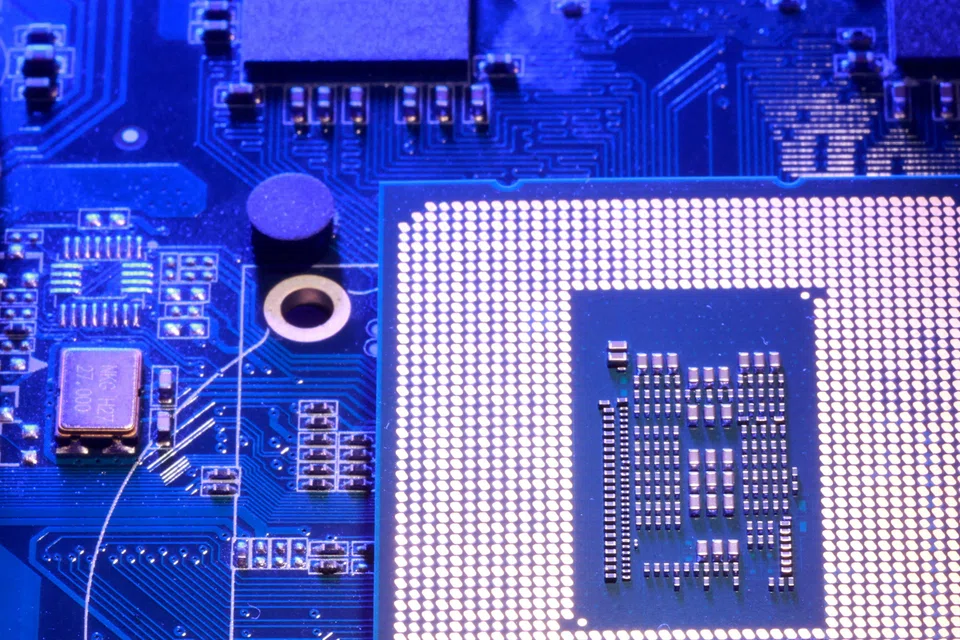
[BEIJING] China has revised regulations protecting integrated-circuit layout designs, tightening registration standards and allowing punitive damages for serious infringement, as Beijing seeks to better safeguard domestic chip know-how.
The revised regulations, signed by Premier Li Qiang on Jul 23, will take effect on Oct 15, the Justice Ministry and China National Intellectual Property Administration said in a document published by state news agency Xinhua on Monday (Aug 3).
The rules cover detailed layouts that determine how components are arranged within a chip – designs that can reflect substantial engineering work and are central to semiconductor development even for companies that do not manufacture chips themselves.
The measures do not amount to export controls, but reflect the greater strategic importance Beijing is assigning to technology developed by Chinese companies.
US restricting access to chip design tech
China’s semiconductor industry has accelerated efforts to develop domestic alternatives after successive US restrictions limited access to advanced semiconductor-design software and manufacturing equipment.
Chinese policymakers have also considered broader measures to prevent strategically important domestic technologies from being transferred overseas or acquired by foreign companies, the Financial Times reported last month.
Those proposals could include restrictions on overseas production of advanced chips based on Chinese designs, the newspaper reported.
The revisions announced on Monday are aimed at making it harder to copy such work or secure legal rights over designs developed by others.
Applicants must show that filings result from genuine creative activity, submit declarations of originality, and clearly identify the original elements in materials lodged with authorities.
SEE ALSO



Regulators will be able to reject applications that clearly fail to meet those requirements, while the changes also provide a clearer basis for challenging registrations that should not have been granted.
Alfredo Montufar-Helu, a Beijing-based managing director at Ankura China Advisors, said that China is “trying to screen out low-quality claims and distinguish companies with genuine technological capability” by “raising originality standards, tightening registration requirements and penalising bad-faith applications”.
The regulations strengthen remedies for infringement, allowing damages to be calculated based on losses suffered by the rights holder or gains made by the infringer.
Courts can award punitive damages in serious cases.
The rules also clarify how layout-design rights can be licensed, transferred or used as collateral, and require organisations leading their creation to provide eligible personnel with reasonable rewards and remuneration. REUTERS
Decoding Asia newsletter: your guide to navigating Asia in a new global order. Sign up here to get Decoding Asia newsletter. Delivered to your inbox. Free.
Share with us your feedback on BT's products and services
TRENDING NOW

DBS, OCBC, UOB rout lops billions off STI as inflation, rate concerns spook investors

Grab CEO’s wife Chloe Tong on life with Anthony Tan and finding her purpose

OCBC sheds S$8 billion in value as shares close nearly 6% down; analysts cautious on banks

Deal between tycoon friends sparks scrutiny of Philippine power sector

