

China’s 2.2 trillion yuan pile of bad consumer debt threatens economy
The debt overhang is undermining national efforts to boost domestic consumption, with Chinese banks extending fewer new loans
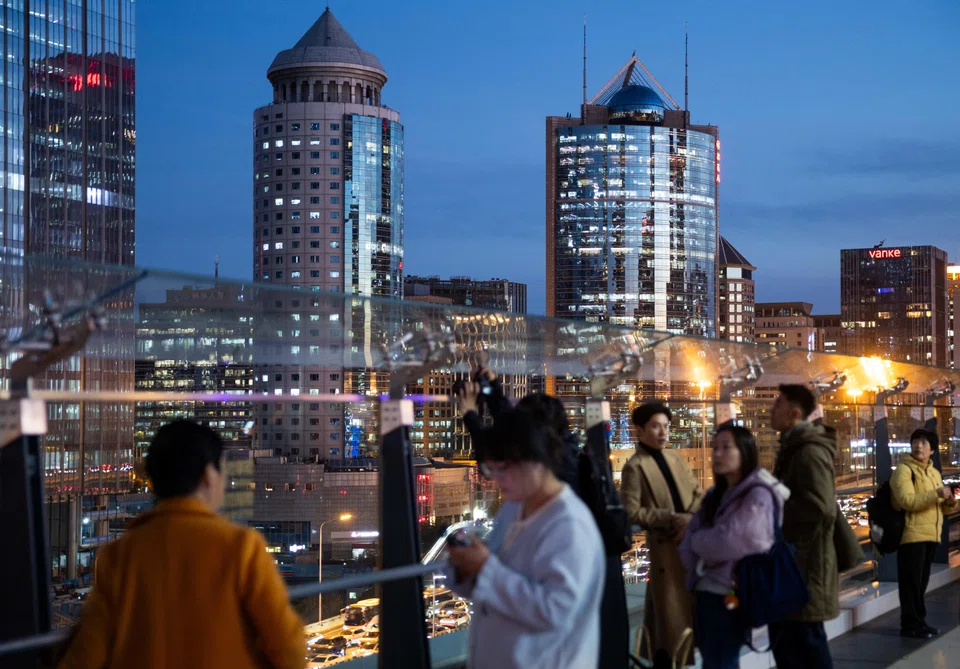
[BEIJING] As many as 100 million Chinese consumers are struggling to service their personal debt, fuelling a largely hidden crisis that threatens Beijing’s efforts to revive the world’s second-largest economy.
Bad consumer loans from credit cards to mortgages have surged over the past few years. Non-performing household debt soared 21 per cent last year to a record of at least 2.2 trillion yuan (S$419 billion), according to Gavekal Dragonomics. The firm analysed financial reports from 26 banks and other data sources after authorities stopped releasing aggregate figures on delinquent and defaulted personal loans.
Analysis from Zhejiang University’s Institute of Financial Research said Chinese financial institutions could have non-performing personal debt totalling two trillion yuan to three trillion yuan to dispose of annually.
The estimates suggest that as much as 10.6 per cent of China’s 1.1 billion adult population were behind on debt payments at the end of 2025.
“Personal bad loans will continue to pile up,” said Xiaoxi Zhang, China finance analyst at Gavekal. The situation is unlikely to improve without more aggressive government policies to alleviate income pressures and financial strains, she said.
The debt overhang is undermining national efforts to boost domestic consumption, with Chinese banks extending fewer new loans. Mounting repayment stress is also blunting the impact of loan subsidies intended to spur consumer spending on big-ticket items such as automobiles, home renovations, and electronics.
Official data released earlier this week showed a retail sales slump not seen since the coronavirus pandemic, a worrying sign for the economy.
Much of China’s short-term debt boom has been driven by loan platforms operated by tech giants, including mobile payments leader Ant Group and short-video specialist ByteDance. They act as go-betweens for banks and borrowers, offering loans carrying annualised interest rates from 4 per cent to more than 24 per cent.
Yet even as bad debt mounts, these platforms continue to aggressively push loans with slogans like “instant disbursement”, “low interest” and “low threshold” that show up when users log into their mobile apps.
SEE ALSO



On Meituan’s delivery platform, some users are instantly pre-approved for credit lines up to 300,000 yuan, while ByteDance’s Douyin carries ads offering “funds in 30 seconds”. On bike-sharing apps, low-interest loan offers scroll across the bottom of phone screens.
Ant, ByteDance and Meituan did not respond to requests for comment.
Catching up
The frictionless borrowing environment is catching up with younger consumers. Hu Jing, a 23-year-old waitress in Shanghai, saw her debt troubles begin three years ago with a cosmetic procedure. Spurred by peers and online promotions that framed the borrowing cost as “just 50 yuan a day”, she took out a 30,000-yuan instalment loan arranged by Meituan.
Hu, who was earning 8,000 yuan a month at the time, assumed the debt would be easily manageable so she borrowed more to fund subsequent Botox and skin treatments, eventually missing payments. As her financial strain grew, lending engines offered a risky lifeline: her mobile apps began popping up with fresh credit offers, encouraging her to take out new loans simply to service her existing monthly debt.
When Hu subsequently lost her job, the financial math fell apart. Her current position pays half of her previous salary. She now owes more than 100,000 yuan (S$19,055) in overdue debt, and regrets not recognising the pitfalls sooner.
“I get collection calls and messages every day,” Hu said. “I do not know what to do.”
China’s household debt has nearly tripled over the past decade to about 83 trillion yuan.
On paper, bad debt look manageable. Less than 3 per cent of household debt is non-performing, below the US delinquency rate of roughly 4.8 per cent.
However, Beijing has little experience managing large-scale consumer defaults and lacks a nationwide personal bankruptcy framework to help individuals restructure or clear their obligations. Signs are now emerging that regulators are growing uneasy.
Late last year, the People’s Bank of China (PBOC) rolled out a credit-amnesty programme, offering a one-time window for individuals with up to 10,000 yuan in overdue debt to repair their credit scores.
Under the initiative, borrowers who defaulted between 2020 and 2025 but fully settled their balances by March 2026 had their delinquency records wiped clean, restoring their access to mainstream credit. It is not known how many people took up the offer.
Regulators have also instructed online platforms to cap average rates on new loans below 20 per cent, according to sources familiar with the matter who asked not to be identified discussing private information.
Authorities asked some major lending platforms to stress test their portfolios against a potential 12 per cent annualised rate ceiling, the sources said. A cap that low would align with guidelines stipulating rates should not exceed four times the one-year Loan Prime Rate, currently at 3 per cent.
For years, the high rates charged by online lenders acted as a financial cushion, allowing them to absorb default losses and remain profitable.
The PBOC declined to comment, while the National Financial Regulatory Administration did not reply to a fax requesting comment.
The consumer credit squeeze comes as the banking sector grapples with a protracted property slump and mounting corporate defaults. While official data pegs the industry’s non-performing loan (NPL) ratio at just 1.5 per cent as at March, analysts widely believe the figure vastly understates the true volume of delinquent debt.
Stress signs are already showing at the top. At Industrial & Commercial Bank of China, the nation’s largest lender with more than 145 million active credit cards, the NPL ratio for credit card debt surged more than a percentage point last year to 4.61 per cent, dwarfing the bank’s overall NPL ratio of 1.31 per cent.
As much as 5 to 6 per cent of retail loans at some of China’s large banks could be non-performing, according to May Yan, head of Asia financials research at UBS. Delinquency rates are likely even higher at smaller lenders, she said.
The divergence between policy and reality highlights the dilemma facing authorities. Yan said that Beijing’s recent policy intent has been to lower borrowing thresholds and financing costs to encourage consumption among households with repayment capacity, but the outcome has diverged from expectations.
“Those with stronger repayment ability are unwilling to borrow amid economic uncertainty and declining household wealth, while more vulnerable groups are taking on excessive debt,” she said.
That economic pain has proved toxic for some. Ma Jun, a 57-year-old construction contractor from eastern Jiangsu province, has spent years trying to dig himself out of debt after his business ran into severe cash-flow issues in 2021.
To keep a residential project afloat, Ma paid his migrant crew’s wages and immediate expenses out of his own pocket. His employer went bust before reimbursing him, leaving him to hold the bag.
Over the next two years, Ma tapped multiple lending platforms to fund business banquets and gift-giving, desperate to grease the wheels for new contracts. But as the property slump deepened, projects dried up. Ma resorted to taking out fresh loans just to service older ones until the cycle became unsustainable.
At its peak, his outstanding principal neared 150,000 yuan. He also failed to realise that some of those digital loans carried annualised rates exceeding 20 per cent.
“It’s like walking into a trap,” he said. At his lowest point, he received more than a dozen calls daily from aggressive collectors who targeted his family and threatened legal action.
Ma secured a salaried job in 2024, and now his focus is on paying off his remaining balances. He still has roughly 30,000 yuan in outstanding debt, forcing him to live under intense austerity.
“It’s really been a disaster for me and my family,” Ma said. “I wish I had never borrowed those loans, but it’s pointless to regret it now.” BLOOMBERG
Decoding Asia newsletter: your guide to navigating Asia in a new global order. Sign up here to get Decoding Asia newsletter. Delivered to your inbox. Free.
Share with us your feedback on BT's products and services






