

China’s inflation cools as Iran war oil shock starts to ease
It is the first slowdown since the country’s producer price index turned positive in March
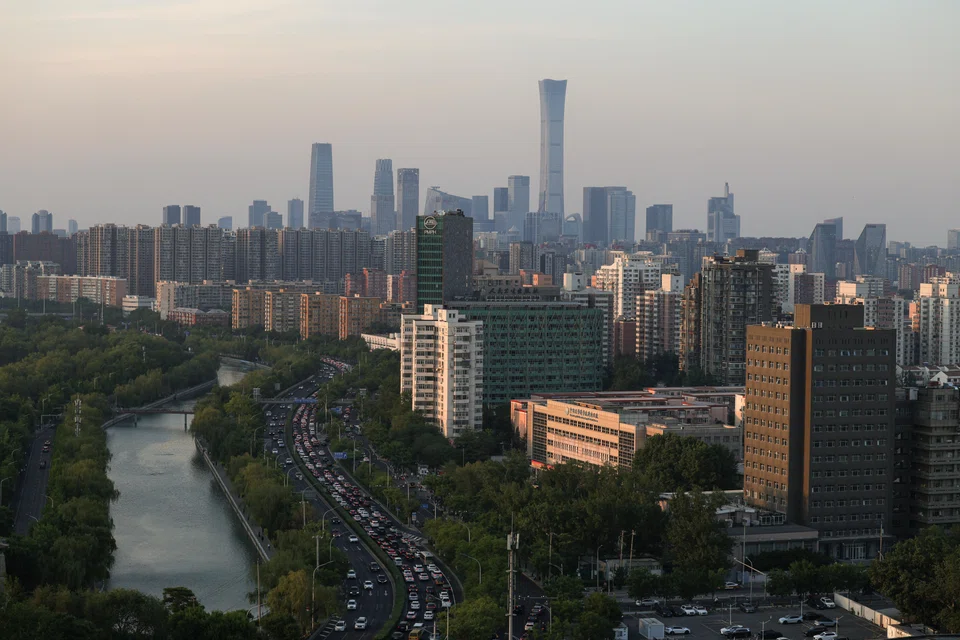
[BEIJING] China’s factory-gate inflation eased for the first time since the Iran war broke out in late February, while consumer prices also decelerated, in another sign that cost pressures from the oil shock are starting to fade.
The producer price index rose 3.5 per cent in July from the year-ago period, slower than expected and compared with a gain of 4.1 per cent in the previous month, data published by the National Bureau of Statistics on Sunday (Aug 9) showed.
That is the first slowdown since China’s producer price index turned positive in March on the back of higher oil prices, after more than three years of declines.
Consumer inflation decelerated to 0.5 per cent from 1 per cent in June. The core consumer price index, which strips out volatile food and energy items, eased from 1 to 0.9 per cent.
China has emerged from a record bout of deflation with weak upward momentum for prices.
Sluggish domestic consumer spending has so far limited the extent to which factories can pass on their growing production expenses from higher global prices for oil, chips and metals.
As a result, a divergence in profits has opened up between upstream and downstream sectors.
Industries such as clothes-making are suffering a plunge in their earnings, while others such as energy producers are having soaring profits.
The economic fallout of higher global prices for commodities is already starting to fade in China. While crude fluctuated wildly in June and July, average costs still eased from their peak earlier this year.


US President Donald Trump said on Thursday that negotiations between Iran and Oman over the Strait of Hormuz are “moving along”.
Teheran said it is “very close” to a deal with Oman on a new maritime transit route in the strait, even as the Islamic Republic renewed a list of demands for the US to agree to before the waterway would open.
Many economists have warned in recent years that persistent deflationary pressures in China could harm the economy’s long-term growth, encouraging households to cut back on spending, eating into corporate profits and stifling investment and hiring.
A slowdown in the headline price gauges could reignite such concerns by offering further evidence that a return of healthy inflation in the aftermath of the oil shock could still be a long way off.
The cost of pork, China’s staple meat, narrowed its year-on-year decline in a sign that an oversupply is easing in the industry, after a year of contraction.
The cost of tourism services declined. Domestic spending in the sector was worse than expected during the summer holidays, local media reported, citing a decrease in hotel rates and flight ticket costs from the year-ago period. BLOOMBERG
Decoding Asia newsletter: your guide to navigating Asia in a new global order. Sign up here to get Decoding Asia newsletter. Delivered to your inbox. Free.
Share with us your feedback on BT's products and services
TRENDING NOW

Government to bring forward raising of retirement age, give employers more financial support to create flexi-load jobs

Former minister Maliki Osman, Revolut chairman join Asia Gulf Holdings advisory board

Is Manila Asia’s new dining hot spot?

Simba at risk of losing operating licence over spectrum misuse

