Chinese firm uses employee data to build AI worker, stoking job security debate
In some cases, firms secretly record workflows to create skill files and then use those as grounds for layoffs
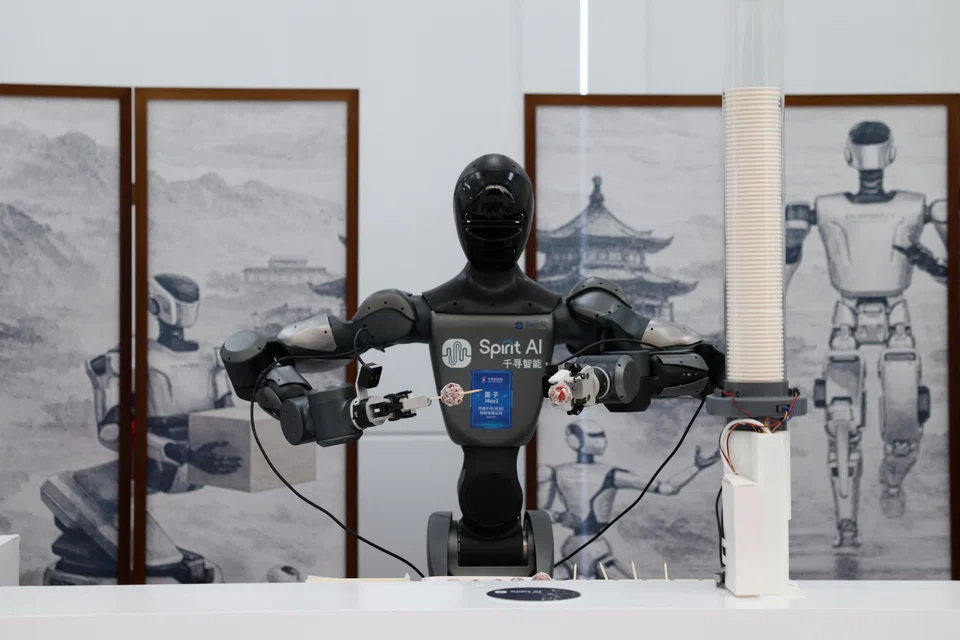
A GAMING and media company in China’s Shandong province has sparked heated discussions about skill distillation after using a former employee’s chat logs, work documents and decision-making habits to train an artificial intelligence avatar to do his job.
Skill distillation is a specialised machine learning method that transfers specific functional behaviours, decision-making procedures or structured reasoning strategies from a large, complex “teacher” model into a smaller, more efficient “student” model.
The controversial practice highlights a rapidly emerging trend where companies harvest staff data to create automated digital replicas, raising profound ethical, legal and job security concerns.
AI brain
The Shandong company’s practice reflects a broader movement gaining traction among global developers. In late March, an open-source project, named colleague.skill, went viral on GitHub. The tool allows users to import daily collaboration data from platforms like Lark and DingTalk and e-mails to generate an AI skill capable of performing a colleague’s tasks, such as applying templates to weekly reports or reviewing code against company standards.
While the concept appears similar to robotic process automation (RPA)—a software technology that mimics human interactions with computer interfaces for repetitive tasks—industry insiders argue that AI models represent a significant leap forward.
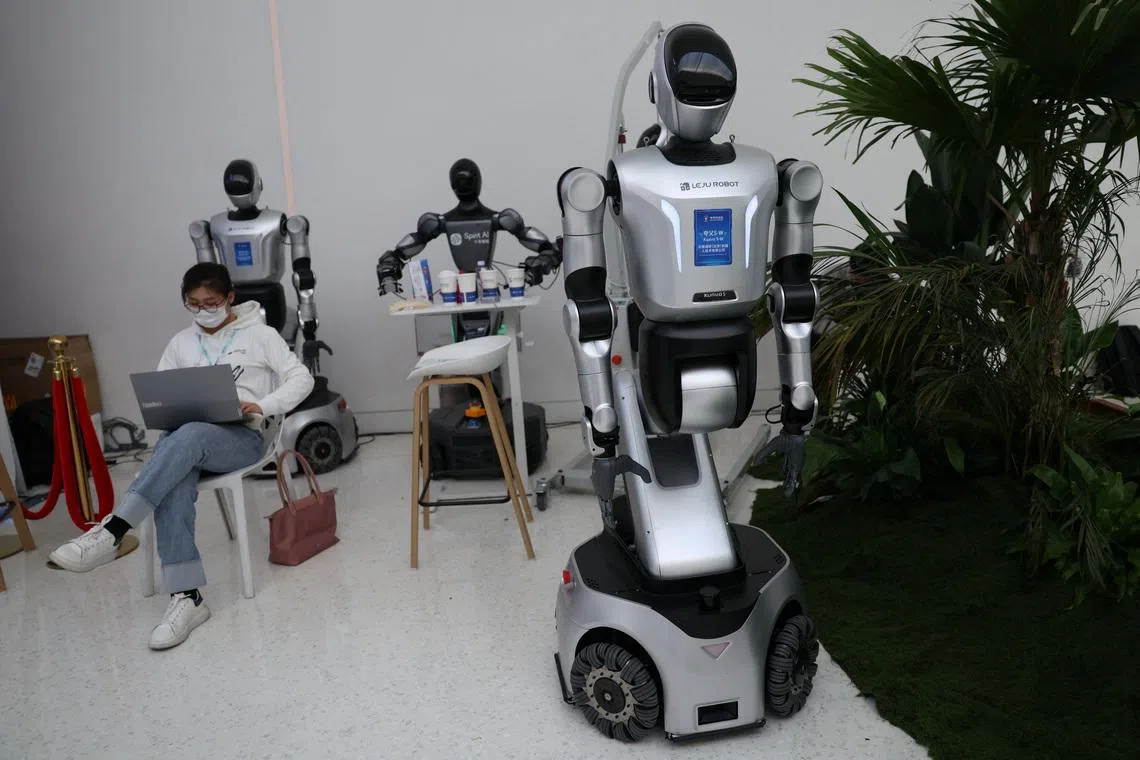
RPA functions more like an industrial robot in a factory that mechanically executes prerecorded steps, whereas AI-trained skills possess powerful brains, Yang Fangxian, founder of 53AI, told Caixin. AI-trained skills can now evaluate contexts, such as identifying a meeting’s type and selecting the appropriate template to organise the information, meaning it can think like a human, Yang said.
This cognitive evolution allows AI to move beyond simple manual labour. For example, while traditional transcription tools produce generic summaries, a skill trained on internal company data can generate standard memos, incorporate business knowledge and even identify unaddressed issues during a meeting to offer potential solutions, according to Yang.
The value of human workers
As AI automates low-value, repetitive tasks, a consensus is forming that the core value of human workers will shift towards defining problems and making complex decisions. Despite having vast computing power and knowledge, AI requires human instruction, according to Yang.
Human workers whose jobs involve interpersonal interactions are generally considered difficult for AI to replace, particularly those that provide emotional value. However, knowledge-based or functional roles requiring human interaction, such as teachers or company administrators, could be easily transformed into AI-trained skills because AI might communicate more accurately and efficiently.
SEE ALSO




There is no definitive conclusion on which corporate roles are most vulnerable to AI replacement. While a Goldman Sachs report indicated that entry-level clerical and administrative roles are most susceptible to automation, a McKinsey report argued that AI is flattening organisational structures by taking over the communication and oversight functions of middle-level managers. Meanwhile, others suggest that the standardised decision-making models of senior executives could also be cheaply replicated by AI.
In fact, the skill distillation process targets specific tasks rather than specific workers. Yang argued that distilling an executive’s deep understanding and organisational capabilities into a skill is often more valuable, as it allows the entire company to execute tasks at a high level.
Privacy concerns
Skill distillation brings significant legal and ethical controversies. You Yunting, a senior partner at Shanghai-based DeBund Law Offices, said in an article that while companies have a legal basis to claim rights over work products, the red line lies in privacy and personal data protection.
Private chat logs and personal e-mails stored on work devices remain personal privacy. An employee’s consent to device monitoring upon hiring does not equate to authorisation to use their behavioural data to train an AI replacement, You said. Furthermore, companies cannot include sensitive personal information, such as voice prints, facial features and behavioural habits, in distilled skill files. Releasing an employee’s image and voice as a digital worker without permission could infringe on their portrait and voice rights.
You also highlighted a hidden power imbalance in labour relations: employees lose market pricing power as their years of accumulated skills are rapidly distilled into replicable digital assets without sharing the resulting profits. In some cases, companies secretly record workflows to create skill files and then use those as grounds for layoffs, meaning employees inadvertently provide the materials for their own dismissal. CAIXIN GLOBAL
Decoding Asia newsletter: your guide to navigating Asia in a new global order. Sign up here to get Decoding Asia newsletter. Delivered to your inbox. Free.
Share with us your feedback on BT's products and services