

Data centre boom props up Australia’s slowing economy
Private investment rises 4% in Q1, with a 16% jump in spending on machinery and equipment
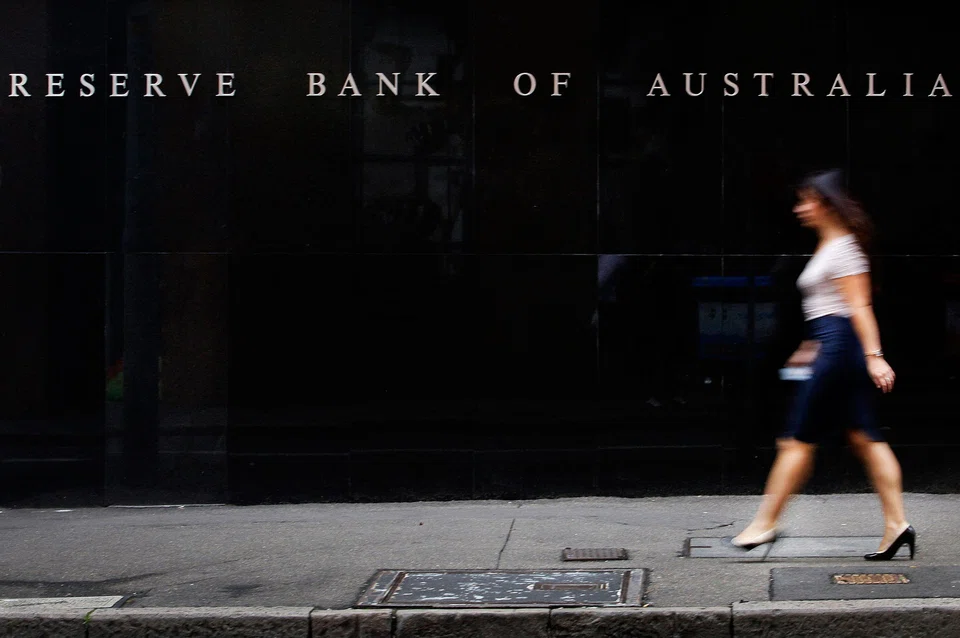
[SYDNEY] Australia’s economy decelerated last quarter, propped up by a massive surge in investment into data centres that helped cushion the early impact of higher fuel costs and rising interest rates.
Gross domestic product advanced 0.3 per cent in the first three months of the year, just one-third of the pace recorded in the final quarter of 2025 and missing estimates, data from the Australian Bureau of Statistics (ABS) showed on Wednesday (Jun 3).
Private investment climbed by almost 4 per cent, led by higher outlays on data centres, with a 16 per cent jump in spending on machinery and equipment, resulting in the largest gain in almost 30 years.
Australia’s economy has been buffeted and households have been squeezed by resurgent inflation and three consecutive rate hikes, capped by an energy shock unleashed by the war in Iran.
The Reserve Bank of Australia (RBA) is aiming to cool activity and stave off second-round inflationary effects from higher fuel costs, and the government is trying to rein in outlays to avoid adding to price pressures.
Westpac Banking economists, led by Pat Bustamante, estimated that the net effect of the investment in data centres, including spillover effects, drove all the growth this quarter.
“The economy was clearly slowing, even before the conflict in the Middle East and interest rate hikes had really started to (affect it),” he said in a research note.
“The headwinds from these developments will be more fully reflected in the second quarter of 2026, with the possibility of a quarterly contraction.”
The RBA will closely scrutinise the report ahead of its mid-June meeting, to decide whether it has sufficiently tightened policy to put inflation on track to return to the midpoint of its 2 to 3 per cent target.



The central bank in May raised the cash rate to 4.35 per cent, fully unwinding a brief easing cycle in 2025.
Fourth hike in 2026 “still on the table”
Australia’s policy-sensitive three-year government bond yields retreated after the data. Money markets reckon that the RBA will stand pat in just under two weeks’ time, and are wagering a 50-50 chance of another hike in August, while fully pricing a December move.
“Labour market conditions remain relatively tight, while elevated crude oil prices continue to pose upside inflation risks,” said Chong Wee Khoon, Apac macro strategist at BNY.
“There is no room for complacency, and the risk is that the RBA hikes again if inflation expectations remain persistently high.”
Stephen Smith, partner at Deloitte Access Economics, said that the figures showed that Australia’s economic momentum was fading, and the quality of growth has deteriorated due to net exports declining and household spending faltering.
“For policymakers, the result is uncomfortable,” he said. “The economy is cooling, but not in a way that suggests inflation will fall neatly back to target.”
He noted that productivity growth weakened again while unit labour costs remained elevated, meaning the central bank “will see softer activity, but not necessarily evidence of easing domestic cost pressures”.
“A fourth rate hike in 2026 is still on the table,” he added.
The economic slowdown comes against a backdrop of the ongoing US-Iran war, which is driving up energy costs.
Economists expect that the country’s growth will weaken further this quarter, as fallout from the conflict combines with the delayed effects of the RBA’s tightening campaign.
James McIntyre, Bloomberg economist, said: “There are three key stories: lower mining output due to cyclones, the unwinding of electricity subsidies and a surge in import-heavy data centre construction.
“They make the quarter harder to read, but the bottom line is that the economy weakened at the start of 2026.”
Wednesday’s data also showed that:
- Annual expansion came in at 2.5 per cent, below forecasts;
- Household spending rose 0.5 per cent last quarter. The ABS noted the growth included elevated spending on electricity, gas and other fuels – up 11.7 per cent – as government rebates ceased;
- The household savings ratio fell to 6.2 per cent from 7 per cent;
- Economic output per person declined 0.1 per cent;
- Mining production slid 1.5 per cent, subtracting 0.2 point from GDP growth, due to weather-related impacts; and
- Construction advanced 0.9 per cent, adding 0.1 point to growth. BLOOMBERG
Decoding Asia newsletter: your guide to navigating Asia in a new global order. Sign up here to get Decoding Asia newsletter. Delivered to your inbox. Free.
Share with us your feedback on BT's products and services
TRENDING NOW

Once staunchly pro-China, Malaysian Chinese businesses are now distancing themselves from Beijing

Looking beyond looming CEO succession, should UOB potentially pursue a transformative merger?

Could stablecoins be the future of money?

Grab CEO’s wife Chloe Tong on life with Anthony Tan and finding her purpose

