



DeepSeek founder Liang Wenfeng becomes the world’s richest AI model creator
The entrepreneur’s US$36 billion fortune makes him China’s eighth-richest person
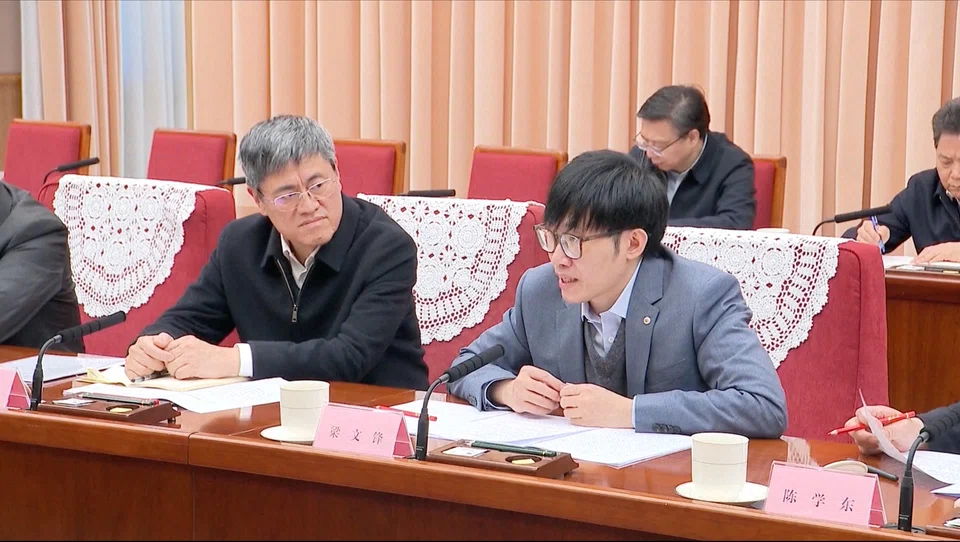
[HONG KONG] DeepSeek founder Liang Wenfeng’s net worth more than doubled after his firm’s most recent fundraising round, making the Chinese entrepreneur the world’s richest among creators of artificial intelligence models.
Liang is now worth US$36 billion, up from about US$16.7 billion previously, according to the Bloomberg Billionaires Index. That ranks him well above Anthropic co-founder Dario Amodei and OpenAI’s Greg Brockman.
In the comparison, Bloomberg looked at firms whose primary business and majority of revenue come directly from AI models.
The list excludes diversified conglomerates such as Alibaba Group and Tencent, as well as other businesses in the AI supply chain such as data centres and semiconductors.
For Liang, most of his fortune is derived from his control of DeepSeek.
Strong demand for investment boosted DeepSeek’s valuation about five times from the initial US$10 billion reported in April.
Following the startup’s US$7.4 billion funding round in June – which valued the company at US$50 billion and saw Liang personally invest US$3 billion – his stake is estimated to have diluted to approximately 78 per cent, according to the Bloomberg Billionaires Index.
DeepSeek did not respond to requests for comment.
Liang was born in 1985 in Zhanjiang, in China’s southern Guangdong province, where his father was an elementary school teacher.
He studied electronic engineering at Zhejiang University, a prestigious college in the city of Hangzhou where he also earned a master’s degree in information and communication engineering.
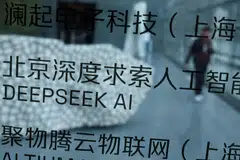
Liang created DeepSeek in 2023 as an offshoot of the AI division of his hedge fund, Zhejiang High-Flyer Asset Management, which he set up with two former university classmates. The trio had begun trading as students during the global financial crisis.
Early on, High-Flyer used its massive trading profits to stockpile advanced graphics chips before US export restrictions tightened.
Those early investments gave DeepSeek the computing power necessary to develop its breakthrough models without relying on traditional venture capital.
DeepSeek shocked the global tech industry in early 2025 by releasing a model that achieved performance comparable to US rivals like OpenAI, but at a fraction of the cost.
The startup is keeping up that momentum, recently showcasing its latest V4 model and publicly touting its compatibility with chips made by domestic tech giant Huawei Technologies.
For years, consumer Internet tycoons such as Alibaba’s Jack Ma defined tech wealth in China.
That era is now giving way to state-backed AI. The influx of state and corporate capital marks DeepSeek’s transition from a private software experiment into a critical national asset.
What sets Liang apart from his Silicon Valley peers is the sheer scale of his equity retention.
In the US, building a US$50 billion frontier AI company typically requires giving up massive chunks of equity to tech giants and venture capitalists.
By contrast, maintaining a near 78 per cent stake gives Liang a boost to his personal wealth and control that is unusual among modern AI founders.
While US giants such as OpenAI and Anthropic command massive valuations approaching US$1 trillion, their equity is more fragmented across larger investor bases or multiple co-founders.
Liang’s US$36 billion fortune makes him China’s eighth-richest person, just behind Chen Tianshi, the hardware AI billionaire and Cambricon Technologies co-founder. BLOOMBERG
Decoding Asia newsletter: your guide to navigating Asia in a new global order. Sign up here to get Decoding Asia newsletter. Delivered to your inbox. Free.
Share with us your feedback on BT's products and services
TRENDING NOW

LTA proposes combining car COE categories, adding rebate-surcharge system

StarHub to acquire MyRepublic’s mobile business amid ongoing telco consolidation

DBS, OCBC, UOB rout lops billions off STI as inflation, rate concerns spook investors

Grab CEO’s wife Chloe Tong on life with Anthony Tan and finding her purpose

