

Delay in Trump’s China visit gives both sides time to hammer out trade deal
The US president’s request to delay his trip to China came just hours after officials from both sides met in Paris for trade talks
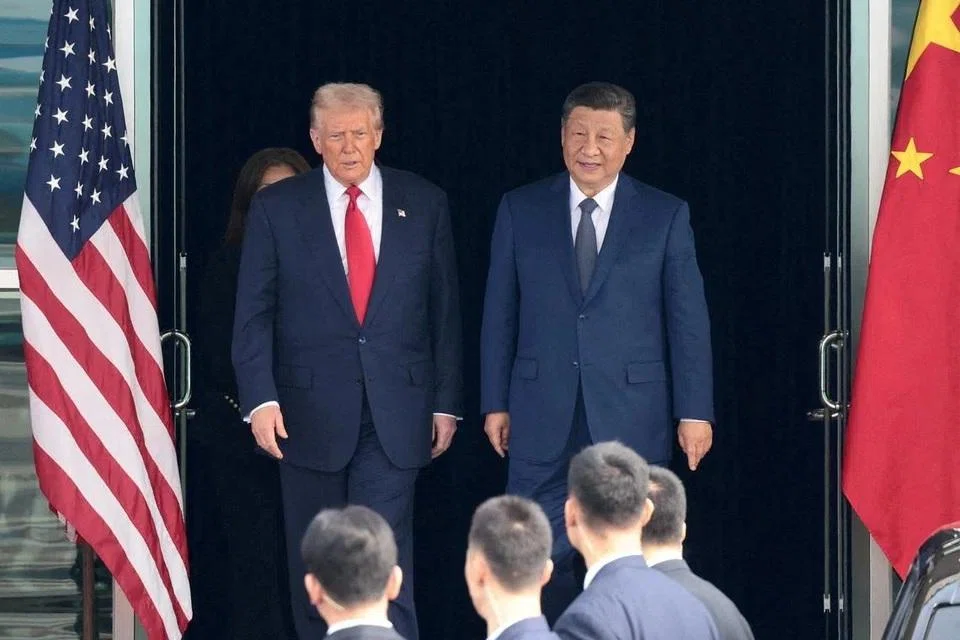
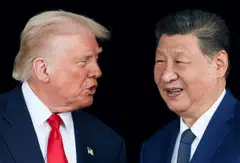
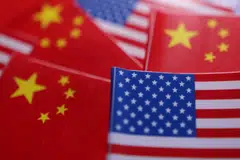
[BEIJING] US President Donald Trump’s decision to delay his planned visit to China by about a month may offer both sides a useful window to firm up their objectives for the closely watched leaders’ summit, even as Washington frames the postponement in a way that avoids inflaming tensions with Beijing.
Analysts said Washington’s explanation – that domestic considerations amid the ongoing Middle East conflict were the reason for the postponement, rather than frustration over China’s stance on not helping to secure the Strait of Hormuz – is one that Beijing can accept publicly, even if it might be viewed with some scepticism behind closed doors.
Han Shen Lin, China managing director for The Asia Group consultancy, told The Straits Times (ST) that while Beijing will accept it publicly, it will “read between the lines”.
“With China’s refusal (to support US efforts) in the Strait of Hormuz still fresh, few in Zhongnanhai will believe scheduling is the real reason,” said Lin, referring to the compound in Beijing where China’s top leaders work.
On Mar 15, Trump said he was urging some seven countries to send warships to escort vessels through the Strait of Hormuz, a vital waterway that Teheran has mostly blocked, causing oil and gas prices to spike.
While the US President did not name the countries he had requested support from, he had said in a Truth Social post the day before that he hoped “China, France, Japan, South Korea, the UK and others that are affected by this artificial constraint” would send ships to the region.
At a press conference in the White House on Mar 16, Trump said China “should be thanking” the US for its efforts in Iran and that he was surprised it was not “eager” to help.
When asked about the China trip, Trump said he had sent a request to China that the summit be delayed “by a month or so”.
He said: “We’re speaking to China... I’m looking forward to being with them.
SEE ALSO
“We have a very good relationship... There’s no tricks to it either... We’ve got a war going on, I think it’s important that I be here.”
Unlike the White House, Beijing had not publicly confirmed the Mar 31 to Apr 2 visit, which was consistent with China’s usual diplomatic practice.
Lin said the “face-saving framing” suits both sides, but Beijing will watch closely whether the rescheduled summit comes with revised demands or quiet concessions.
“Typically, summits ratify progress already made, not create it.
“If back channel talks aren’t moving, delay just gives hawks on both sides more room to harden positions and raise the political cost of compromise,” said Lin, who is based in Shanghai.
When asked about Trump’s request to delay the trip, Chinese Foreign Ministry spokesman Lin Jian said at a regular press conference on Mar 17 that both China and the US are in communication regarding the trip, including the dates.
Lin Jian said China has taken note of clarifications from the US about the reasons for the possible delay of the visit.
“We have noted that the US has publicly made clarifications on misguided media reports, calling them completely false. The US side stressed that the visit is not linked to the issue over the Strait of Hormuz,” he said.
In an interview with the Financial Times on Mar 15, Trump said he was expecting China to help unblock the waterway before he travels to Beijing, and suggested that he may delay the trip.
Guo Shan, a partner with Chinese consultancy firm Hutong Research, told ST that if the US had linked the postponement to China’s non-involvement in the strait, it would have been seen as pressure being exerted for concessions, which Beijing would have opposed, she said.
As things stand, delaying the meeting between Trump and Xi would allow negotiators to narrow gaps on key issues such as energy, agriculture and aircraft purchases, reducing the risk of a summit that yields few concrete outcomes, she said.
“China will want to wait for energy prices to stabilise as it used to get discounted oil from Iran, Russia and Venezuela, but prices are now rising,” said Guo.
“The US will want to announce big numbers and deals to please voters ahead of the midterm elections,” she added.
Stephen Olson, a former US trade negotiator and visiting senior fellow at the ISEAS – Yusof Ishak Institute, told ST that it would have been “untenable” for a US president to be seen at lavish banquets in Beijing or any other foreign capital while the US military is involved in significant military operations.
In February, Trump said he hoped the China trip would be the “biggest display you have ever had in the history of China”.
As the conflict drags on and countries rebuff his request to send ships to the Strait of Hormuz, it puts Trump “on his back foot”, said Olson.
“That is the last situation he would want to be in when entering a meeting with China’s leader,” he said.
When asked about Trump’s request that China send ships to the region, Chinese Foreign Ministry’s Lin Jian said on Mar 16: “China’s position is very clear: We once again call on all parties to immediately cease military operations, avoid further escalation of tensions and prevent regional instability from having a greater impact on global economic development.”
Chinese state media Global Times on Mar 15 published a strongly worded commentary, questioning whether Trump was seeking to “share responsibility” or “share the risk of a war that Washington started and can’t finish”.
“In other words, someone set the fire. Now they are asking the world to help put it out – and split the bill,” the commentary added.
Trump’s request to delay his trip to China came just hours after officials from both sides met in Paris for trade talks, the sixth of such meetings in an effort to stabilise ties after a tumultuous year marked by Trump’s tariffs and Beijing’s restrictions on rare-earth exports.
US Treasury Secretary Scott Bessent, who spoke to the press after the meeting, characterised the talks as constructive while Chinese chief trade negotiator Li Chenggang said the talks were “in-depth, candid, (and) constructive”.
But significant sticking points remain. Beijing has voiced concerns over the ongoing US trade investigations into alleged excess industrial capacity, while Washington continues to press China on trade imbalances and commitments to buy more agricultural products, energy and planes.
William Yang, a senior analyst at the International Crisis Group, said there appears to be some progress on a mechanism to manage trade and investment, which US Trade Representative Jamieson Greer said might be called the US-China Board of Trade.
A delay in Trump’s visit to Beijing could allow both sides to flesh out the details so that the leaders could lock in the idea at their summit, said Yang.
“It’s an opportunity for Beijing to boost its preparation for the summit to streamline the list of concessions it’s willing to make, prepare potential countermeasures against US trade restrictions, and firm up its demands on sensitive geopolitical issues such as US arms sales to Taiwan,” said Yang. THE STRAITS TIMES
Decoding Asia newsletter: your guide to navigating Asia in a new global order. Sign up here to get Decoding Asia newsletter. Delivered to your inbox. Free.
Share with us your feedback on BT's products and services
TRENDING NOW

DBS, OCBC, UOB rout lops billions off STI as inflation, rate concerns spook investors

Grab CEO’s wife Chloe Tong on life with Anthony Tan and finding her purpose

OCBC sheds S$8 billion in value as shares close nearly 6% down; analysts cautious on banks
Deal between tycoon friends sparks scrutiny of Philippine power sector

