

Dubai home prices drop for first time since post-pandemic boom
Fall in March is an indication of the Iran war’s immediate impact on real estate in the city
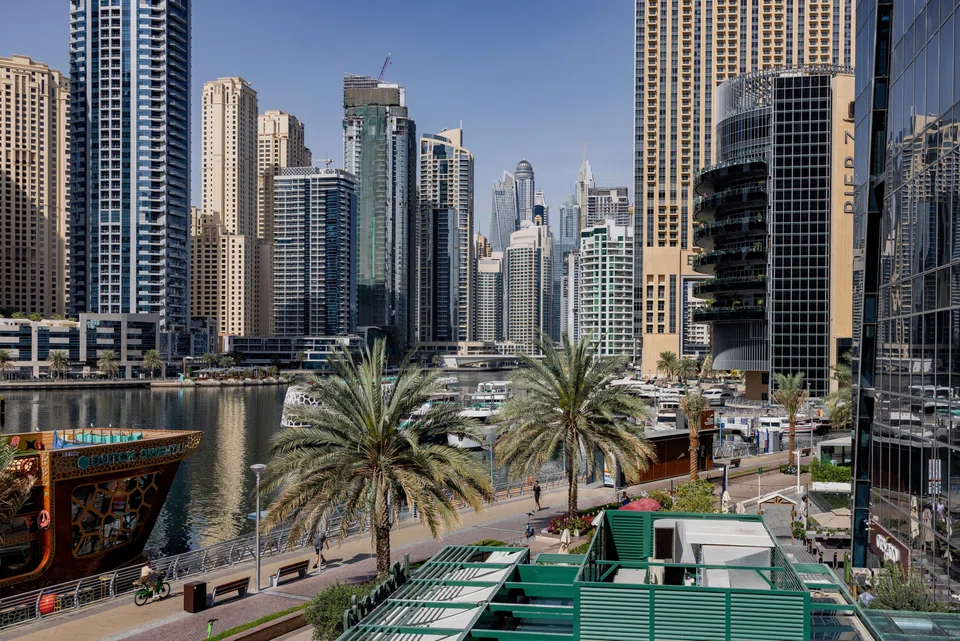
[DUBAI] Foreign investors and well-heeled expatriates helped transform Dubai’s housing market into one of the world’s hottest.
Now, values are falling for the first time since the global pandemic, as regional conflict weighs on demand.
Dubai-based ValuStrat said its home price index fell 5.9 per cent in March from a month earlier, marking the first decline in valuations since 2020.
The property-consulting and valuation company is used by some of the city’s largest banks.
Even with that drop, the gauge is only back to where it was six months ago.
The Dubai Land Department did not respond to requests for comment.
The data is an indication of the conflict’s immediate impact on real estate in Dubai, which is part of the United Arab Emirates.
The city has relied on its status as a tax-free haven to draw expats and foreign capital to its property market – an influx that helped home prices rebound from a prolonged slump and soar more than 70 per cent since 2020.
Geopolitical upheaval
That rally is now being tested by geopolitical upheaval. Gulf Arab nations bore the brunt of Iran’s retaliation for attacks by the US and Israel that began in late February.
They faced thousands of missiles and drones in several weeks, intercepting the vast majority. A fragile ceasefire began earlier in April, but planned peace talks fell apart on Wednesday (Apr 22).
The value of Dubai residential sales dropped by nearly a fifth to 37.2 billion dirhams (S$12.9 billion) in March from February, said Reidin, a research and analytics company that analyses data from the Dubai Land Department.
The number of transactions dropped to about 13,000 in March, from nearly 16,000 the previous month.
Louis Harding, the CEO of Dubai brokerage Betterhomes, said: “The market is not going to immediately return to what it was before, and we think there’s going to be a softening of pricing.
“We expect demand to be impacted because there’s a chance that population will not grow at the same pace of recent years – at a time of significant handover numbers.”
Betterhomes and ValuStrat said the drop in March might have been exacerbated by factors such as the Eid al-Fitr holiday and some of the UAE’s heaviest rainfall in decades. Still, Harding is preparing for a “lean and challenging” summer of transactions.
In recent years, Dubai has made an effort to transform itself into a less transient destination. A push to give long-term golden visas has resulted in an influx of foreigners who have made the city their home – which is expected to boost the market’s resilience.
Property companies listed in Dubai are already rebounding from the declines seen after the war started on Feb 28.
Shares of Emaar Properties, Dubai’s largest developer, have rallied about 16 per cent from their low in mid-March.
Market liquidity
Katralnada Binghatti, CEO of developer Binghatti Holding, said in March: “There still is liquidity in the market. The market behaviour still seems relatively stable.”
In 2009, Dubai was pushed to the brink of default after a real-estate slump – triggered by a collapse in the off-plan market, which consists of homes sold ahead of construction.
Matthew Bate, founder and CEO of property adviser and broker BlackBrick, said that slice of the market is being closely watched now, as it requires high-conviction bets from foreigners on the city’s long-term trajectory.
The off-plan market, which accounts for nearly three-quarters of transactions in Dubai, saw the value of total sales drop about 13 per cent in March from the previous month, Reidin said.
Still, Sahil Khosla, CEO of Soho Development, a developer that is building luxury towers in Dubai, said he is not concerned about a dramatic decline.
“There are jitters in the market, and off-plan will be the first to suffer because it’s speculative,” he said.
“But we’re not worried the property market will cliff-dive because there are more end-users than ever before, and any discounts we are seeing come after a massive ramp-up in valuations over the past five years.”
Expats account for more than 85 per cent of the UAE’s population.
Realtors in London, Monaco and Marbella are reporting increased interest from wealthy Middle East residents looking to rent or buy properties, Bloomberg News had reported.
Matthew Green, head of Middle East and North Africa research at real-estate company CBRE, said: “The directional trend for March is expected to continue until April, with transactional conditions softening as investor confidence is further tested.”
Higher costs
Rizwan Sajan, the founder of Danube Properties, said that companies will also have to contend with higher costs for building materials if the Strait of Hormuz remains closed for much longer.
As sentiment has shifted, prominent developers have held calls with investors to allay concerns over a potential liquidity crunch.
New projects have continued to be rolled out, with developers announcing plans to add hundreds of homes.
In addition, developers – from Emaar to Azizi Developments – have pushed ahead with new projects.
Some companies are offering incentives to sustain demand, such as lower upfront payments.
Imran Farooq, the CEO of Samana Developers, said: “I expected sales to be lower in a situation like this, but we’re still seeing sales.
“It’s taking a little longer to sell, but sales are happening with buyers from within the UAE, as well as from Egypt and India.” BLOOMBERG
Decoding Asia newsletter: your guide to navigating Asia in a new global order. Sign up here to get Decoding Asia newsletter. Delivered to your inbox. Free.
Share with us your feedback on BT's products and services
TRENDING NOW

DBS, OCBC, UOB rout lops billions off STI as inflation, rate concerns spook investors

Grab CEO’s wife Chloe Tong on life with Anthony Tan and finding her purpose

OCBC sheds S$8 billion in value as shares close nearly 6% down; analysts cautious on banks

Deal between tycoon friends sparks scrutiny of Philippine power sector

