

ECB’s Rehn says data show first signs of stagflationary shock
It’s the result of the Iran war and rising energy prices
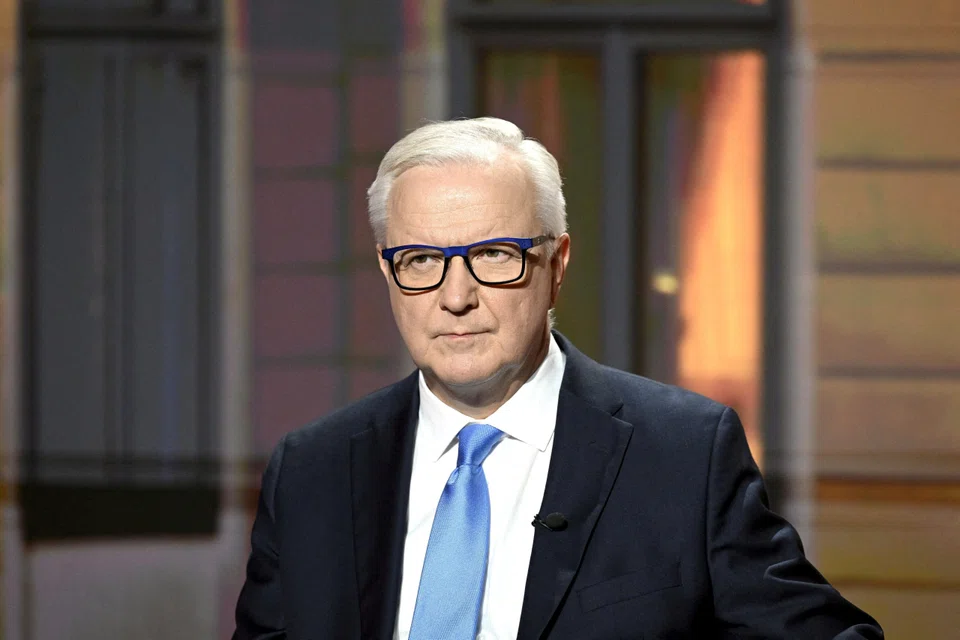
[HELSINKI] European Central Bank Governing Council member Olli Rehn warned that data are starting to point to stagflation as a result of the Iran war and rising energy prices.
“The first signs were already visible in the statistics, when growth in the euro area in the first quarter was only slightly positive and inflation accelerated to 3 per cent,” the Finnish central-bank chief said on Wednesday (May 13) in a speech.
While stressing that the current shock is “not quite as big” as the last spike in prices in 2022, he said events have shifted away from the ECB’s baseline outlook and closer to a “less favourable scenario, at least for oil prices.”
Despite inflation surging beyond the ECB’s 2 per cent target, policymakers in Frankfurt have held fire on interest-rate hikes as they await more information on how the conflict is affecting prices more broadly.
“Today we’re once again seeing an external price shock related to geopolitical tension and the volatility of energy markets,” Bulgarian central-bank Governor Dimitar Radev said separately in Sofia.
Rehn, like his colleagues, stressed that the key factors are the strength and duration of the war, as well as possible spillovers. But he said there’s no sign yet of inflation expectations de-anchoring and called developments over wages “reassuring.”


Growth in the eurozone’s 20-nation economy looks set to soften, however, a factor that could act as a counterweight to inflation. In an indication of such weakness, France reported earlier on Wednesday that unemployment unexpectedly rose to the highest level in five years, reaching 8.1 per cent.
Investors are betting the ECB will raise its deposit rate by a quarter-point in June and twice more before year-end, though policymakers remain wary of confirming any move.
“I’m hearing a debate about whether it’s June or afterwards,” Bank of France Governor Francois Villeroy de Galhau, who retires this month, told Franceinter radio. “In April, we decided to keep rates on hold. Why? Because we don’t yet have enough information on this infamous propagation to other prices, to services and goods.” BLOOMBERG
Decoding Asia newsletter: your guide to navigating Asia in a new global order. Sign up here to get Decoding Asia newsletter. Delivered to your inbox. Free.
Share with us your feedback on BT's products and services
TRENDING NOW

Mooted COE changes will solve category issues, but higher premiums likely: observers

Grab CEO’s wife Chloe Tong on life with Anthony Tan and finding her purpose

Once staunchly pro-China, Malaysian Chinese businesses are now distancing themselves from Beijing

Cliff Tan has 7 million followers and a 4-month waitlist. Why won’t he expand his business?

