

Euro’s global role is up slightly, but still distant from the US dollar
Overall usage of the common currency has risen to about 20%: ECB
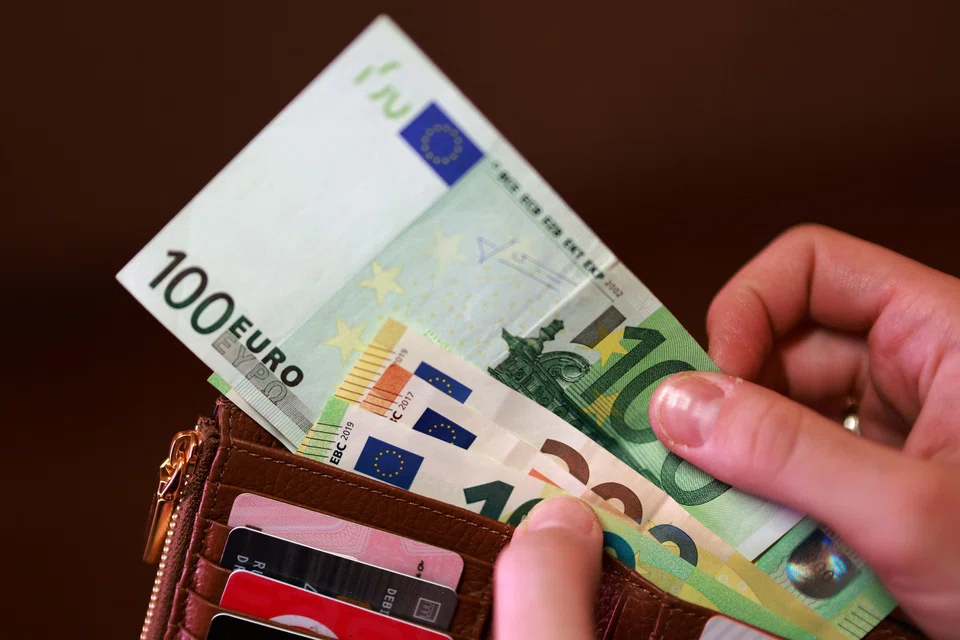
INTERNATIONAL use of the euro rose slightly in 2025, but stayed well below that of the US dollar, highlighting the difficulty of mounting a global challenge to the greenback’s supremacy.
Overall usage of the common currency increased to about 20 per cent, the European Central Bank (ECB) said on Tuesday (Jun 2) in an annual assessment. It held at the same level in foreign-exchange reserves, still only about a third of the greenback’s allocation.
The ECB said that international debt issuance in euros hit a record high, and that the euro led for the first time in the global market for green and sustainable bonds. But it also found a notable drop-off in the currency’s use for daily foreign-exchange trading.
European officials have sought to chip away at the American currency’s international dominance as Donald Trump’s erratic policymaking and attacks on the Federal Reserve since his return to the presidency dented confidence in the US.
ECB President Christine Lagarde has gone as far as discussing a potential “global euro moment”, urging politicians to strengthen the euro’s role so the currency bloc can enjoy more of the greenback’s privileges, including lower borrowing costs.
“There is an opening for the euro to enhance its global appeal – provided that European policymakers create the necessary conditions and put words into action,” Lagarde wrote in Tuesday’s report. Economic resilience, legal and institutional integrity, and geopolitical credibility must be reinforced, she said.
However, the report also laid out the scale of the task.
One problem is central banks’ accumulation of gold holdings amid persistent geopolitical tensions. While purchases decreased to about 850 tonnes from more than 1,000 tonnes in 2024, the metal remained the second-largest global reserve asset at market prices.
Some countries have also advanced alternative cross-border payment systems, including those based on digital technologies, the ECB said, calling the trend another sign of fragmentation in the international monetary system.
The ECB also stressed that the use of China’s renminbi, while still low overall, notably increased in areas such as daily foreign-exchange trading and trade financing, with the Middle East conflict potentially triggering further gains.
“Industry experts have suggested that the conflict could serve as a catalyst for an expansion of the renminbi’s role in global oil markets,” it said, citing reports that some ships made transfers in the currency via China’s Cross-Border Interbank Payment System or crypto assets to transit through the Strait of Hormuz in March and April.
The report again urged concrete steps towards completing the savings and investments union under an “ambitious” timetable.
“Additional steps like joint financing of public goods would help establish a safe and liquid pool of EU public debt,” Lagarde wrote in the report, repeating a proposal that is highly controversial in places such as Germany. BLOOMBERG
Decoding Asia newsletter: your guide to navigating Asia in a new global order. Sign up here to get Decoding Asia newsletter. Delivered to your inbox. Free.
Share with us your feedback on BT's products and services
TRENDING NOW

Two Singapore-listed palm oil firms named in Greenpeace report on Indonesian plantation fires
Singapore Airlines flight returns to San Francisco after ‘unruly’ passenger incident

Singapore looking into which companies responsible for haze-causing fires: PM Wong

Deluge IPO 3.86 times subscribed ahead of SGX debut

