

Eurozone inflation jumps most since 2022 on energy costs
Expectations are that the ECB will have to raise interest rates
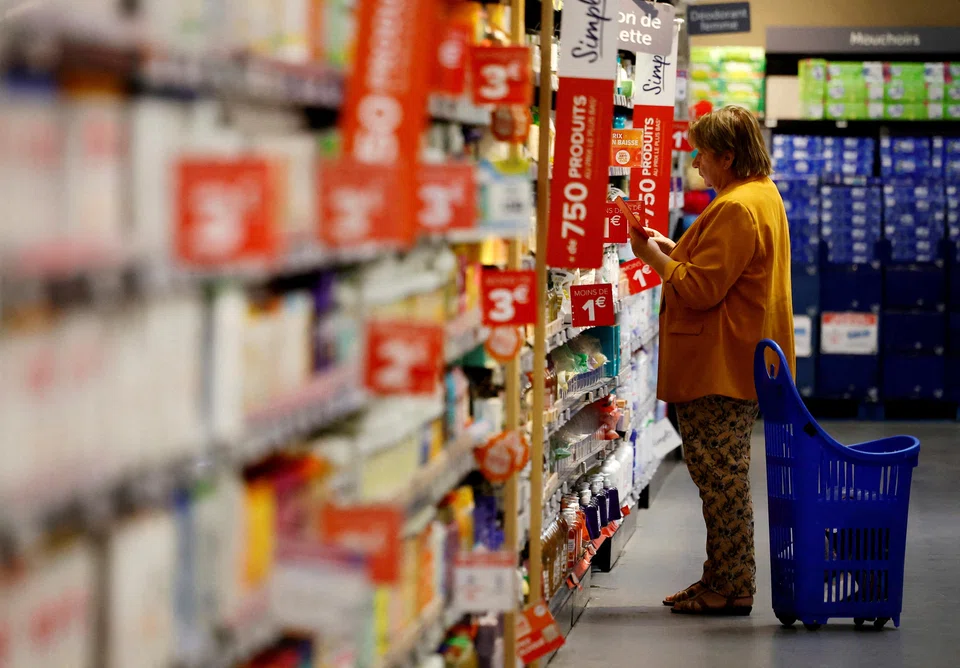
[BRUSSELS] The euro area saw its steepest jump in inflation since 2022 as the Iran war pushed energy costs sharply higher, backing expectations that the European Central Bank will have to raise interest rates.
Consumer prices rose 2.5 per cent from a year ago in March – up from 1.9 per cent the previous month and the highest since January 2025. The reading is just below the 2.6 per cent median estimate in a Bloomberg survey.
Core inflation, which excludes volatile items like food and energy, unexpectedly slowed to 2.3 per cent, while the closely watched services gauge also eased, Eurostat said on Tuesday (Mar 31).
German bonds held small gains, leaving 10-year yields one basis point lower at 3.02 per cent and not far below the 15-year peak reached last week. Traders kept wagers on the ECB increasing rates two or three times this year, with the first move likely next month.
With the conflict in the Middle East now extending beyond a month, its effects are increasingly being felt in Europe, where not only inflation but expectations on where prices are headed are picking up markedly.
Governments and central banks in the region are also slashing their projections for economic growth, while firms are bracing for a hit to demand among their customers.
The ECB says it won’t to allow a repeat of the inflation spike that followed Russia’s invasion of Ukraine in 2022, vowing to act quickly and decisively as needed. But with no clarity on when the fighting will end, officials are still assessing the toll.
Elevated oil and natural gas prices are already casting doubt on the ECB’s baseline outlook for inflation to average 2.6 per cent this year. Under a more extreme outcome, price gains could peak at as high as 6.3 per cent in 2027.
“Today we can say that the base-case scenario – for which assumptions were locked in on March 11 – can probably be considered to be the optimistic scenario,” Estonian central-bank chief Madis Muller said on Tuesday in Tallinn. “We certainly can’t rule out changes in interest rates already in April if energy prices remain at a high level for a long time.”

Powerless to prevent the gyrations in energy markets, the ECB is instead focused on avoiding second-round effects including excessive increases in wages and selling prices. It’s also worried about knock-on effects to things like fertiliser and food prices that help shape households’ perceptions.
A survey published on Monday showed consumers’ inflation expectations surged in March, while firms also anticipate marking up their prices sharply. Market-based indicators have also already reacted. Long-dated inflation swaps jumped in the early days of the war, before paring much of the move as traders started to price rate hikes.
Croatian central-bank chief Boris Vujcic said views of faster inflation were “what we have expected,” while his Italian counterpart Fabio Panetta said it’s “essential to monitor expectations closely and to prevent a wage-price spiral, while ensuring that monetary-policy action remains proportionate.”
Their Bulgarian colleague Dimitar Radev argued that past inflation shocks have left a “durable imprint” on European consumers and highlighted that “developments that were previously perceived as external shocks are now feeding directly into inflation expectations, energy prices, financing conditions and broader confidence.”
In a speech text published on Tuesday, he said risks to the inflation outlook “are not only elevated” but also “asymmetric and closely linked to geopolitical developments.”
Individual countries saw mixed inflation results for March. In Italy, there was no uptick at all, with the reading unexpectedly coming in unchanged at 1.5 per cent. French inflation quickened, but didn’t quite reach 2 per cent. Germany and Spain, which reported numbers earlier, recorded more rapid price increases, of 2.8 per cent and 3.3 per cent.
Further accelerations are expected and will only add to pressure on the ECB.
“The longer the war in Iran lasts and the more destructive it becomes, the greater the risk of inflation will be,” Slovakia’s Peter Kazimir said. “Consequently, the sooner and more decisively we’ll have to respond.” BLOOMBERG
Decoding Asia newsletter: your guide to navigating Asia in a new global order. Sign up here to get Decoding Asia newsletter. Delivered to your inbox. Free.
Share with us your feedback on BT's products and services
TRENDING NOW

DBS, OCBC, UOB rout lops billions off STI as inflation, rate concerns spook investors

Grab CEO’s wife Chloe Tong on life with Anthony Tan and finding her purpose

OCBC sheds S$8 billion in value as shares close nearly 6% down; analysts cautious on banks

Deal between tycoon friends sparks scrutiny of Philippine power sector

