

Eurozone private sector contraction eases in June, but services stay weak, PMI shows
June’s reading of the S&P Global Flash Eurozone Composite PMI rose to 49.5 from 48.5 in May
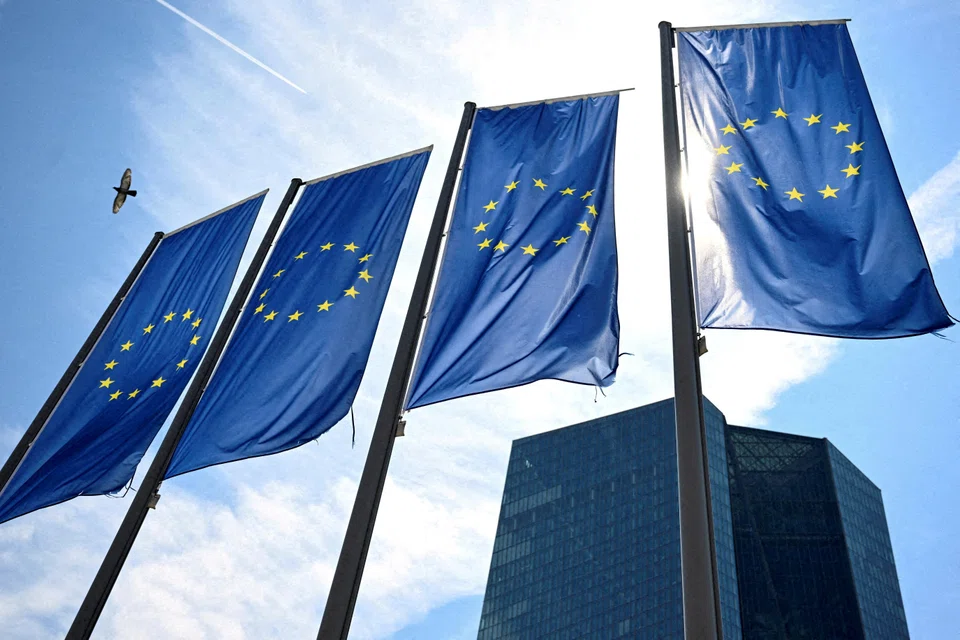
[LONDON] Eurozone private sector activity shrank for a third straight month in June, though at a slower pace, as a modest recovery in tourism and leisure demand failed to fully offset a sustained fall in new business, a survey showed on Tuesday (Jun 23).
June’s reading of the S&P Global Flash Eurozone Composite PMI rose to 49.5 from 48.5 in May, a three-month high. A number below 50.0 signals a contraction.
“The eurozone economy is showing enough resilience to just about stay out of recession,” said Chris Williamson, chief business economist at S&P Global Market Intelligence. “The flash PMI registered only a slight drop in business activity in June, meaning the survey is indicative of unchanged GDP over the second quarter.”
A Reuters poll published at the start of June predicted a 0.1 per cent expansion of the economy this quarter.
New orders fell for the fourth consecutive month in June but at a slower pace. A marginal recovery in manufacturing new orders was not enough to offset a continued decline in services demand.
Most survey responses were collected before the US-Iran ceasefire memorandum was signed on June 17.
The Flash Eurozone Services PMI edged up to 48.9 from 47.7 in May – a three-month high – but remained in contraction territory. Germany posted its sharpest drop in business activity in 18 months but France’s rate of decline eased. The rest of the eurozone as a whole recorded modest output growth.
Employment fell slightly in June, although the private sector has now had six straight months without adding jobs. Services staffing nudged slightly higher, but manufacturing payrolls continued to shrink.
On prices, input costs rose at their slowest pace since just before the outbreak of war in the Middle East in February, easing across both manufacturing and services. Output price inflation also slowed but by less than input costs.
“Encouragingly, lower energy prices are already filtering through to businesses and rates of input cost and selling price inflation have moved lower in June as a result, hinting at a potential peaking of the recent price spike,” Williamson added.
The European Central Bank hiked interest rates on June 11 as a war-related energy cost surge pushed overall inflation over 3 per cent, well in excess of the ECB’s 2 per cent target.
The Flash Eurozone Manufacturing PMI dipped to 51.3 in June from 51.6 – a four-month low. Factory output continued to expand, supported by inventory building as clients sought to get ahead of potential future price rises and supply disruptions.
Business confidence improved for a second consecutive month after hitting a 31-month low in April, but sentiment remained relatively subdued overall. REUTERS
Decoding Asia newsletter: your guide to navigating Asia in a new global order. Sign up here to get Decoding Asia newsletter. Delivered to your inbox. Free.
Share with us your feedback on BT's products and services






