

ExxonMobil’s latest Singapore facility signals that innovation can continue amid global challenges: DPM Gan
The move comes even as the company is set to lay off 10% to 15% of its Singapore workforce by end-2027

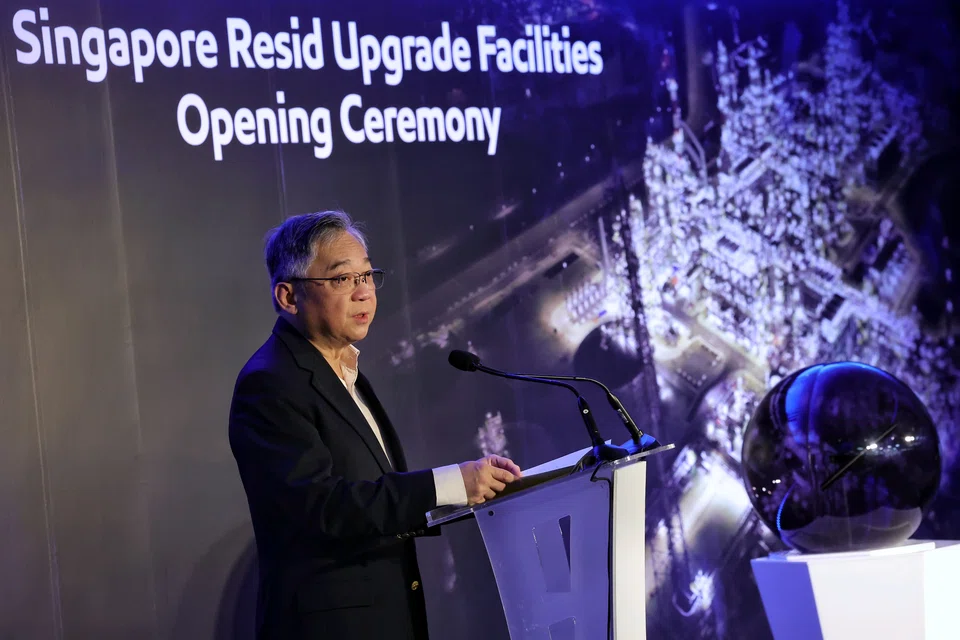
[SINGAPORE] A new facility set up by oil giant ExxonMobil on Jurong Island shows that innovation can carry on even with ongoing challenges, said Deputy Prime Minister Gan Kim Yong on Tuesday (Dec 16).
“(This) facility signals something larger: that even in a challenging global environment, we can continue to upgrade, innovate and create long-term value,” said DPM Gan.
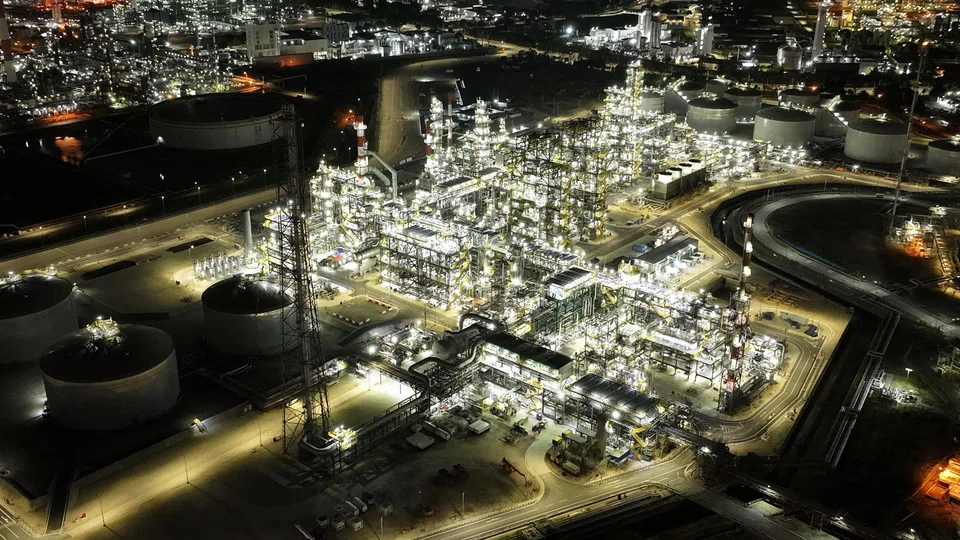
He was speaking at the official launch of ExxonMobil’s Singapore Resid Upgrade facility, which converts heavy residues from crude oil refining into useful products, namely lower-sulphur fuels and higher-value lubricant base stocks.
With the new plant, ExxonMobil’s Singapore complex is now the largest manufacturing site in the world for base stocks – a key component for producing lubricants, which are used in automotives and for industrial applications.
This is also the only facility where ExxonMobil produces EHC 340 MAX, a base stock designed for better low-temperature performance and efficient formulation cost. It will be exported from Singapore to ExxonMobil’s key Asian markets, as well as to its distribution hubs in the US and Europe.
The Resid Upgrade Project comes even as ExxonMobil is set to lay off 10 to 15 per cent of its 3,500-strong Singapore workforce by end-2027, amid the global oil and gas down cycle.
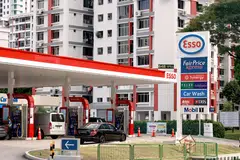
The company has also agreed to sell its Esso retail stations in Singapore to Indonesia’s Chandra Asri, and is reportedly set to shutter one of its steam cracker plants on Jurong Island in March 2026.
Speaking at the launch, ExxonMobil senior vice-president Jack Williams noted that the company faces “fierce competition” throughout Asia, and that the new facility will help it compete.
“However, we’ve had to make some difficult decisions to further improve the competitiveness of this site,” he added.


Dealing with structural shifts
DPM Gan outlined three headwinds the energy and chemicals sector is facing: global overcapacity, shifting demand patterns and the green transition, which is reshaping the expectations of customers, regulators and societies.
“These are structural shifts that call for adaptation, innovation and a willingness to transform,” he added, highlighting Singapore’s efforts to transform Jurong Island into a premier hub for specialty chemicals and sustainable materials.
The Republic will work with industry leaders such as ExxonMobil to strengthen capabilities in higher-value, lower-carbon and green manufacturing. The company has become a “cornerstone” of the energy and chemicals sector in Singapore, said DPM Gan.
ExxonMobil has more than S$30 billion in fixed asset investments in Singapore. The company made the final investment decision on the resid project in 2019, but the plant’s opening was delayed by two years due to the Covid-19 pandemic.
During the pandemic, ExxonMobil worked closely with the government to resolve manpower constraints and supply chain disruptions.
Extensive work was also required to integrate the manufacturing site’s existing operating units and 22 new reactors, and to install more than 150 km of new pipeline. The latter is equivalent to about three times the length of Singapore from east to west.
The Resid Upgrade Project increases ExxonMobil’s production capacity of a certain class of base stocks, known as Group II base stocks, by 20,000 barrels per day. This includes up to 6,000 barrels per day of the EHC 340 MAX.
“This new facility will strengthen Singapore’s energy and chemicals sector, by anchoring high-value manufacturing and supporting our shift to specialty and performance products,” said DPM Gan.
“This is the kind of investment – forward-looking, capability-enhancing and sustainability-aligned – that will underpin the next phase of growth for the sector.”
He expressed hopes that ExxonMobil will continue to see the Republic as a long-term strategic partner – not just for production, but also to develop new technologies and capabilities.
Decoding Asia newsletter: your guide to navigating Asia in a new global order. Sign up here to get Decoding Asia newsletter. Delivered to your inbox. Free.
Copyright SPH Media. All rights reserved.
TRENDING NOW

Once staunchly pro-China, Malaysian Chinese businesses are now distancing themselves from Beijing

Looking beyond looming CEO succession, should UOB potentially pursue a transformative merger?

Could stablecoins be the future of money?

Grab CEO’s wife Chloe Tong on life with Anthony Tan and finding her purpose

