Fewer ships transiting Strait of Hormuz along Oman coast after U-turns
No immediate explanation has been given for the sharp reversals
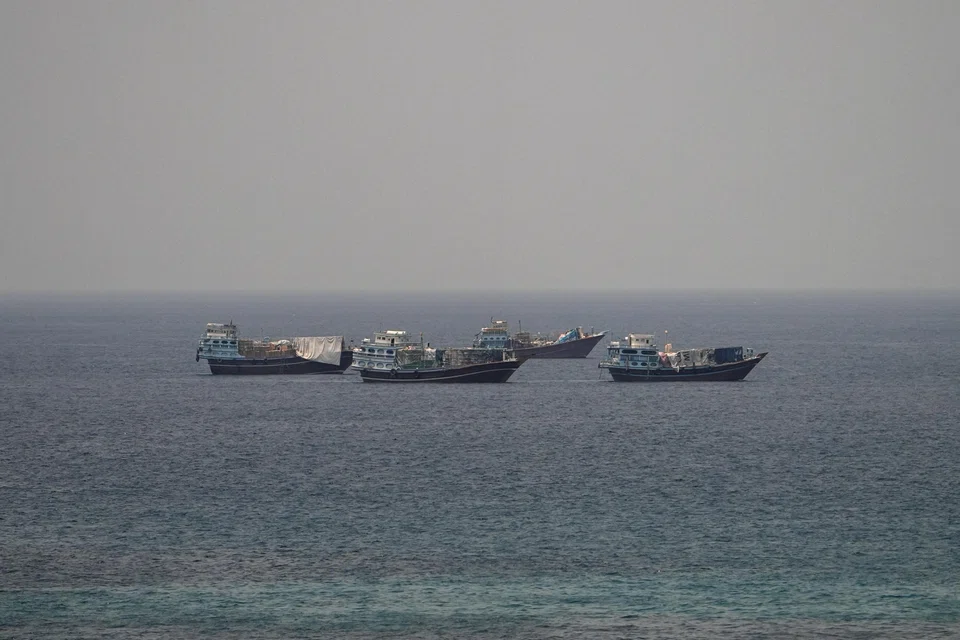
THE number of vessels sailing through the Strait of Hormuz along the Omani coast fell to a trickle on Sunday (Jul 5), a day after several exiting along that route made sharp reversals, underscoring Iran’s continued efforts to maintain its grip on the waterway.
One products tanker that turned around on Saturday appears to be making a fresh attempt, sailing past the tip of Oman’s Musandam peninsula.
A products tanker transited along the same route earlier, openly signalling its intentions, and is now broadcasting a position in the Gulf of Oman.
Others are opting to cross in the dark. One Suezmax crude carrier appeared in the Gulf of Oman after last broadcasting from within the Persian Gulf on Saturday.
Over Friday and Saturday, at least eight vessels were seen U-turning as they sailed through Hormuz along the Omani route. Four of them then went on to sail northward towards the Iranian route, and left the strait.
There was no immediate explanation for the sharp reversals, though Iran has repeatedly said that vessels should only transit the strait through the route designated and authorised by the Islamic Republic. Naval liaison groups have yet to comment on the abrupt U-turns.
On Saturday, 19 vessels crossed the Strait of Hormuz in either direction, but only one openly signalled its inbound transit along the Omani coast, Kpler data shows.
That compares with Friday’s count of 13 along that route. This tally includes only observed transits, and figures may change as more dark crossings – made without transponders switched on – are verified.
For much of the war, several ships attempting to leave the Persian Gulf through Hormuz have reported warnings by Iranian forces over radio communications, saying that they should not proceed without getting Teheran’s permission.
Iran has fired on some of the vessels that sailed on.
Tanker companies have been struggling with the stop-start reopening of Hormuz. Their willingness to take on the risk of crossing the narrow waterway is crucial for the normalisation of the oil market, still recovering from a historic four-month crisis. BLOOMBERG
Decoding Asia newsletter: your guide to navigating Asia in a new global order. Sign up here to get Decoding Asia newsletter. Delivered to your inbox. Free.
Share with us your feedback on BT's products and services