

German manufacturing sector contracts at fastest rate in a year, PMI shows
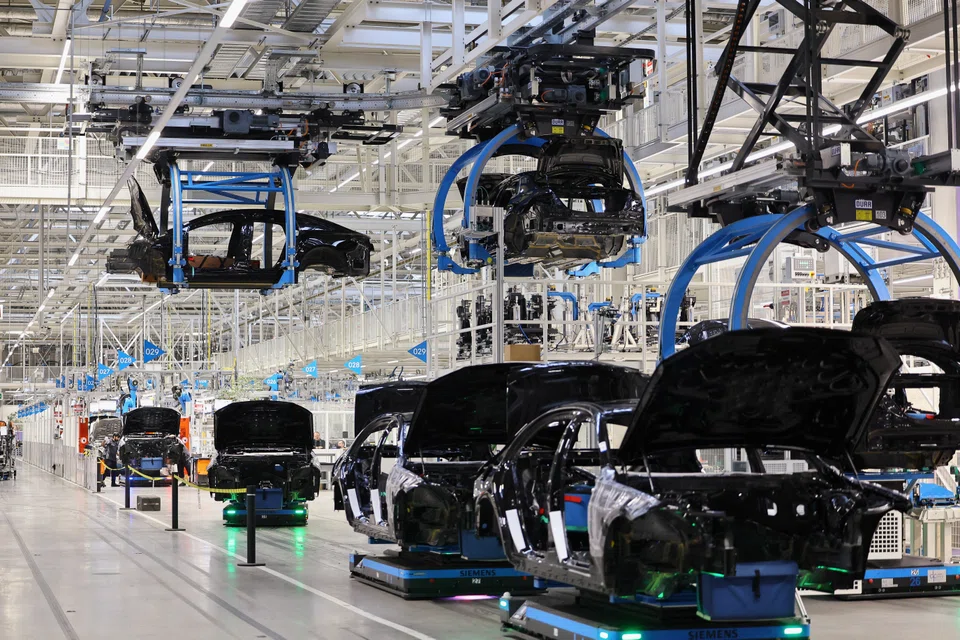
GERMANY’S manufacturing sector contracted at its fastest pace in a year in September, driven by sharp declines in output, new orders, and employment, a survey showed on Tuesday (Oct 1).
The HCOB Germany Manufacturing Purchasing Managers’ Index (PMI), compiled by S&P Global, fell to 40.6 in September from 42.4 in August, marking the fourth consecutive month of a deepening slowdown and the lowest reading in 12 months. Any figure below 50 indicates a contraction in activity.
The final reading is slightly above the preliminary reading of 40.3.
“The figures are adding fuel to the debate around deindustrialisation,” said Cyrus de la Rubia, chief economist at Hamburg Commercial Bank. “With orders drying up at an alarming rate, it is hard to picture any kind of recovery happening soon.”
New orders saw the steepest decline since October last year, reflecting market uncertainty, investment reticence, and weakness in the automotive sector.
Export sales also posted the sharpest drop in 11 months, with firms citing reduced demand from Asia, Europe, and North America.



“Looking back over the last 30 years, the slump in export orders is unprecedented,” added de la Rubia. “Many companies, especially in the automotive and mechanical engineering sectors, have not yet found convincing answers to the sudden intensification of competition.”
Workforce retrenchment gathered pace in September, leading to the steepest contraction in factory employment in over four years, the survey showed.
Business confidence deteriorated sharply, turning negative for the first time in seven months. More than one-third of surveyed firms predicted a decline in output over the next 12 months, citing weaker demand, geopolitical uncertainty, and troubles in the automotive sector. REUTERS
Decoding Asia newsletter: your guide to navigating Asia in a new global order. Sign up here to get Decoding Asia newsletter. Delivered to your inbox. Free.
Share with us your feedback on BT's products and services






