



Bessent’s unprecedented grasp on Japan policy tests Takaichi
His knowledge of Japan is “unprecedented” for a Treasury chief, according to Ken Weinstein
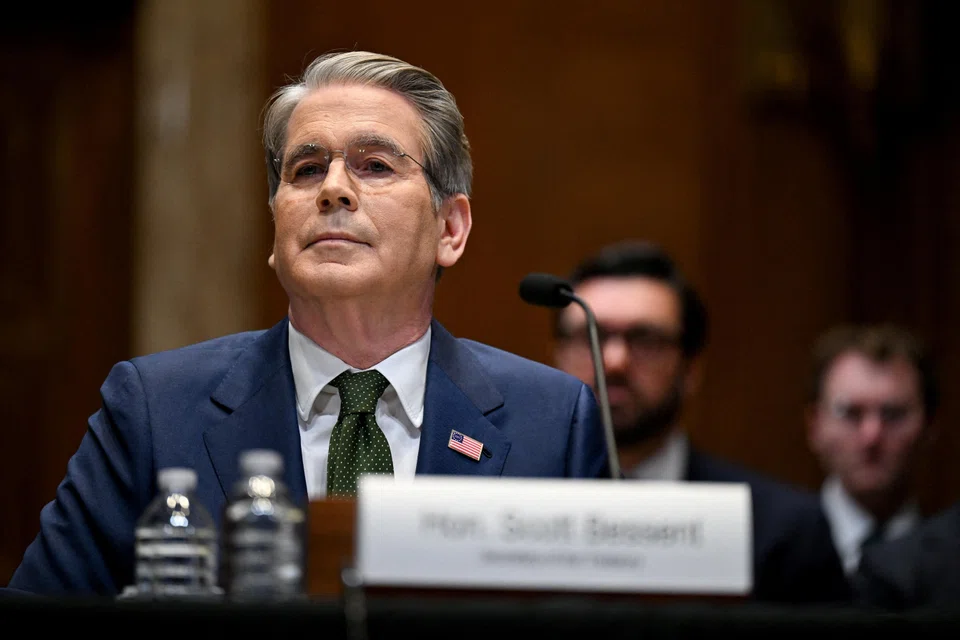
WHEN a major meltdown in Japanese bonds spilled over into US Treasuries during Scott Bessent’s high-profile visit to Davos in January, he had more than a few words for his Japanese counterpart.
The US Treasury secretary embarked on what Japanese officials viewed as more of a reprimand than a typical catch-up with Finance Minister Satsuki Katayama on the sidelines of the World Economic Forum, according to people familiar with the matter, who spoke on condition of anonymity to describe the private exchange.
According to one of the people, Bessent fired off points so rapidly, her note-taking aide struggled to keep up. The people didn’t reveal details of his requests.
Bessent also piled public pressure on Katayama, telling Fox Business he’d spoken with his Japanese counterparts and was “sure” they’d speak to end the volatility.
Shortly after, she urged markets to calm down, emphasising that Japan was pursuing a “responsible and sustainable” fiscal policy, a message that appeared to settle some of the nervousness among investors over the nation’s spending plans.
The episode shows how Bessent — who placed some of his most fruitful bets in Japan during his former career as a hedge fund manager — is taking an unusually assertive approach to shaping the economic trajectory of America’s top Asian ally.
With the US continuing to borrow more, the Trump administration is unlikely to welcome developments in Japan that indirectly bump up already elevated Treasury yields.
His detour en route to Donald Trump’s summit with Xi Jinping in China may also offer reassurance to Japan that Washington isn’t focused exclusively on its relationship with Beijing as tensions continue to simmer between the two Asian rivals.
But for Prime Minister Sanae Takaichi, the Treasury secretary’s attention is a double-edged sword, as she tries to balance US support with control over her domestic policy agenda.
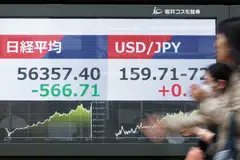


Bessent’s third trip to Japan in little more than a year as Treasury chief kicks off on Monday. Investors will be watching closely for any signs of tension as he arrives after multiple days of suspected large-scale yen intervention by Tokyo to prop up the currency. Bessent has criticised that approach in the past and favours interest rate hikes instead.
“Japan may have little room to push back if he steps up his demands,” said Chotaro Morita, who’s analysed Japan’s markets for more than three decades and is chief strategist at All Nippon Asset Management. “There is little doubt Bessent’s remarks on Japan will be critical.”
The US Treasury Department didn’t respond to a request for comment on Bessent’s trip. Japan’s Finance Ministry also didn’t reply to a request for comment.
The visit by Bessent speaks to both the risks Japanese financial flows pose to American markets, and Tokyo’s importance as a partner to Washington amid rivalry with Beijing. It will also take Bessent’s personal tally of visits to Japan since 1990 to 54, by his own count — a testament to his long-standing fascination with the country.
Bessent will meet with Takaichi and Katayama on Tuesday before heading to Seoul on Wednesday for talks with his Chinese counterpart He Lifeng, according to a post from his account on X. China’s Commerce Ministry confirmed that the talks in Seoul will focus on trade ahead of the Trump-Xi summit.
South Korean Finance Minister Koo Yun Cheol said on Monday that he currently has no plans to meet either Bessent or He this week.
Discussions during the Treasury secretary’s sojourn in Tokyo are likely to span supply-chain resilience and the Iran war in addition to currency markets.
Bessent’s knowledge of Japan is “unprecedented” for a Treasury chief, according to Ken Weinstein, Japan chair at the Hudson Institute. Trump nominated Weinstein as ambassador to Tokyo during his first term.
“The information advantage a Japanese finance minister normally has over a US Treasury secretary when dealing with Japanese issues is significantly reduced when Scott Bessent is in the room,” Weinstein said.
Breathing room
Days after that intense meeting with Katayama in Switzerland, Bessent took the extraordinary step of helping Japan prop up a falling yen by authorising a so-called rate check. Such calls to currency traders act as a warning of a potential entry into the market.
The move helped provide Japan some breathing room by scaring off speculators and staving off the need for actual intervention at the time.
Atsushi Takeuchi, a former head of the BOJ’s foreign exchange division — who executed currency interventions in 2010-11 on behalf of Japan’s Finance Ministry — was taken aback by that manoeuvre.
“Nobody in the market had probably heard of a US rate check for the yen before — it made a huge impact,” said Takeuchi, who now heads the Ricoh Institute of Sustainability and Business. “I didn’t even think about that option when I held that position.”
Bessent may have aided Japan then, but his personal preference for how Japan should handle its economy appears to include allowing the yen to find an appropriate level as the central bank normalizes policy.
Last August, Bessent declared that “the Japanese have an inflation problem” and that the BOJ was “behind the curve” in raising interest rates. During a Tokyo visit in October, he called on the Takaichi administration to give the BOJ space to combat inflation — a day before its policy announcement.
The US last adopted such an assertive posture on Japanese economic policy under former President Bill Clinton. The Clinton administration extracted economic concessions to address Tokyo’s trade surplus with Washington in the 1990s.
Among other acts of pressure before that, US officials negotiated the Plaza Accord in the mid-1980s, a currency arrangement that led to a significant appreciation of the yen. Some analysts say that move helped inflate Japan’s bubble economy, ending in the crash that triggered decades of low growth.
Bessent’s trip this week comes as market speculation builds for a BOJ rate hike in the middle of next month. Japanese bonds have slid further since the Davos episode, last month sending 10-year yields to their highest since 1997.
Bessent has identified the US equivalent as his most important market metric. Any Japan-driven increase in Treasury yields would complicate the Trump administration’s goals.
That helps explain Bessent’s intense exchange with Katayama in January. Takaichi’s plans for a more active fiscal policy and her consideration of a sales tax cut continue to stoke concern among investors that Tokyo is underestimating the potential longer-term impact of a more expansionary fiscal policy and its reluctance to take a harder line on inflation.
Japan is still very much a “buy” for global investors, Katayama insisted in an interview with Bloomberg in Davos following her exchange with Bessent.
Rising tax revenues as the economy grows and the cutting back of unnecessary spending will enable the government to forge ahead with plans to boost the nation’s investment in key growth industries without the need for extra bond issuance beyond budgeted levels, she indicated.
Takaichi’s historic election landslide in February also helped reassure investors that her government was on a more secure footing to steer policy after it won a large majority in the lower house of parliament. Progress on the costly move of temporarily cutting the sales tax on food has also been slow, with no date yet set, if it happens at all.
Still, yields in Japan continue to creep up, maintaining the potential to buffet Treasuries. Since the conversation in Davos, Tokyo has also stepped into the currency market, spending as much as 10 trillion yen (S$81.3 billion) to prop up the yen. Continued interventions, often financed by the sale of Treasuries, might also bump US yields potentially causing further concern for Bessent.
At the same time, as interest rates rise in Tokyo there’s also the possibility that outflows of money from Japan into overseas assets including US securities may slow.
Japan is in the middle of an economic regime shift, said Tim Adams, chief executive of the Institute of International Finance, adding that the BOJ’s gradual exit from ultra loose monetary policy “changes the global equilibrium.”
The “potential reallocation of Japanese capital back onshore” has implications for global markets including US Treasuries, said Adams, who once served as Treasury undersecretary for international affairs. “Treasury needs a close line of sight into that transition.”
Hotel Okura
Bessent’s attention to Japanese markets dates all the way back to 1990, when he arrived at the tail-end of the bubble era and the start of what became the nation’s “lost decades.”
Staying at Tokyo’s renowned Hotel Okura for about three months, Bessent recalled in a recent podcast interview that the room rate was US$500 a night. By 2011, that had come down to US$350 — “so that told you about the malaise there,” he said.
“I’m very familiar with Japan — I’d seen the up, I saw the down,” he said. “Then I saw the stasis for a long time.”
Bessent picked up on the winds of change in a pivotal 2012 meeting at his alma mater, Yale University. Accompanying his boss, billionaire hedge fund legend George Soros, he met with Koichi Hamada. The Yale economics professor was a key member of a brain-trust advising former Prime Minister Shinzo Abe.
Hamada outlined an early iteration of what became Abenomics — the programme Abe used to try and reflate Japan’s economy after he returned to power in December that year.
“I grew increasingly excited by the potential magnitude of the market moves if these policies were implemented,” Bessent recalled of the meeting in an article for the International Economy magazine in 2022. He wrote that he told Soros it would be “the market ride of a lifetime.”
Bessent began to shuttle from New York to Tokyo on a monthly basis to get a better grasp of the changes in Japan. While exact returns aren’t public, Soros made around US$1 billion on bets against the yen from November 2012 to early 2013.
By 2022, Bessent viewed the BOJ as entering the “end-game” for ultra-loose policy. His own firm, Key Square Capital Management, was profiting from bets on the yen, helping the macro hedge fund post a 30 per cent gain. In his International Economy column, he suggested the sea-change in Japanese monetary policy could roil global markets, having “anchored interest rates” for years.
Since then, the BOJ has ended the largest monetary stimulus program in modern history. Under BOJ Governor Kazuo Ueda from April 2023, the central bank has taken its benchmark interest rate from below zero to a positive 0.75 per cent — still well below almost all peers.
Given Bessent’s comments on BOJ policy, talks with Ueda in Tokyo were also expected to take place, but his trip to Seoul now makes a meeting with the BOJ governor less likely. Bessent said he’s known Ueda for more than a decade.
“He probably has long thought that the BOJ is too slow to raise rates,” said Seiichiro Takahashi, founder of global macro fund Hawksbridge Capital. Bessent cited Takahashi in his 2022 column as a friend of both his and the late Abe.
Bessent met with Takahashi at the US embassy in Tokyo last July. “We talked about how the yen’s excessive weakness would be corrected if the BOJ keeps raising rates,” said Takahashi, who has a glass-walled room in his office modelled after one he saw in Bessent’s.
With much at stake for Japan as it contends with surging energy costs and a contentious relationship with China, Japanese officials are likely to tread carefully during Bessent’s visit.
“He understands the country well,” said Morita at All Nippon. “But that doesn’t mean he will take a friendly stance.” BLOOMBERG
Decoding Asia newsletter: your guide to navigating Asia in a new global order. Sign up here to get Decoding Asia newsletter. Delivered to your inbox. Free.
Share with us your feedback on BT's products and services
TRENDING NOW
Gas Supply may pursue remedies if contract breached following Indonesia’s export cuts: Tan See Leng

Why the biggest business decision about AI isn’t which model to choose
If Europe goes to war, the fallout will be felt in East Asia
Singapore expects all parties to honour commitments, says PM Wong after Indonesia cuts gas exports

