


Beyond Fed’s expected hike, worries remain over pay and Putin
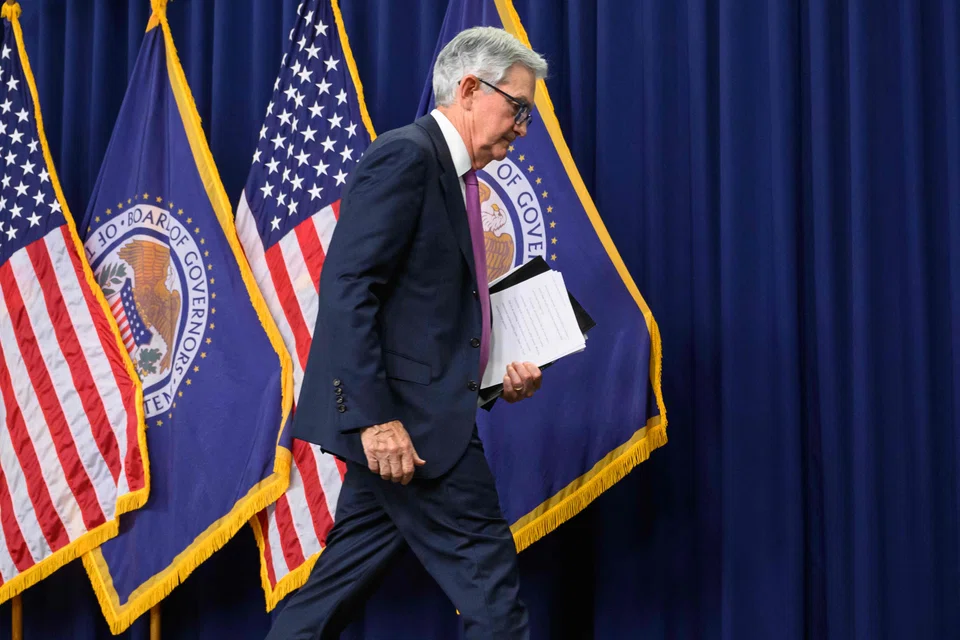
SOMETIMES, the stock market’s direction is decided by a single word change in the US Federal Reserve’s statements. This time around, billions of dollars may depend on the tone of the chairman’s voice.
The odds of Jerome Powell’s rate-setting committee resuming its rate hikes this Wednesday (Jul 26) – bringing rates to a near two-decade high of 5.5 per cent after a pause in May – are overwhelmingly high. Traders are also pretty confident about what Powell will say at his press conference: that the US central bank remains dependent on data and still sees signs of danger from inflation.
If Powell’s tone of voice betrays a feeling that the Fed has vanquished inflation and is merely awaiting confirmation from the data, stocks could take flight. If he exhibits any nervousness about an incipient rebound in food and energy prices, a big chunk of the bull-market gains could evaporate.
Depending on the tone at his press conference, the Fed could give the market a subtle hint that the new hike is a “one and done”, said Quincy Krosby, chief global strategist at brokerage LPL Financial.
Recent data has suggested that the worst of the inflation crisis may be behind us. The inflation charts are now tracing a clear narrative arc: inflation peaked last summer as the shock to the global economy from the Ukraine war registered and Covid 19-ruptured supply chains could not facilitate the post-pandemic shopping spree.
In the last 12 months, supply chains were gradually repaired or “near shored”, consumers switched to services spending from product buying and the world grew accustomed to the brutality of the Ukrainian conflict. Plus, the Fed’s actions succeeded in slowing economic activity. The surge in mortgage rates cooled demand for homes. Petrol prices started the summer closer to their Covid-19 lows than their 2022 highs.
As a result, consumer price inflation plunged to around 4 per cent in June, from a peak of over 9 per cent a year earlier. The clear moderation in inflation allowed Powell to skip a rate hike in May after more than a year of action every six weeks.
If the inflation rate was all that mattered, the Fed might reverse plans for a rate hike on Wednesday, said analysts at money manager Schroders. But that “would trigger a rally in bond markets, which would loosen financial conditions”, undoing much of the hard work the central bank has done to prevent speculative inflation of risky assets.
There’s another threat to the inflation story’s happily-ever-after that the Fed may not be able to ignore – Russian President Vladimir Putin. If there’s a villain in this story, Putin is it. He unleashed the global inflation scourge in 2022, and he has struck again.
After six months of a de facto truce on the Black Sea, where both sides guaranteed safe passage for grain ships, Putin once more attacked Ukrainian ports. Ukraine responded in kind, warning that no ship approaching Russian ports would be immune from attack. The tit-for-tat policies put one fifth of global wheat supplies in jeopardy.
A new round of food inflation seems inevitable. Wheat futures have jumped about 20 per cent since the grain-export deal fell apart a week ago, and that has spilled over into other agricultural commodities. Pork products in the US are retesting all-time highs.
“The bad news they could deliver is they are still concerned about core inflation,” said Krosby. “They could acknowledge that the ‘stickiness’ has begun to disentangle but perhaps not quickly enough.”
It is a confusing economic picture, with factory output slowing and the housing market stalling even as restaurants and airlines are experiencing booming demand and the job market remains red hot. Consumer spending and inflation are rising modestly as the increase in services spending is offset by waning demand for hardware.
Even former Fed chair Ben Bernanke has been wrong-footed by the economic environment. He told an audience recently that Powell’s Fed was likely to raise rates this week, but that the September plan was “up for grabs”.
One strategist noted that the Fed is far from declaring victory in its fight against inflation.
“Despite all signs pointing to inflation well on its way to returning to historical norms, the Fed continues to worry about elevated wage pressures,” said Brent Schutte, chief investment officer at money manager Northwestern Mutual Wealth Management.
“It continues to view wage growth as the last domino needed to fall to prevent a return to the stagflation years of 1966 to 1982. Until annualised wage increases consistently register below 4 per cent, we believe the Fed will be unwilling to take rate hikes off the table.”
Analysts at brokerage Morgan Stanley estimate that the Fed will start to cut rates about nine months from now, in March 2024. Schroder said that there was a possibility that Powell will strike a neutral tone, and that the central bank meeting will be a non-event.
But artificial intelligence (AI), it appears, can do anything – even loosen the Fed’s grip on global markets. The biggest thing on the stock market in the last four weeks has not been interest rates, but AI. And the biggest thing in AI today is tech giant Microsoft, which reports earnings on Tuesday, the day before Powell takes centre stage.
Decoding Asia newsletter: your guide to navigating Asia in a new global order. Sign up here to get Decoding Asia newsletter. Delivered to your inbox. Free.
Share with us your feedback on BT's products and services






