



Beyond trade: The renminbi’s next act in Asean
Firms are increasingly evaluating the Chinese currency on tangible economics, says StanChart’s Karen Ng

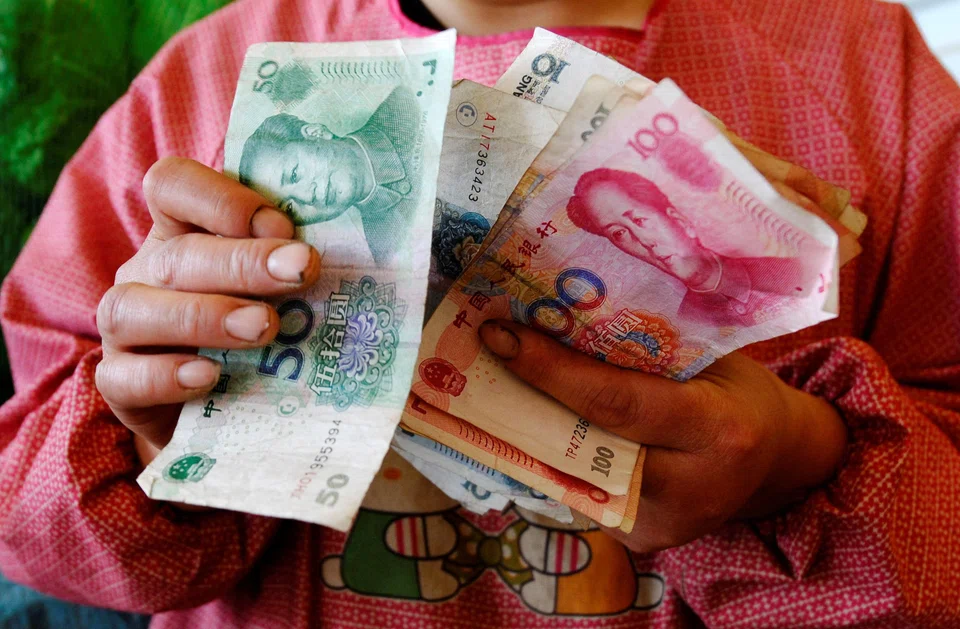
[SINGAPORE] Trade settlement was just the beginning of Asean’s adoption of the renminbi. As firms increasingly incorporate the Chinese currency into their treasury strategies, financing and capital markets are emerging as its next frontiers.
The key driver for the use of the renminbi in South-east Asia has shifted from policy to commercial rationale, said Standard Chartered’s head of China opening and renminbi internationalisation Karen Ng.
Historically, adoption of the currency was concentrated among Chinese corporates and across China-linked supply chains, she noted.
Today, businesses increasingly assess it on tangible economics: to reduce foreign-exchange conversion costs, lower funding costs, and better match the currency of their trade, financing and cash flows. While this shift has been gradual, it has become more visible over the past two to three years.
Indeed, the renminbi is not merely being considered as a lower-cost funding currency. As its offshore ecosystem matures, it is also being evaluated as an additional capital market that provides access to a differentiated investor base, she said.
“Many issuers increasingly view renminbi capital markets as a strategic funding channel that complements their existing US dollar and Singapore dollar programmes by expanding investor diversification and enhancing long-term funding flexibility,” said Ng.
For instance, Singapore Airlines in June made its debut in the offshore Chinese yuan debt market with its issue of a 1.5 billion yuan (US$223.5 million), 2.38 per cent five-year “dim sum” bond.
The transaction allowed the airline to broaden and diversify its investor base, noted Ng, citing this move as an example that renminbi capital markets are evolving beyond a pure funding-cost discussion.
“The strong demand and oversubscription also demonstrated growing investor appetite for high-quality non-Chinese issuers in the offshore renminbi market,” she continued.
SEE ALSO




MNCs to drive growth
Current adoption of the Chinese currency remains strongest in sectors with deep China supply chain integration, including manufacturing, electronics, natural resources and commodities, energy, logistics and infrastructure.
Particularly in the metals and mining sector and the energy industry, where China remains the largest end-market, Ng pointed out that the bank is increasingly seeing multinational corporates discussing expanding renminbi settlement with their Chinese customers.
“While adoption remains gradual, this reflects growing corporate interest in matching renminbi revenues with renminbi financing and treasury management,” she said.
The way she sees it, the next phase of growth is likely to come from multinational corporates.
“Chinese corporates often have direct access to highly competitive onshore renminbi funding, so international banks are unlikely to compete purely on pricing,” she explained. “Instead, we see greater opportunities supporting multinational corporates that have growing China-related revenues, procurement or investments, where regional treasury decisions are typically made outside China.”
Room to grow
Yet, despite China making up nearly one-fifth of global trade, the renminbi only accounts for 3.1 per cent of global payments in July 2026, according to SWIFT.
The Chinese currency remains the fifth-most-used in worldwide payments, per SWIFT data, which tracks transactions routed through its network. According to the People’s Bank of China, the renminbi is the world’s third-largest trade finance and payments currency.
To that point, the strategic case for renminbi internationalisation rests on a persistent misalignment between China’s economic weight and the role of its currency in global finance, noted Standard Chartered in a report titled Renminbi in motion for corporates released in March.
For many corporates, renminbi exposure exists operationally, but has yet to be deliberately structured, highlighted the report. This disconnect increasingly manifests as a structural imbalance that introduces inefficiencies and growing strategic exposure over time.
Today, the biggest challenge for corporates in their adoption journey is not necessarily funding costs, but whether they have natural renminbi cash flows, said Ng.
The business case is straightforward when companies have both renminbi revenues and expenditures. If revenues remain denominated in the US dollar while financing is in renminbi, hedging costs may offset part of the funding advantages.
In that case, adoption depends on each company’s treasury profile rather than pricing alone, she noted. Operational readiness is another consideration, including payment infrastructure, clearing efficiency and internal treasury policies, she said.
How adoption differs across Asean

The state of play, however, varies across South-east Asia’s major economies, reflecting differences in their trade links with China, corporate structures and financial-market ecosystems.
Singapore, for instance, acts as the regional treasury and financing hub that enables rather than generates renminbi flows, said Ng.
Many multinational and regional corporates centralise their treasury, liquidity management and foreign-exchange risk management in Singapore, and hence renminbi trade flows generated across South-east Asia are often intermediated through the Republic via financing, hedging and capital markets.
Ng believes Singapore is well positioned to support regional renminbi adoption, especially with the recent slew of fresh financial and capital markets initiatives, including the appointment of a second renminbi clearing bank announced last December.
In neighbouring Malaysia, which has one of Asean’s deepest manufacturing supply chains with China, Ng pointed out that the electronics, machinery and industrial sectors are seeing increasing renminbi usage as procurement from there continues to expand.
“Many corporates already have meaningful renminbi payables, making renminbi financing and settlement a natural extension,” she explained.
Thailand, likewise, has well-established automotive, electronics and tourism ties with China, whose investments in electric vehicle manufacturing and industrial parks may gradually increase renminbi usage across procurement, financing and treasury activities, said Ng.
Indonesia’s opportunities, meanwhile, lie in its commodity exports and Chinese outbound investment.
Nickel processing, EV battery supply chains and infrastructure development in South-east Asia’s largest economy are creating increasing China-linked trade flows where the renminbi could, over time, play a larger role, she added.
“The next phase of renminbi internationalisation is unlikely to be driven by a single product,” said Ng. “Instead, it will increasingly be driven by industry ecosystems.
“Rather than focusing only on individual renminbi loans or trade transactions, the opportunity lies in supporting an end-to-end renminbi value chain, including trade settlement, treasury management, working capital, liquidity management and capital markets.”

Decoding Asia newsletter: your guide to navigating Asia in a new global order. Sign up here to get Decoding Asia newsletter. Delivered to your inbox. Free.
Copyright SPH Media. All rights reserved.
TRENDING NOW

Government to bring forward raising of retirement age, give employers more financial support to create flexi-load jobs

If Europe goes to war, the fallout will be felt in East Asia

Indonesia stocks suffer worst plunge in nearly 30 years as MSCI proposes standalone status

Vietnam’s northern provinces, not Hanoi or Ho Chi Minh City, are powering near 10% GDP growth

