Big shift in AI stock trade drives hunt for new stars in Asia
Rather than completely abandon the AI trade, investors are moving to other stocks
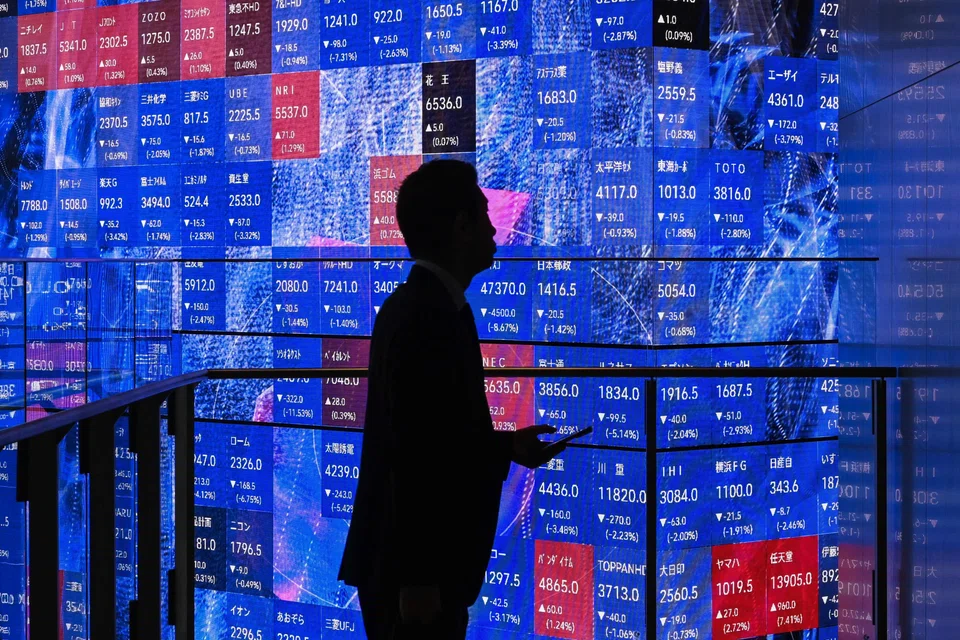
[HONG KONG] The hunt is on for new Asian equity winners from the artificial intelligence (AI) trade, as a technological shift and bubble fears reshape the investment universe.
As the massive stock rally unleashed by the launch of OpenAI’s ChatGPT enters its fourth year, leading regional beneficiaries, including Taiwan Semiconductor Manufacturing Company (TSMC) and SK Hynix, are flagging. Investor attention is turning instead to smaller, lesser-known names such as MediaTek and Zhongji Innolight.
High-profile firms that are still essential to the nuts-and-bolts requirements of AI are likely to see their stocks bounce back after some cooling off. But they could start sharing the spotlight as focus progresses from training of large language models (LLMs) to everyday application of the technology, as well as how to bring down the costs.
“The market is pricing in a new narrative, a new paradigm, which is: what if the dominant LLM isn’t just OpenAI? And that’s why everything is happening,” said Andy Wong, head of multi-asset investment at Pictet Asset Management in Hong Kong. “You need to digest what’s going on, recalibrate, and then apply a new risk premium.”
The chain reaction was set off last month with Alphabet’s launch of an upgraded Gemini model and its reported deals with other firms for its in-house AI chips. Amazon.com’s latest accelerator added to the shift away from AI stock trades that had concentrated on OpenAI and dominant semiconductor firm Nvidia.
Japan’s SoftBank Group, seen as a proxy for OpenAI given the close ties between the two companies, saw its stock slump 38 per cent in November to cap its worst month in 25 years. Shares of Nvidia’s key foundry TSMC and memory provider SK Hynix fell 4 per cent each last month, letting some steam out of their big rallies.
While ChatGPT is being threatened by a growing host of competitors, Nvidia’s AI training processors are losing market attention as application-specific integrated circuits come more to the fore. With that, investors are becoming concerned about negative implications for product pricing.
If LLMs become commoditised, “the ones with cheaper costs will become the winner”, said Han Sangkyoon, chief investment officer at Quad Investment Management in Seoul. He expects the next six months to be crucial in “how the bubble created by Nvidia and OpenAI could burst”.
Rather than completely abandon the AI trade, investors are moving to other stocks. MediaTek, a Taiwan-based chip designer working with Alphabet, logged its best week since 2002 following the Gemini debut. South Korea’s IsuPetasys, which supplies printed circuit boards for Alphabet, climbed 18 per cent to a fresh record high last week.
Such moves highlight how, regardless of the ultimate brand name or which US megacap sits at the top of the supply chain, there is a string of Asian suppliers that can reap rewards.
“Around 90 per cent of the hardware manufactured globally, which is fitting into data centres – servers, testing environment, anything you need from manufacturing the chips, memory cards, or even testing, cooling systems – all comes from Taiwan, Korea, Japan, Thailand, and even mainland China,” said Egon Vavrek, head of emerging markets and Asia equities at BlackRock.
While the US and China are competing in the AI arms race, their supply chains are still somewhat dependent on each other. Shandong-based optical transceiver maker Zhongji revenue, for example, gets 22 per cent of its revenue from Alphabet and 11 per cent from Amazon. Its stock rose 11 per cent last week to a new peak.
Not that the established leaders of the AI boom are done. TSMC has the most advanced chipmaking technology and provides outsourced manufacturing for all the major players. It’s shares are still poised for a third-straight year of gains that has taken its market value to more than US$1 trillion.
SK Hynix and Samsung Electronics together account for over 90 per cent of global market share in the high-bandwidth memory that is another essential component of AI technology, according to research from Macquarie Group.
Even as SK Hynix shares have more than tripled this year, bearish hedges have dropped. Short interest in the stock has fallen to 0.6 per cent of its free float from more than 3 per cent in May, according to data from S&P Global.
Investors are always looking for new ideas though, whether due to newsflow, nervousness over valuations of outperformers, or even constraints on holdings in their portfolios.
“AI remains front and centre of tech investors’ minds, even after three years into the theme,” said Timothy Fung, head of Asia equity strategy at JPMorgan Private Bank in Hong Kong. “Opportunities are evolving across the AI supply chain, but remain linked to physical infrastructure.” BLOOMBERG
Decoding Asia newsletter: your guide to navigating Asia in a new global order. Sign up here to get Decoding Asia newsletter. Delivered to your inbox. Free.
Share with us your feedback on BT's products and services