The birth of the 2023 bull market
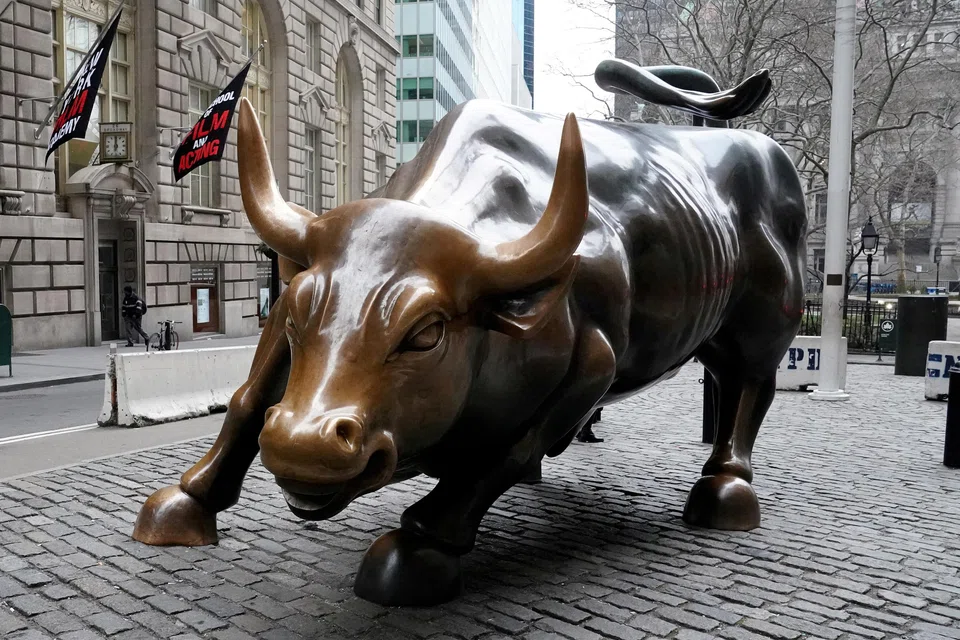
THE bear market that savaged the global economy, credit markets and the banking system is finally dead. From this chaos, a sprightly new stock market is arising. Welcome to the 2023 bull market.
It was the longest-lived bear since the 1940s, and one of the longest in history. The S&P 500 peaked almost 18 months ago, on Dec 31, 2021, shortly after US Federal Reserve chairman Jerome Powell warned he was going to war against inflation.
The Fed’s aggressive policy soon formed one of several lacerating bear claws swooping down on the US stock market. In February 2022, Russia invaded Ukraine in what would quickly become the bloodiest conflict in Europe since World War II.
That drove up oil prices to near record highs, causing an escalation of the battle between the Fed and runaway prices. For months, each consumer-price inflation report constituted a new shock to which the central bank responded with shock increases of their own.
The crisis caused by the interest-rate shocks reached a crescendo with Silicon Valley Bank’s warning that losses on its bond portfolio had left a gaping hole in its balance sheets.
The wave of bank runs that followed brought the S&P 500 near its bear-market lows. Most investors dumped equities indiscriminately during the regional-bank panic, leading to the cathartic, frenzied bear-market finale Wall Street watchers call “capitulation”.
It is in this post-apocalyptic atmosphere that the bull was quietly born. The S&P 500 has finally risen by 20 per cent from its nadir, meeting the definition for the start of a new bull market.
Since the March lows, the situation for regional banks and interest rates has worsened, if anything. But investors no longer care. As investors emerge from hibernation, they are looking only towards the bright side.
The focus is now on consumer spending, a gradual easing of inflation and, above all, the potential of artificial intelligence (AI) technology. Even a likely recession doesn’t scare investors any more, because that would slow inflation further and likely trigger a Fed rate cut.



There’s a palpable change in mood on the stock market and several confirmatory indicators. The fear that characterises a bear market has given way to the greed that epitomises a bull. The CBOE market volatility index – the “fear gauge” – hit the lowest level since 2020. Investors are no longer concerned enough to pay for portfolio insurance, the put options that pay out when the broad S&P 500 falls.
The small-cap Russell 2000, which has uncharacteristically lagged the broad S&P 500 for much of this year, is now consistently outstripping large-cap returns on a daily basis. That’s important, said Quincy Krosby, chief global strategist at brokerage LPL Financial. This, she explained, is because the Russell, consisting mostly of domestic companies in cyclical industries, is the “bellwether for economic conditions”.
“The bull market has legs,” said Savita Subramanian, chief investment strategist at brokerage Bank of America Global Research, in a note to clients. She said that long-term charts show that, in the year after the S&P 500 rises by more than 20 per cent from a trough, entering a technical bull market, returns are overwhelmingly superior to other 12-month snapshots.
The pandemic-era bull, which began in March 2020, was a bizarre creature that left many investors wary of buying into the new bull market. It was a sugar high, in retrospect. Stimulus payments and a lack of spending options caused a stampede of locked-down Americans into electronic financial markets.
There’s always something silly about speculation at its most frenetic, but the pandemic-era market was the most farcical of them all.
The stocks leading the way were nonsensical. A failing second-hand video game dealer, a cinema chain, and a bankrupt rental-car chain, and a cryptocurrency named after a joke dog were among the biggest gainers in the “meme stock” bull market.
The 2023 bull market has some of the bizarre elements of the short and violent pandemic bull market of 2020-21. It’s already fraught with concerns about valuations, and computer-game trading logic. The speculation is just as wild and headlong this time around. The euphoria could have slightly more staying power, however, because it’s slightly more grounded in financial reality.
The last time Microsoft was at these heights, in 2021, it was driven there by vague impressions that Covid-19 might have changed the way people worked. Did people and corporations spend more than they otherwise would have done on IT during lockdowns? The lockdowns didn’t last long enough for this to become a significant economic trend.
Microsoft’s 2023 gains are related to the quantifiable prospects of AI, the first technology shift since the Internet to drive philosophers’ projections of a new social order and corporate accountants’ projections of new revenue streams.
It reached a tipping point earlier this year, when chatbot computer programs, led by Microsoft-backed ChatGPT, proved themselves capable of composing poems and paintings rivalling those of the most accomplished humans. The advances in the machines’ artistic talent were exciting enough. It was a “sea change” for tech, said Subramanian.
For investors, the most remarkable thing about AI was how quickly its impact showed up on Microsoft’s bottom line. Microsoft’s business is as large as the economy of a small country. If a new business line is moving the needle in Microsoft’s earnings report, as AI did in the first quarter, it must be a major new business line.
Indeed, people and corporations all over the world are already adopting AI, and that’s made it an important economic force to be reckoned with.
Revenue from generative AI technology offerings are forecast to reach US$3.7 billion in 2023 and expand to USUS$36 billion by 2028, an expansion rate of more than 50 per cent per annum, according to research firm S&P Global Market Intelligence.
Move over, GameStop. Microsoft and other AI players, including AI-powered consulting firm Palantir Technologies, which has doubled in value so far this year, are the leaders of the AI bull. This time around, the memes will be auto-generated.
Decoding Asia newsletter: your guide to navigating Asia in a new global order. Sign up here to get Decoding Asia newsletter. Delivered to your inbox. Free.
Share with us your feedback on BT's products and services