

Oil heads for 13% weekly surge as Middle East attacks deepen supply fears
Attacks from Yemen on Saudi energy facilities raised fears of prolonged disruptions in the broader region

[SINGAPORE] Oil prices fell on Friday (Sep 11) but both major benchmarks are on track to end the week above US$100 a barrel for the first time since mid-May, as increasing attacks along key shipping routes in the Middle East fuel fears of a prolonged disruption to supplies.
The benchmarks pared all early gains to trade lower on Friday after the Financial Times reported that foreign ministers in the Middle East are trying to work out a temporary deal with Iran to manage shipping through the Strait of Hormuz.
Brent crude futures fell US$2.01, or 1.9 per cent, to US$105.62 a barrel by 0555 GMT. US West Texas Intermediate crude fell US$1.38, or 1.4 per cent, to US$101.10 a barrel.
The benchmarks were still trading nearly 13 per cent higher on a weekly basis - the steepest gain since the week ended Jul 17. Both benchmarks rose more than 6 per cent on Thursday.
Iran-aligned Houthis seized control of Yemen’s port of Mocha on Thursday, posing a further threat to Red Sea traffic, while Gulf traffic remains restricted through the Strait of Hormuz as tanker attacks in the region have intensified in recent days.
Attacks from Yemen on Saudi energy facilities marked an escalation beyond Iran and the Strait of Hormuz and raised fears of prolonged disruptions in the broader region, analysts say.
“While meaningful volumes are still moving through the Strait of Hormuz, flows remain well below pre-war levels, underscoring how fragile the situation has become,” ING analysts said in a note.
US diesel prices surpass US$6 a gallon
Oil supply disruptions due to the US-Iran war, along with Ukrainian attacks on Russia’s refineries, pushed the US national average diesel price past US$6 a gallon for the first time ever on Thursday, according to price tracker GasBuddy.
Still, US President Donald Trump has not shown any signs of easing attacks on Iran. He warned the US may hit Iran’s Pickaxe Mountain near its heavily damaged Natanz uranium enrichment facility, but said he thought the war would end immediately after the November midterm elections.
SEE ALSO



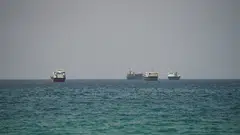

Iran said it had attacked 10 ships near the Strait of Hormuz on Wednesday, after the US hit five Iranian oil tankers. Iran’s Islamic Revolutionary Guard Corps said it would escalate its response to any further attacks.
“With events spiralling and Iran showing it is willing to stretch this conflict as wide and as long as it can, it is becoming increasingly likely that WTI crude will retest the US$119.48 high from early March (2027),” IG analyst Tony Sycamore said.
Analysts said the rally’s durability will hinge on China, the world’s largest crude importer. If China continues to buy, it could amplify the impact of supply disruptions and drive prices higher.
Opec lowered its forecast for world oil demand growth in 2026 to 380,000 barrels per day, a copy of its monthly report showed, marking the fifth straight downward revision. Opec oil output fell by 640,000 bpd in August, a Reuters survey found.
“The next leg in oil will depend less on headlines and more on whether physical flows improve or deteriorate further,” said Phillip Nova analyst Priyanka Sachdeva.
“The question now is whether the market can stabilise below US$120, or whether another wave of supply disruption pushes crude into a completely new price regime.” REUTERS
Decoding Asia newsletter: your guide to navigating Asia in a new global order. Sign up here to get Decoding Asia newsletter. Delivered to your inbox. Free.
Share with us your feedback on BT's products and services