
Global Enterprise logo
BROUGHT TO YOU BYsc logo
OUTLOOK 2026

Business class airfares could rise in 2026 as Apac passenger traffic continues to expand

Cargo demand expected to be stable but rates will be under pressure as capacity increases

Summarise
Tay Peck Gek
Published Mon, Jan 5, 2026 · 07:00 AM
    • Analysts expect air freight volume to be stable but there is a possibility of shippers switching to ocean delivery if sea cargo reliability improves and rates dip.
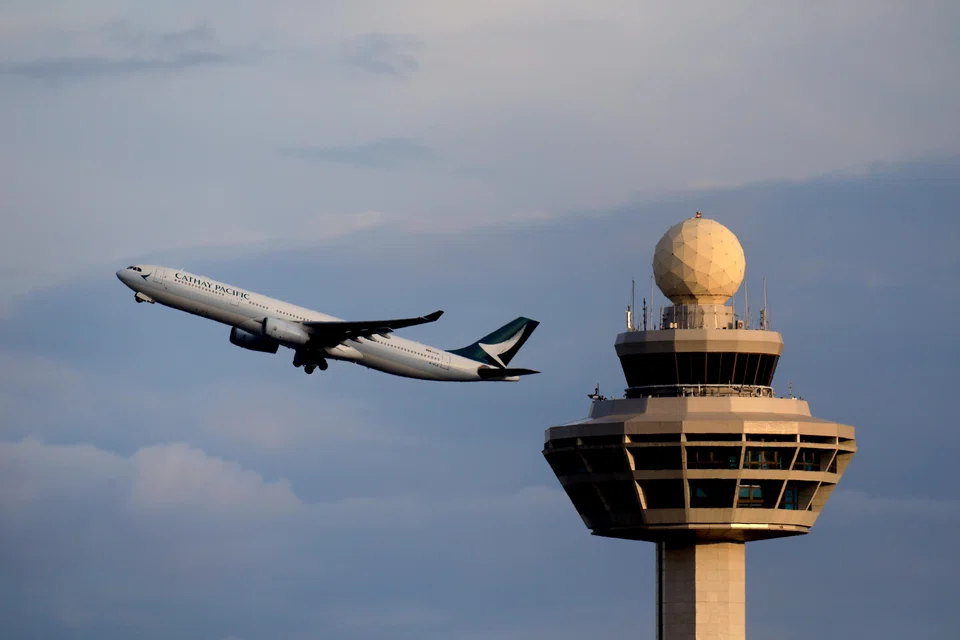
    • Analysts expect air freight volume to be stable but there is a possibility of shippers switching to ocean delivery if sea cargo reliability improves and rates dip. PHOTO: CMG

    [SINGAPORE] Strong growth in consumer demand for air travel in Asia could push up prices for some business class seats this year, analysts say. But higher capacity in the low-cost segment is expected to keep tickets affordable for budget travellers.

    Most markets in Asia-Pacific should cross into 2026 carrying the same firm momentum from the fourth quarter of 2025, notwithstanding worsening geopolitical tensions between China and Japan, said Shukor Yusof, founder of aviation consultancy Endau Analytics.

    Indeed, the Association of Asia Pacific Airlines (AAPA) expects international passenger traffic to the region to continue expanding in 2026 in line with long-term trends, supported by a growing services sector and rising regional connectivity.


    Transportation and supply chain management professor Rico Merkert from the University of Sydney similarly sees continued strong growth in passenger demand.

    He noted that the factors that will fuel the desire to travel are continued growth of middle classes in South-east Asia, India and China, and their disposable incomes; along with a continuation of increase in capacity by low-cost carriers – which will lead to even more induced demand.

    Linus Bauer, founder of aviation consultancy BAA & Partners, projects Asia-Pacific passenger traffic to rise moderately by 4 to 6 per cent, or 150 million to 200 million passengers, to about 3.8 billion passengers.

    Asean Intelligence

    Get insights into businesses across South-east Asia

    Get the free report

    Meanwhile, expansion of passenger capacity in 2026 will remain measured, expected to grow by approximately 3 to 5 per cent, reflecting a balance between demand growth and the need to preserve yield, Bauer said.

    Within the region, intra-Asia short-haul and point-to-point routes will see faster expansion, particularly by budget carriers while many full-service carriers focus only on high-yield trunk routes to Europe, North America and the Middle East, he pointed out.

    Premium cabin fares more resilient

    American Express Global Business Travel Consulting, a software and services company focused on travel, expenses, meetings and events, said booming economies will see rising business class fares but it expects a flat outlook for economy class.

    Its forecasts showed that higher demand in India should fuel price rises of up to 4.5 per cent in business class and 2.8 per cent in premium economy. Business class fares on the high-demand India-Singapore route could see significant increases.

    “We’re also anticipating price rises in business class on Singapore-US. From 2026, flights departing Singapore will be required to use sustainable aviation fuel,” American Express Global Business Travel Consulting pointed out.

    Bauer said 2026 is likely to see a mature pricing environment, with economy fares gradually easing while premium yields remain more resilient.

    For high-density, price-sensitive markets – particularly within South-east Asia, South Asia and Oceania – average economy fares are expected to be 5 to 10 per cent lower than in 2025, owing to increased narrow-body capacity and higher market share by budget carriers.

    But yields for premium cabins in business and first class are projected to stay stable or see modest improvement of between 2 and 5 per cent, buoyed by stronger premium leisure demand and recovering corporate travel.

    He added that passenger yield across the region in 2026 may be 5 to 7 per cent lower than the recovery years of 2024 and 2025 in the economy segment, but resilient in the premium segments, keeping blended yield broadly flat.

    Prof Merkert said inflationary pressures will drive up airport and labour costs, which airlines will try to pass on. “Higher air fares may be the result of this, unless the price of jet fuel can remain low, for which there is a good chance.”

    However, as budget airlines raise capacity or more players join the low-cost segment, flying in the Asia-Pacific region will remain affordable in 2026, the academic added.

    AI, e-commerce, high-value goods drive cargo demand

    AAPA said the outlook for air cargo demand remains broadly positive, but subject to uncertainties from global trade policies and elevated costs – including from new US tariffs and limited availability of sustainable aviation fuel.

    Prof Merkert said e-commerce and artificial intelligence (AI)-related demand – semiconductors and computer chips, which are typically air freighted – will continue to be a positive for the aviation industry. This will see Asia-Pacific remain as the largest air cargo market globally.

    Niki Frank, CEO of global forwarding for Asia-Pacific at DHL, expects high-value niche sectors such as life sciences and healthcare, premium e-commerce, and high-technology to drive the increase in demand, even as he projects stable overall volumes.

    Bauer sees a 3 to 5 per cent rise in cargo volume in the region, reflecting a stabilised expansion path driven by e-commerce, intra-Asia manufacturing shifts, time-sensitive high-value goods, and some supply-chain rebalancing – but without the distortions of the pandemic years.

    Cargo rates are expected to remain under pressure, trending towards pre-pandemic levels. The return of belly-hold capacity as passenger flights recover will exert downward pressure on rates, Bauer added.

    As a result, freight yield per tonne-km may fall by 10 to 15 per cent relative to the peak levels from 2024 and 2025, though special-cargo segments such as perishables, pharmaceuticals and electronics with differentiated service needs may sustain premium rates.

    Niall van de Wouw, chief airfreight officer at ocean and air freight rate analytics platform Xeneta, flagged that shippers might switch to ocean carriers from air if ocean reliability improves and rates drop due to overcapacity.

    Prof Merkert added that there is a possibility of global recession, which would affect air freight.

    Decoding Asia newsletter: your guide to navigating Asia in a new global order. Sign up here to get Decoding Asia newsletter. Delivered to your inbox. Free.

    Copyright SPH Media. All rights reserved.