


Canada’s Fairfax revives India’s bank privatisation drive with US$5.6 billion IDBI deal
This will be the largest foreign direct investment in South Asian country’s financial sector, if completed
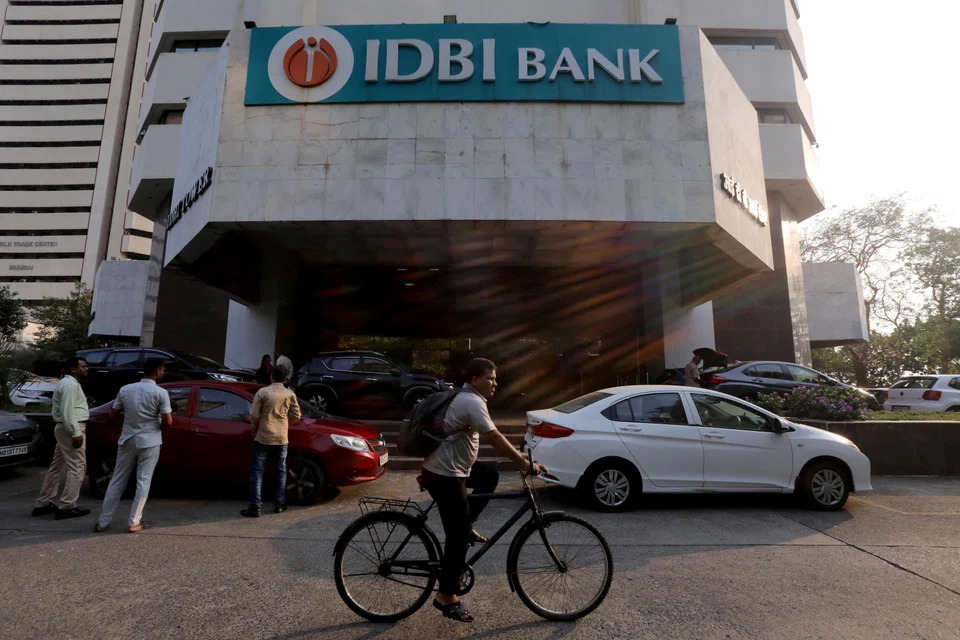
[BENGALURU] India’s sale of a controlling stake in IDBI Bank to Canada’s Fairfax Financial Holdings for nearly 530 billion rupees (US$5.6 billion) will deliver the largest foreign direct investment in the country’s financial sector, while injecting life into a privatisation drive that has been dogged by weak investor interest and valuation disputes.
The deal also represents a calibrated opening of India’s banking ownership framework rather than an immediate liberalisation or the beginning of an accelerated privatisation cycle, said Rajesh Agarwal, head of research at AUM Capital Market.
On Wednesday (Oct 14), the Indian government approved the sale of a 60.72 per cent stake in IDBI for 528.78 billion rupees. The deal marks a major step in the Canadian firm’s entry into the state-controlled Indian bank that has been ailing financially and needed rescue.
The transaction represents one of India’s most significant ownership changes of a bank, raising hopes that it could revive the country’s stalled bank-privatisation drive launched in 2021.
Even though this shows the government’s willingness to transfer management control, the transaction should be interpreted with measured optimism, noted Agarwal.
The proposed price tag represents a 23 per cent premium to the bank’s book value as at Jun 30, 2026. Fairfax will need to present credentials to the Indian banking regulator, the Reserve Bank of India (RBI), for a “fit and proper assessment”.
IDBI shares fell about 7 per cent on Thursday, with Fairfax’s offer of 81 rupees a share below the stock’s previous close of 90.39 rupees.
A monetisation boost
The deal, which includes plans to combine the lender with Fairfax’s insurance and investment banking businesses, is expected to help the government exceed its target for disinvestment and asset monetisation in the current financial year.
The central government had set a disinvestment target of 800 billion rupees for FY2026-27, the highest in five years, factoring in the proceeds from the proposed stake sale in IDBI.

The transaction could push combined disinvestment and asset monetisation receipts to about 887 billion rupees, according to Moneycontrol.
India has struggled to gain traction with its disinvestment efforts in recent years, with weak investor interest and disagreements over valuations complicating asset sales. The IDBI process itself had to be revisited after initial bids fell short of the government’s reserve price.
The sale took time because of the sensitivities surrounding divesting a bank, including labour considerations and the difficulty of agreeing on a price, said Abizer Diwanji, founder NeoStrat Advisors.
IDBI’s limited public float also complicated valuation, making it harder to establish whether market prices reflected the bank’s underlying worth, he added.
From balance-sheet repair to sustained growth
The immediate challenge for Fairfax will be to demonstrate that a change in ownership can deliver better operating performance.
IDBI’s financial recovery provides a starting point for that effort. The RBI placed the bank under Prompt Corrective Action in May 2017 because of concerns over its non-performing assets and losses. Restrictions were lifted in March 2021.
The next phase would require the bank to turn that recovery into sustainable earnings growth while maintaining credit discipline.
Diwanji noted that the bank’s Tier 1 capital ratio of about 26 per cent provides room to expand without necessarily requiring fresh capital in the near term. A decisive investor could also provide a definitive strategy, while Fairfax’s capital markets and insurance businesses could create growth opportunities.
The Life Insurance Corporation (LIC), the country’s largest state-owned life insurer, is an existing shareholder in IDBI alongside the government. Diwanji observed that if the bank can effectively manage business flows generated by LIC, it could boost current and savings-account deposits and fee income.
Fairfax has also proposed contributing its interests in Indian firms Go Digit Life Insurance, Go Digit General Insurance and IIFL Capital Services to IDBI.
Agarwal said that, if executed successfully, the proposed integration could broaden IDBI’s business from traditional banking to a financial-services distribution platform. This would create opportunities to acquire customers, cross-sell and generate more non-interest income beyond those available through conventional bank privatisation.
A precedent, not necessarily a privatisation wave
India’s banking sector comprises both state-owned and private-sector lenders. The country has 12 public-sector banks, led by the State Bank of India, the country’s largest bank by assets – with the group holding a total of 84.03 trillion rupees as at June this year.
Among private-sector lenders, HDFC Bank ranks first by assets, followed by ICICI Bank and Axis Bank, according to Statista’s August 2026 ranking.
IDBI, a smaller lender compared with some of India’s big state-owned banks, had total assets of about 4.44 trillion rupees as at June and operates more than 2,000 branches across India.
Fairfax’s acquisition of IDBI could offer a template for future strategic disinvestment, although Agarwal is quick to emphasise that “one successful transaction does not establish that a broader programme of public-sector bank privatisation is imminent”.
Future deals would depend on government priorities, market conditions, regulatory considerations and the financial position of individual institutions, he added.
Fairfax’s roughly 40 per cent stake in CSB Bank, a private-sector lender based in the southern Indian state of Kerala, adds a regulatory complication to its plans in the country, raising questions about how it will manage holdings in both banks.
A merger could offer strategic benefits through a broader franchise and potential operating synergies. However, differences in scale, geographic concentration, customer profile and organisational structure between CSB and IDBI could make integration complex.
The transaction could also raise questions over valuation, exchange ratios, minority-shareholder interests and regulatory approvals, Agarwal said.
The ownership structure after the sale also underscores that the government’s presence in IDBI will not entirely disappear.
The government and LIC will retain a combined 34 per cent stake, with holdings of 15 per cent and 19 per cent, respectively. The government has also authorised the sale of its remaining 15 per cent stake through the open market, leaving scope for further disinvestment.
The bank’s performance under its new ownership could help determine whether the transaction remains a landmark, standalone deal or becomes a model for future changes in ownership across India’s banking sector.
Decoding Asia newsletter: your guide to navigating Asia in a new global order. Sign up here to get Decoding Asia newsletter. Delivered to your inbox. Free.
Copyright SPH Media. All rights reserved.
TRENDING NOW

Far East Organization’s The Serra Residences sells less than a quarter of units released at average S$3,460 psf

MAS, SGX must address our IPO problem

A bumpy road ahead for some of Singapore’s fresh graduates in their job search

Once staunchly pro-China, Malaysian Chinese businesses are now distancing themselves from Beijing

