


China equities are cheap, but not everyone is sold
Concerns over geopolitical risks, policy changes, rising commodity prices, corporate earnings temper optimism

Singapore
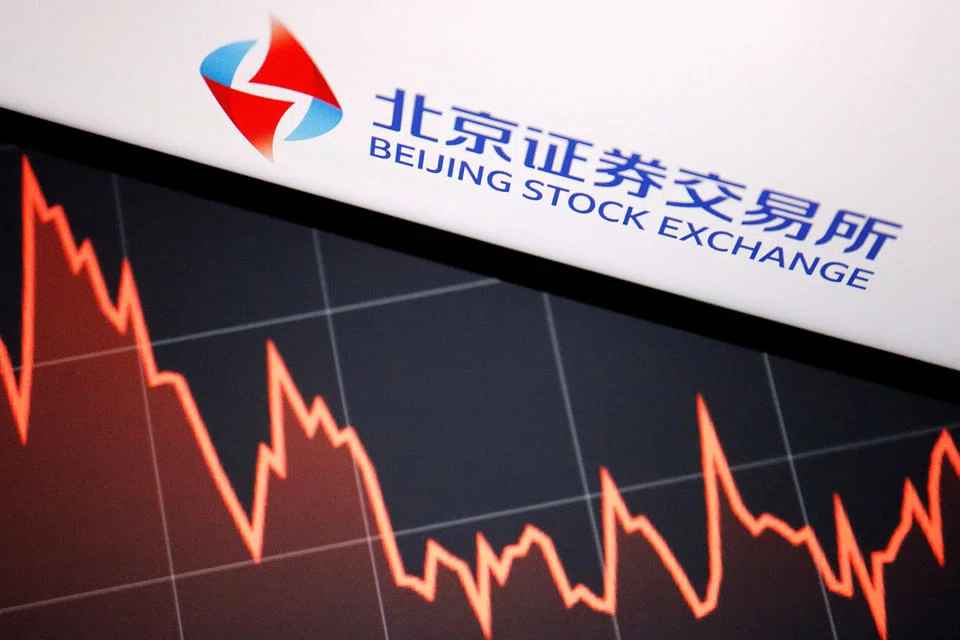
CHINA'S policy pivot to a more accommodative stance since December and latest signals of a possible easing of regulatory crackdown have resurrected interest in oversold Chinese equities; but not everyone wants to jump back onto the roller coaster.
Market volatility in Chinese stocks has been punishing, with Russia's invasion of Ukraine creating another headwind for China.
Almost two weeks after battered Chinese equities soared and clawed back some losses, they were down again on Monday (Mar 28) after Beijing ordered a lockdown of its largest city, Shanghai. The move renewed concerns over the economic toll on the mainland. The CSI 300 Index lost almost 2 per cent, before settling at 4,147.62, down 0.65 per cent.
Stephen Innes, managing partner at SPI Asset Management, told BT the overall market tone was quite bearish given soaring US yields and a stronger US dollar.
"And of course the Covid concerns in Shanghai aren't helping," Innes said. "It's not clear if Pudong Airport or the Yangshan container port will close."

In the first three months of this year, an estimated US$6 billion worth of Chinese shares had been dumped by foreign investors, spooked by concerns ranging from China's zero-Covid strategy, regulatory crackdowns, the delistings of Chinese companies listed in the US and China's relationship with Russia in the Ukraine war. The sell-off was large enough to prompt Chinese Vice Premier Liu He to address most of the concerns at the Financial Stability and Development Committee meeting on Mar 16.
UBS's strategists said the meeting reinforces its belief that Beijing would seek to stabilise the economy this year: "We expect China to outperform Asia and emerging markets in the coming months with mid-teen percentage returns this year. For longer-term investors who hold less than our recommended strategic allocation to China (about 4 per cent of global equity portfolio), we think this should be a potentially good time to build up exposure."
Within China, UBS strategists prefer A-shares, stocks exposed to the digital economy, 5G, and greentech.
Goldman Sach's chief China equity strategist Kinger Lau believes this policy "circuit breaker" on Mar 16 has set a floor on valuation downside, and propelled the market back to where it was before the historic selloff.
"Macro momentum should start to improve in the second quarter on monetary, fiscal, and property easing, and a more pragmatic approach to contain Covid spread should partially ease growth fears," he said, expecting an improvement in regulation clarity and buybacks from cash-rich China companies to boost valuations of technology stocks.
"All these point to a better trading backdrop in the run-up to the National Party's Congress in autumn," Lau added. Goldman is overweight China and is expecting 22 per cent upside over the next 12 months.
His optimism hinges on China's easing stance in 2022, therefore supporting equity performance; the stock market historically performing well in the lead-up to the leadership transition event; easing regulatory crackdown which will be condusive to China Internet stocks which represent 40 per cent of MSCI China index cap; cheap valuations with potential for re-rating on stable growth and policy easing; and funds' low exposures to China.
Credit Suisse made a tactical shift from India to Chinese equities earlier in March. It reckoned China is able to withstand global headwinds better than most Asian peers due to its low oil import bill (as a percentage of GDP), insulation from US rate hikes, low export dependence and improved macro indicators.
Analysts Dan Fineman and Kin Nang Chik also noted that during the Great Financial Crisis and the first quarter of the 2020 pandemic panic, China outperformed on the downside. Credit Suisse's China economist, David Wang, said China almost always meets or beats its growth target, which has been pegged at 5.5 per cent this year.
Beijing has more policy tools available to it than peer governments in Asia, the analysts said. China is still highly competitive. Despite the turbulence of the 2018-20 trade war, China remains fiercely competitive. Its share of global exports has risen and foreign direct investments boomed last year.
While positive catalysts are emerging, China's fundamental outlook remains challenging. One political observer even warned that President Xi Jinping's policy stance might change after he wins his third term as leader of the Chinese Communist Party.
Bruce Pang, head of macro and strategy research at China Renaissance Securities, said valuations did not seem to matter as much now and that it might be too early to call the bottom of the market.
Concerns and uncertainty revolving around geopolitical spillover risk and ADR delisting will keep equity risk premium at elevated levels.
James Wang, head of China equity strategy at UBS, expects more earnings downgrades due to elevated commodity prices, which could hamper near-term share market performance.
While China's monetary and fiscal policy shift have been promising, more supportive measures are still needed to stabilise and drive a recovery in the beleaguered property sector, analysts said. Home sales among the 100 largest property developers in the first two months of the year plunged 43 per cent from a year earlier.
Ultimately, the Russian war and earnings are the top factors to pay attention to for China equity.
"Can Chinese companies continue making money in the face of all these risks? That's the most important question for long-term investors," said Liqian Ren, director of Modern Alpha.
READ MORE: Shanghai launches 2-phase lockdown as Covid surges
Decoding Asia newsletter: your guide to navigating Asia in a new global order. Sign up here to get Decoding Asia newsletter. Delivered to your inbox. Free.
Copyright SPH Media. All rights reserved.
TRENDING NOW
Motoring tycoon Peter Kwee is back in court: Here are his previous legal battles

Demand, tech capabilities position Apac and AI as Skyscanner’s next growth frontiers: CEO Bryan Batista
Beyond the greenback, Vietnam’s big borrowers turn to Asian-currency bonds

Nvidia’s outlook cut to stable by Moody’s on governance concerns

