



China uses anti-sanctions law to counter US blacklisting of refiners that bought Iranian crude
This comes less than two weeks before US President Donald Trump is due to visit Beijing
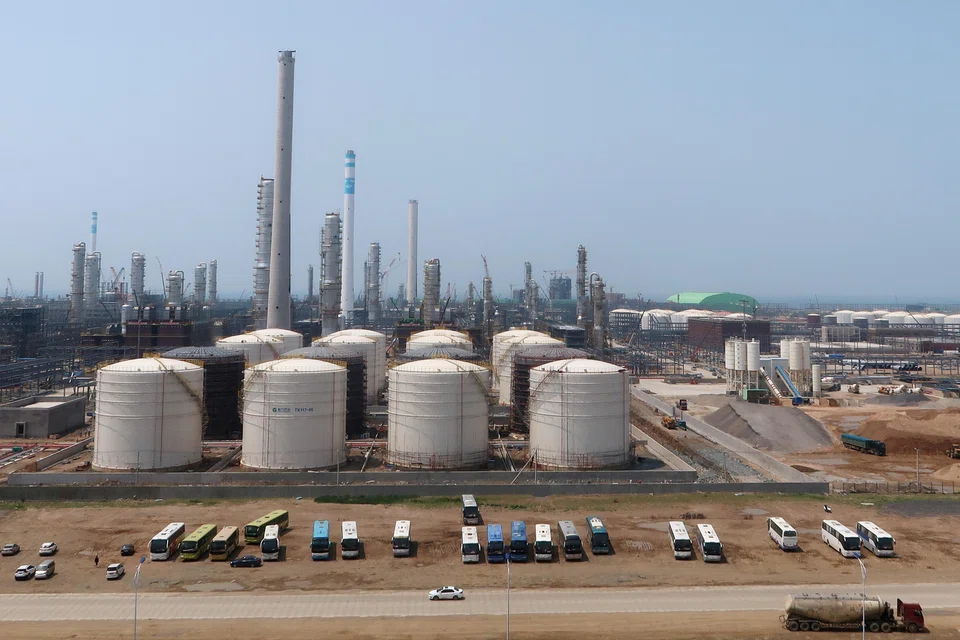
[BEIJING] China has, for the first time, invoked a law targeting companies that comply with foreign sanctions it rejects, escalating a pushback against the US blacklisting of several oil refineries over purchases of Iranian crude.
On Saturday (May 2), the Ministry of Commerce ordered companies not to comply with US sanctions against five refiners, including the recently designated Hengli Petrochemical, citing a law that allows Beijing to retaliate against entities enforcing sanctions it deems unlawful.
Washington and other Western governments have sanctioned a number of Chinese firms for trading Iranian or Russian oil, drawing repeated criticism from Beijing.
Hengli Petrochemical has denied US allegations that it traded with Iran. Independent refiners in China are the main buyers of Iran’s oil exports.
Trump due to visit Beijing
The move comes less than two weeks before US President Donald Trump is due to visit Beijing, highlighting China’s willingness to deploy its economic pressure tools despite a trade truce with Washington.
“Any company considering skirting US sanctions should think twice,” a White House official told Reuters without elaborating on the Chinese order.
Under the law, introduced in 2021 and most recently revised in April, China can impose countermeasures on companies and individuals, including trade and investment curbs and entry and exit restrictions.
Legal analysts say the law leaves counter-parties of sanctioned firms caught between jurisdictions, risking violations of Chinese law if they comply with foreign sanctions, or penalties elsewhere if they do not.
Canada’s Trade Commissioner Service warned companies operating in China in August 2025 that they could be squeezed between the US, European Union and Chinese rules because of the legislation.
SEE ALSO


China’s official People’s Daily said on Sunday the move “uses the power of the rule of law to precisely counter the US’ ‘long-arm jurisdiction’”.
The law allows companies to apply for waivers. A trader at a Hengli counter-party who declined to be named said firms with substantial business overseas should be able to make the case for exemptions to Chinese regulators. REUTERS
Decoding Asia newsletter: your guide to navigating Asia in a new global order. Sign up here to get Decoding Asia newsletter. Delivered to your inbox. Free.
Share with us your feedback on BT's products and services
TRENDING NOW

DBS, OCBC, UOB rout lops billions off STI as inflation, rate concerns spook investors

Grab CEO’s wife Chloe Tong on life with Anthony Tan and finding her purpose

OCBC sheds S$8 billion in value as shares close nearly 6% down; analysts cautious on banks

Deal between tycoon friends sparks scrutiny of Philippine power sector

