De-escalating US tensions with China
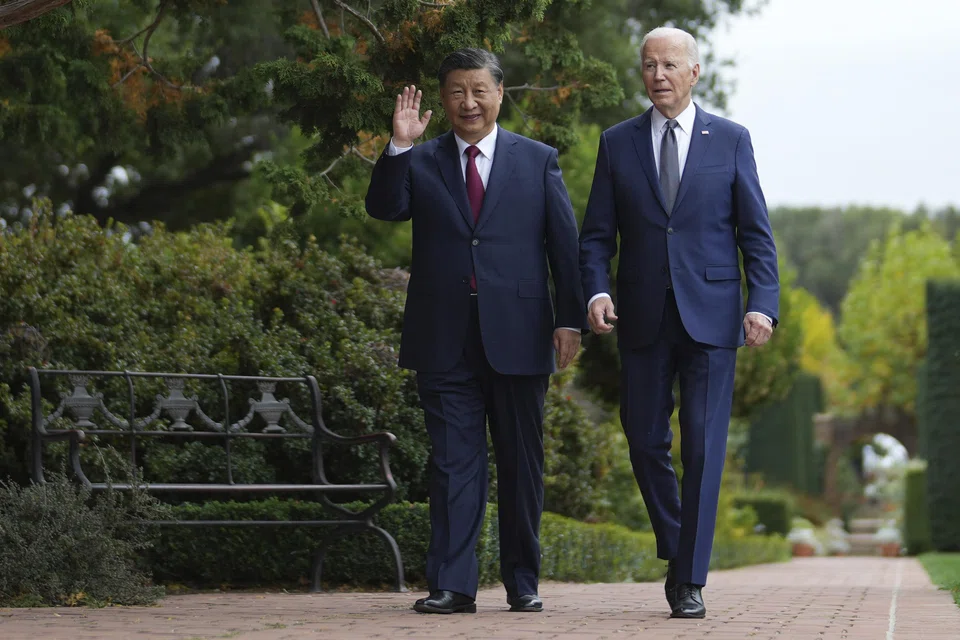
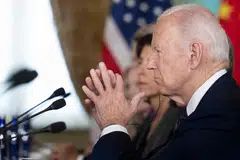
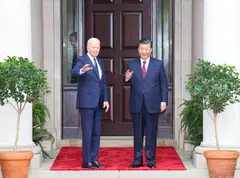
THE meeting between US President Joe Biden and his Chinese counterpart Xi Jinping in California on Wednesday (Nov 15) may not have reset relations between the two countries, but the less contentious tone during their rendezvous could help produce a new, more cooperative spirit when it comes to the world’s most important geo-strategic and geo-economic relationship.
Relations between Beijing and Washington in recent times have been near the lowest point since the US opening to China in the 1970s, with tensions rising over several issues of geopolitical or strategic significance – Taiwan; technology; the South China Sea; China’s aid to Russia during the latter’s war with Ukraine; and more recently, China’s improving ties with Iran.
So with the bar being set so low, it seemed that any progress in the relationship between the two countries during the meeting, held on the sidelines of the Asia Pacific Economic Cooperation (Apec) summit, would create a sense of guarded optimism and bilateral good feelings.
Indeed, the four hours of talks in a estate outside San Francisco resulted in agreements to resume communications between the two countries’ militaries, cooperating on choking off production of fentanyl, and the beginning of a discussion about the risks of artificial intelligence.
“We made real progress,” President Biden said in a tweet, telling reporters after the meeting that the talks were “some of the most constructive and productive conversations we’ve had”.
From President Biden’s perspective, smoothing the relations with Beijing means avoiding another security crisis at a time when the US is already embroiled in wars in Ukraine and the Middle East, and facing major geo-strategic challenges from Russia and Iran.
To put it another way, the last thing the US needs now is a hot crisis over Taiwan, and President Biden is hoping that one of the outcomes of Wednesday’s meeting would be the placement of Sino-American relations on the diplomatic backburner, at least for a while.
President Xi, at the same time, needs more foreign investment, with the Chinese economy facing an array of problems. He is hoping that the US would avoid further economic sanctions on China and reassess the limits it has placed on the sale of technology to Chinese firms.
Both countries want to avoid a military confrontation that would be destructive not only for them but have spillover effects for the entire world.
Most recently, the People’s Liberation Army has stepped up its almost daily aircraft incursions across the median line in the Taiwan Strait while the Chinese Coast Guard and maritime military have been interfering with Manila’s attempts to resupply the Second Thomas Shoal, including the recent use of a water cannon to force a Philippine supply ship to alter course.
Hence the restoration of military-to-military communications between the two governments – including an agreement reached on contacts between the militaries, their defence chiefs and military commanders, announced during Wednesday’s meeting – amounts to good news. Beijing cut those contacts after the then House Speaker Nancy Pelosi’s visit to Taiwan in August 2022.
But there is continuing concern among members of the foreign policy community in Washington that President Xi and other Chinese leaders perceive the US as being a nation in decline, with an 81-year-old leading a politically polarised nation and being drawn into military quagmires in Europe and the Middle East.
That perception could result in the Chinese raising questions about American deterrence in the Indo-Pacific region and lead them to conclude that the US wouldn’t be in a position to retaliate if they decide to retake Taiwan.
Meanwhile, the Chinese also continue to extend diplomatic and economic help to Russia in Ukraine. And not least, China is buying oil from Iran that helps Tehran finance its regional proxies that target Israel and Americans.
In that context, White House officials have indicated that they would like to see the Chinese putting pressure on Iran not to intervene in the war in Gaza.
Hence notwithstanding the friendly atmospherics in Wednesday’s meeting, the expectation in Washington is for an era of intense competition between the two countries, during which China will continue to challenge the US-led international order and strive for global supremacy, and that China will continue with its military build-up and put pressure on Taiwan and the Philippines.
The hope now is that the outcome of the meeting would make it less likely that this new Cold War would degenerate into any hot conflict.
Decoding Asia newsletter: your guide to navigating Asia in a new global order. Sign up here to get Decoding Asia newsletter. Delivered to your inbox. Free.
Share with us your feedback on BT's products and services