
Developers pivoting to bright spots in China's real estate market

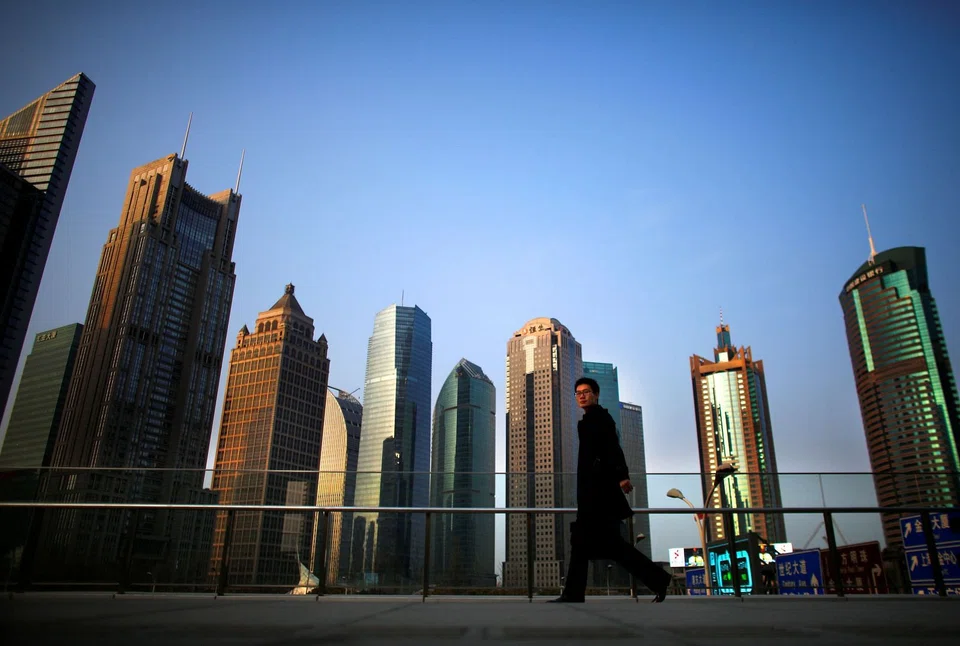
HOUSING demand in China remains strong even as Beijing tries to control home prices, but foreign developers are turning their attention to innovation-driven infrastructure projects instead, from logistics and life sciences facilities to data centres and business parks - sectors backed by the government - as Chinese cities are poised to become even bigger and smarter.
James Macdonald, head of Savills Research China, told The Business Times: "Developers have turned much more conservative in new acquisitions, and are looking to conserve capital where possible either to ensure adequate liquidity for debt servicing, repayments or to be able to capitalise on other buying opportunities that may appear later in the year."
It used to be that adding China's real estate market - valued at US$60 trillion or two-thirds of the world's gross domestic product - to an emerging market portfolio had the dual benefit of lowering risk through improved diversification and enhancing returns. But not anymore.
Last year, Beijing came down hard on over-leveraged property developers. With its "3 red lines" policy, property developers are no longer able to exceed 15 per cent leverage, compared to a high leverage of 20 per cent to 30 per cent before.
Greg Hyland, CBRE's head of capital markets, Asia-Pacific, said: "Unsurprisingly, there's weaker interest in real estate debt as an alternative investment sector this year, despite it traditionally being a popular choice among investors across the region in the past.
"With US$55 billion in Chinese corporate real estate debt set to mature this year, we are seeing strong intentions to sell among China-based investors as the real estate market continues to deleverage. There will likely be a substantial volume of disposals of non-core assets this year."

He reckoned that with the policy stance remaining firm that "housing is for living in, not for speculation", and the "3 red lines" policy to curb excess speculation and overleveraging, China's era of residential real estate-led growth might well be over as the sector experiences weaker growth and enters a consolidation phase.
Martin Wong, Knight Frank's director and head of research and consultancy, Greater China, said that there has been a significant slowdown in new overall property sales after the crackdown on the sector. "Buyers have been more prudent and developers have been more cautious in acquiring land and launching new projects."
Although there is an overall decline in transaction activity, Wong noted that residential sales volume has seen positive growth, with an increase of 9.3 per cent year on year. Meanwhile, office property sales went down by 3 per cent and retail property sales fell by 2.2 per cent year on year.
Underlying demand for housing - whether for sale or rent - remains strong. In Knight Frank's recent Global Buyer Survey, 57 per cent of respondents indicated a desire to move to the city.
"Despite the government's objective in controlling home prices, there is solid demand coming from end-users along with a higher rate of urbanisation," Wong said.
Matthew Yao, head of China at PGIM Real Estate, said that while China has tightened its policy for developers, it has recently loosened the funding for home buyers. This may offer more opportunities for investors. "There will likely be less competition from local developers on various investments. At the same time, local developers may also start to offload assets from their balance sheet or seek capital partners for interesting investment opportunities," he added.
PGIM Real Estate owns and operates a co-living apartment in Shanghai. Other investors in this segment include Warburg Pincus and KKR.
According to Yao, PGIM Real Estate has not prioritised the residential for-sale sector in recent years because of the numerous regulatory changes and tightening measures. Instead, it has focused more on commercial real estate and in particular, the logistics sector.
As China enters the next stage of urbanisation where cities get even more crowded, experts see a strong demand for industrial Internet such as 5G infrastructure and public cloud, as well as green infrastructure, to support the new lifestyles of smart megacities.
Macdonald said that Beijing's commitment towards an innovation-driven economy in the medium to long term has resulted in the commercial real estate market maturing rapidly in areas such as logistics properties, data centres, life sciences facilities, research and development hubs, and business parks - all historically undersupplied sectors which have good fundamentals and are backed by the government.
However, making strategic shifts is not without challenges.
He explained: "It is hard for large developers to shift strategy swiftly to, say, the commercial sector, as this will tend to require significant amounts of capital to be tied up for longer unless there is a capital partner or a purchaser lined up, as well as building asset management teams, etc.
"Some firms have been gradually deploying more capital into this area over the last decade, but it is typically a long-term transition."
It would be better for large developers to focus on "core competencies, bring on equity partners or dispose of fringe assets, monetise where possible, conserve capital and reduce costs where possible".
Despite regulatory upheavals, Singapore developer Ho Bee Land remains confident of the long-term prospects of the China market. The group, which has footprints in Australia, the UK and Germany as well, said it would "continue to seek growth opportunities within our geographical focus, which is in line with our diversification strategy".
Before CapitaLand Investment was formed in Sep 2021, CapitaLand said that it plans to grow its exposure to new economy assets in China to S$5 billion over the next few years, up from S$1.5 billion as at end 2020.
The group, which entered China in 1994, has made several acquisitions in the new economy sectors, including its first hyperscale data centre campus in Shanghai, and sees strong potential to expand its data centre portfolio to other cities such as Beijing and Shenzhen.
CapitaLand China Trust made its maiden foray into China's logistics sector last year, buying a portfolio of 4 prime logistics properties across Shanghai, Chengdu, Kunshan and Wuhan.
And although Keppel Corp unit Keppel Land divested its residential project China Chic in Dec, it said that this was in line with Keppel's Vision 2030 asset monetisation plans to unlock capital which can be channelled towards new growth opportunities.
"We look forward to further collaboration with like-minded partners to continue investing strategically in China, which is a key market for Keppel Land," said a Keppel Land spokesperson.
In Aug 2021, for example, Keppel Land China entered into a joint venture with leading Chinese developer Topchain Group to jointly manage investment properties, mainly offices and business parks, with potential for asset enhancement initiatives in China.
"This joint venture will allow Keppel Land China to better seize opportunities in the sizeable urban renewal market which is growing in China due to rapid urban development and land constraints in major cities, and offer platforms for the application of Keppel Land's smart building solutions in China.
"As we work towards Keppel's Vision 2030, Keppel Land China will continue to push the envelope of digitalisation and sustainability to bring innovative, smarter solutions to our portfolio and realise Keppel Land's vision to be a leader in redefining urban spaces for a sustainable future," added the spokesperson.
Decoding Asia newsletter: your guide to navigating Asia in a new global order. Sign up here to get Decoding Asia newsletter. Delivered to your inbox. Free.
Copyright SPH Media. All rights reserved.