

Economists increasingly expect UK recession as BOE keeps raising rates
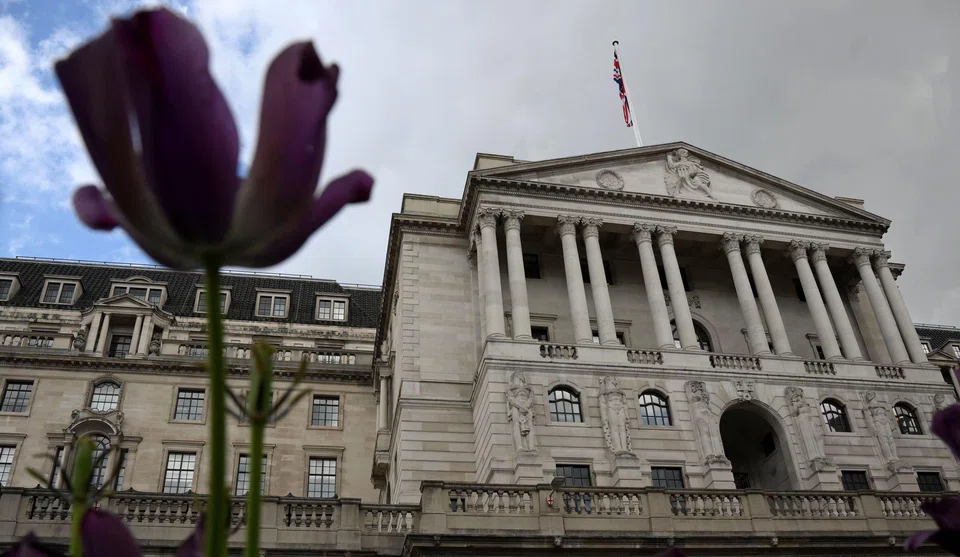
A GROWING number of economists fret that the UK economy is heading for an inflationary recession in six to 12 months.
The only argument is over the severity of the recession and the extent to which inflation would fall during the downturn.
The basic problem is the sharp rise in short, medium and long-term interest rates’ impact on an economy with extensive debt. The Bank of England’s (BOE) latest rate rise of 50 basis points, to 5 per cent, represents a starkly different environment compared to a lengthy period of almost zero per cent to 2.5 per cent rates between 2013 and 2021.
Those ultra-low rates encouraged households to go on borrowing sprees to buy properties and spend. According to The Money Charity, which monitors British consumer debt, total household borrowing soared by £417 billion to £1,840 billion (S$3,165 billion) in the past decade.
Mortgages account for 88.5 per cent, or £1,628 billion, of the total, and the average rates have surged from around 2 per cent in 2020 to more than 6 per cent.
Holders of variable rate mortgages have already been hurt, but UK Finance – which monitors financial developments – estimates that some 800,000 fixed mortgages will expire before the end of this year, and a further 1.6 million by the end of 2024.
The Resolution Foundation, an economics think tank, estimates that 6.5 million households will be adversely affected by the jump in mortgage rates when their fixed-term deals come to an end by 2026.
Over and above the strain of higher mortgage payments, The Money Charity estimates that people owe £212 billion in unsecured debt, including credit cards.
Major banks have disclosed that they charge interest of 39 per cent on arranged overdrafts, and credit card rates are between 20 per cent and 25 per cent. This is at a time when a cost-of-living crisis of high energy and food prices plus taxation increases are squeezing disposable incomes.
SEE ALSO
Meanwhile, the government with borrowings at 101 per cent of gross domestic product (GDP) and UK corporations with estimated debt of 66 per cent of GDP, or around £1,470 billion, are also being hit. Exporters and multinationals are coping with a rally in sterling, which has risen because of interest-rate rises.
Since March, the pound has appreciated by 15.7 per cent against the Japanese yen, by 7.7 per cent against the US dollar, 6 per cent against the Singapore dollar, and 4 per cent against the euro. The pound rally, however, will help cut imported inflation.
Andrew Bailey, governor of the BOE, insisted that the aggressive rate rise, aimed at reducing inflation, “was not designed to precipitate a recession”.
“We’ve got an economy that is much stronger and more resilient than we expected it to be. Part of that is because energy prices have come down, which is good news,” he said. “So we’re not expecting and we’re not desiring a recession. But we will do what is necessary to bring inflation down to target (2 per cent).”
Several economists disagree with the “sanguine predictions” of the BOE and the International Monetary Fund that the economy will avoid a recession in the coming 12 months.
Long-time critics of the BOE, such as Brendan Brown, author of Good Money, and Tim Congdon, head of the Institute of International Monetary Research, contend that easy money and negligible interest rates were the main causes of inflation. The BOE has increased interest rates 13 times since 2021 to counter inflation, which is currently at 8.7 per cent.
This “reverse to previous monetary irresponsibility could be the overkill that raises the likelihood of a severe downturn”, the economists warn.
David Blanchflower, economics professor at Dartmouth College in the US and a former member of the BOE’s rate-setting monetary policy committee, described the latest BOE rate rise as “boneheaded” and “madness”.
“Markets do not trust UK politicians or their central bank,” Prof Blanchflower said. “The 13 rate rises will destroy the housing market and crash the economy.”
Inevitably, mortgages, car defaults and the number of bankruptcies will rise, he added.
UK Chancellor of the Exchequer Jeremy Hunt appealed to banks not to foreclose on struggling homeowners who were delaying mortgage payments.
Silvana Tenreyro and Swati Dhingra, two members of the BOE’s rate-decision committee, opposed the latest interest-rate increase. They believe that rates should be held steady, as the full force of higher borrowing costs have yet to have an impact on the economy.
They contend that inflation could fall significantly below the 2 per cent target in the next three years – a hint that a recession is on the way.
Money markets are predicting that rates will climb to 6 per cent by the end of the year, the highest since 2000. This would heap further pressure on borrowers with variable and fixed-rate mortgages.
Decoding Asia newsletter: your guide to navigating Asia in a new global order. Sign up here to get Decoding Asia newsletter. Delivered to your inbox. Free.
Share with us your feedback on BT's products and services