Explainer: Trump’s options after the US Supreme Court says his tariffs are illegal
But these alternatives come with more limits and procedural restrictions
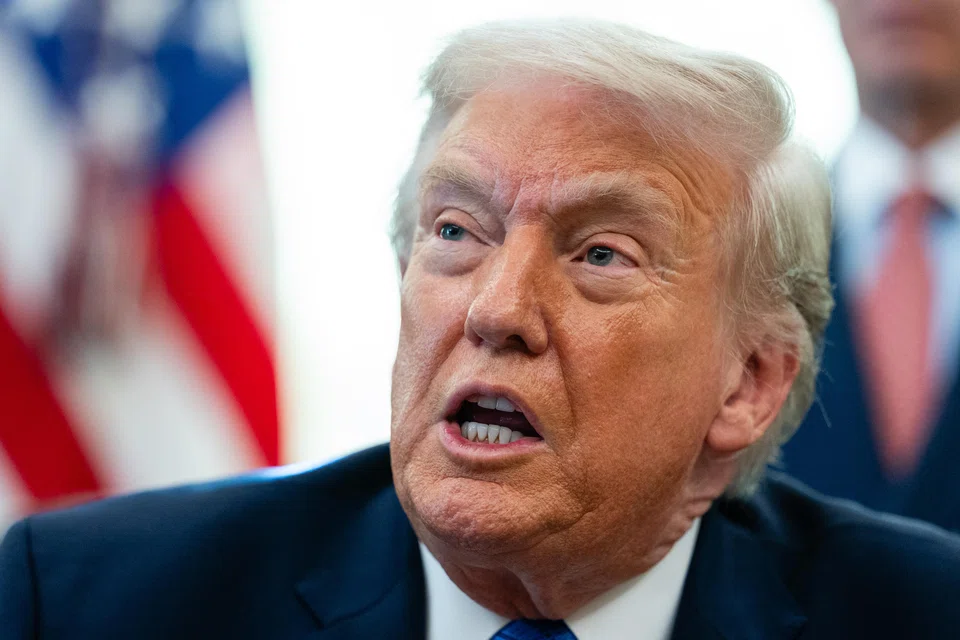
US PRESIDENT Donald Trump can lean on alternative legislation to try and rebuild his tariff wall, after the US Supreme Court ruled that he cannot use a 1977 emergency law to impose import taxes.
The court said that Trump exceeded his authority by invoking the International Emergency Economic Powers Act (IEEPA) to justify his sweeping “reciprocal” duties targeting America’s trading partners, as well as separate levies aimed at China, Canada and Mexico.
The ruling invalidates a large portion of the tariffs that Trump has rolled out in his second term, but there are other ways that he can introduce import taxes. While the Constitution gives Congress the power to levy taxes and duties, lawmakers have delegated some authority to the executive branch through a number of statutes.
What are Trump’s options beyond IEEPA?
He has at least five fallback options to impose tariffs in different ways. In general, these alternatives come with more limits and procedural restrictions, meaning there is less leeway for Trump to impose tariffs almost immediately and set the rates as high as he chooses.
Section 232 of the Trade Expansion Act of 1962
What it permits:
Section 232 gives the president power to use tariffs to regulate the import of goods on national security grounds. There is no cap on the level of the duties or their duration.
Limitations:
These tariffs cannot be imposed instantly – the president can only act after an investigation by the Commerce Department determines that importing these products threatens to impair national security. After a probe is initiated, the Commerce Secretary must report the conclusions to the president within 270 days.
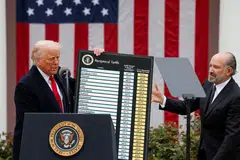

Unlike the blanket tariffs Trump imposed using IEEPA, Section 232 is designed to be applied to imports in individual sectors, rather than from entire countries.
Previous uses:
Trump used Section 232 to set tariffs on steel and aluminium imports in 2018 during his first term in office. He resumed his focus on these two industrial metals upon returning to the White House, leaning on the findings of the 2018 investigations to impose 50 per cent tariffs. He also introduced levies on imports of automobiles and auto parts based on the conclusions of a Section 232 investigation completed in 2019.
Other foreign goods Trump has hit with Section 232 tariffs in his second term include semi-finished and so-called derivative copper products. More sectors could face such duties as the Commerce Department has a number of open investigations.
Section 201 of the Trade Act of 1974
What it permits:
Section 201 authorises the president to impose tariffs if an increase in imports is causing or threatening serious injury to American manufacturers.
Limitations:
Section 201 tariffs cannot be rolled out immediately either. The US International Trade Commission (ITC) must first conduct an investigation and has 180 days after a petition is filed to deliver its report to the president. Unlike the Section 232 probes, the ITC is required to hold public hearings and solicit public comments. Section 201 is also focused at the industry level rather than a broad tax on all imports from a trading partner.
The tariffs are capped at 50 per cent above the rate of any existing duties. They can be imposed for an initial period of four years and extended to a maximum of eight years. If the levies are in place for more than a year, they must be phased down at regular intervals.
Previous uses:
Trump used Section 201 to place tariffs on imports of solar cells and modules, as well as residential washing machines in 2018. The solar tariffs were extended and modified by former president Joe Biden; the washing machine tariffs expired in 2023.
Section 301 of the Trade Act of 1974
What it permits:
Section 301 allows the Office of the US Trade Representative (USTR), under the direction of the president, to impose tariffs in response to other nations’ trade measures it deems discriminatory to American businesses or in violation of US rights under international trade agreements. There’s no limit on the tariff rate that can be introduced.
Limitations:
Again, this avenue does not enable an instant rollout of tariffs as the USTR must first conduct an investigation. The agency is generally required to request consultation with the foreign government whose trade practices are being probed, and solicit public comments, which can result in public hearings.
The duties automatically terminate after four years unless USTR receives a request for continuation, in which case the levies can be extended.
Section 301 investigations focus on one country, but USTR can conduct parallel reviews of a common concern that relates to multiple countries. It did so during Trump’s first term, looking at the digital services taxes of 11 jurisdictions, including France and the UK.
Previous uses:
The first Trump administration used Section 301 to impose tariffs on hundreds of billions of dollars of imports from China in 2018, following an investigation into China’s policies on technology transfer, intellectual property and innovation. Biden increased Section 301 tariffs on certain products from China, including electric vehicles, during his term.
In July 2025, USTR initiated a Section 301 investigation into Brazil, looking at the country’s trade and IP policies, deforestation practices, and ethanol market access.
Section 122 of the Trade Act of 1974
What it permits:
Section 122 gives the president the ability to impose tariffs to address “fundamental international payments problems”. He does not need to wait for a federal agency to conduct an investigation before he can implement the tariffs.
Limitations:
The conditions for using Section 122 powers are to remedy “large and serious” US balance-of-payments deficits, to help correct an international balance-of-payments disequilibrium, or to prevent an “imminent and significant” depreciation of the dollar.
The tariffs are capped at 15 per cent and can only be imposed for up to 150 days. Congressional approval is required to keep the duties in place for longer.
Previous uses:
Section 122 has never been used before. When responding to the legal challenges to Trump’s use of IEEPA brought by five small businesses and the attorneys general of 12 states, the US Court of International Trade pointed out in May that if Trump wanted to impose tariffs to remedy trade deficits, this would fall under the purview of Section 122, not IEEPA.
Section 338 of the Smoot-Hawley Tariff Act of 1930
What it permits:
The Depression-era provision empowers the president to introduce tariffs on imports from nations “whenever he shall find as a fact” that these countries impose unreasonable charges or limitations, or engage in discriminatory behavior against US commerce.
There is no prerequisite for a federal agency to conduct an investigation before the president can apply tariffs.
Limitations:
Section 338 duties are capped at 50 per cent.
Previous uses:
Section 338 has never been used before to impose tariffs. If Trump were to lean on this provision, such an unprecedented move may invite legal challenges. The possibility that Trump could tap Section 338 has alarmed some Democrats in the House of Representatives – five lawmakers introduced a resolution in March 2025 to repeal this section of the 1930 law. BLOOMBERG
Decoding Asia newsletter: your guide to navigating Asia in a new global order. Sign up here to get Decoding Asia newsletter. Delivered to your inbox. Free.
Share with us your feedback on BT's products and services