


Fed stays put on rates, sending strong message that inflation remains a clear and present danger
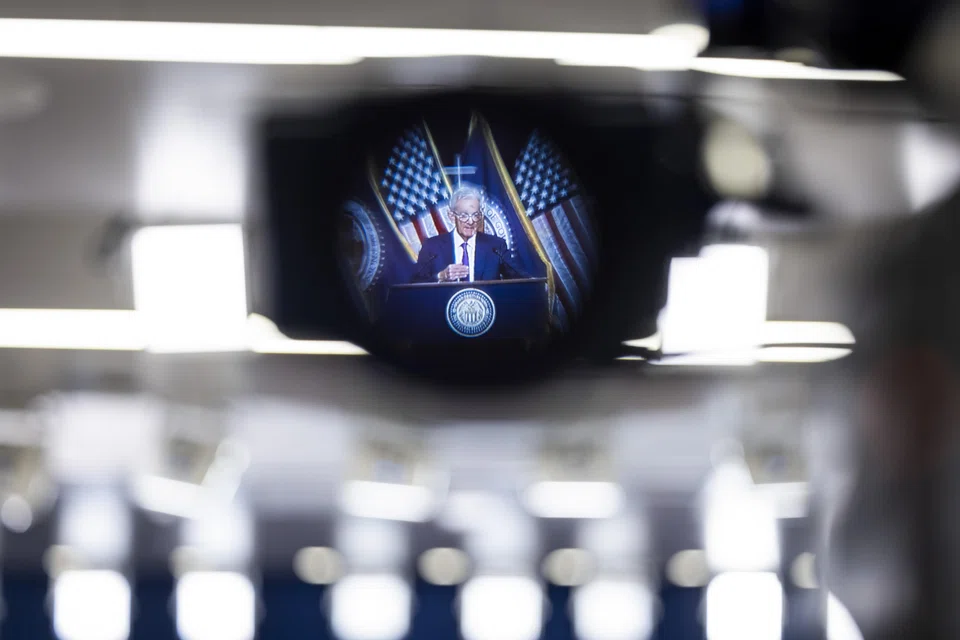
GLOBAL markets sometimes resemble a vast horse-track where everything the bookmakers and punters do revolves around the big race once every six weeks – the Federal Reserve meeting.
US stocks tumbled on Wednesday (Jan 31) after the Fed took a March interest rate cut off the table, with Fed chairman Jerome Powell gently chiding the speculators who had banked on cuts during a violent four-month rally.
The US central bank left rates unchanged in a range of between 5.25 and 5.5 per cent, as widely anticipated. In its statement, the Fed also removed any references to the possibility of rate increases.
And, in its most explicit declaration of victory over inflation yet, the Fed said that the balance between growth and inflation had improved.
Even when Powell started his press conference, he appeared to speak in the same optimistic vein as the banker who sparked the rally in the first place, with his pivot last December.
The favourite parlour game on Wall Street for months had been predicting the first rate cut. Several brokerages known in the industry as experts at reading the tea leaves had confidently assured their clients that Powell’s change of tone in December, his acknowledgment of progress on inflation, was his code for a rate cut in the very near term.

Stocks moved into positive territory early in Powell’s press conference, as he seemed to stick to this script.
But when a reporter asked about the odds of a March rate cut, those gains were quickly wiped out in one fell swoop.
“I don’t think it’s likely that the committee will reach a level of confidence by the time of the March meeting,” said Powell, an unusually frank warning from a Fed official. He might as well have punched the S&P 500 in the gut, for it immediately buckled and by the time the final bell sounded, the tape was bloodied red.
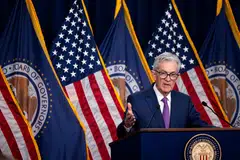

Usually, Fed officials temporise when asked such direct questions. Powell’s clear statement of intent sounded like a pointed message to global markets: the bookmakers had gotten ahead of themselves. Inflation may be down but it could still rear its ugly head, particularly if the Fed cut rates prematurely.
“We want to see more data,” said Powell. Inflation has come down near the Fed’s comfort zone, with consumer prices rising a mere 2.9 per cent on an annual basis in December, compared to a rate of roughly 10 per cent at the peak of the post-pandemic supply-chain and energy crunch.
Powell expressed gratification that, so far, rate hikes have brought down inflation without causing collateral damage to the US economy.
“The economy remains strong, the labour market is performing well. If we saw a problem in the labour market, that would have caused us to cut sooner,” he said.
On the flip side, he pointed out that the Fed could start discussing rate hikes again if the rate-setting committee saw signs of “inflation being stickier”.
One reason Powell’s committee is unwilling to rush into a March rate cut was simply because of the magnitude of such a decision. It is, as the Fed chief noted, a “consequential” decision – not just because the Fed’s timing will influence the value of almost everything in global markets, but because of economic history.
Most scholars agree that the story of 1970s America – the twilight of American manufacturing, as the vast Cadillac and Lincoln cars of the 1950s and 60s were turned to scrap – was written, in large part, by the Fed led by Arthur Burns.
It was the equivocation on rate policy – first hiking, then cutting, then hiking again, that allowed oil-price inflation to spread through the economy and bring it to its knees.
Those are the potential consequences that gave Powell pause on Wednesday. In December, he was, perhaps, in the mood to deliver a victory speech to end the year. This time, to start a new year, he wishes to move with appropriate caution.
If Powell hoped to end the oddsmaking on Fed moves with his coy press conference, he was instantly disappointed. The parlour game resumed with unchecked fervour as soon as the session ended.
After an “otherwise dovish” press conference, the March scepticism came as a bit of a surprise, said economists at brokerage Goldman Sachs.
“Given this comment, as well as our expectation of solid growth in the first quarter and a temporary firming in sequential inflation in January, we have pushed back our forecast of the first cut from March to May,” they said.
Economists at brokerage Bank of America (BOA) Securities were also largely unchastened.
“March is no longer the base case,” they wrote. Powell, they said, had significantly raised the bar. If the Fed was not yet confident enough in its victory to start cutting rates, they wondered where that confidence would come from in the future, if at all.
“More progress in reducing services inflation – and shelter inflation, in particular – and slower wage growth” is what the Fed is waiting for, said the BOA economists.
Both Bank of America and Goldman Sachs reiterated their forecasts for a string of rate cuts to happen – seven and eight, respectively – in the next two years.
One bank, meanwhile, has not quite given up on a March cut.
“With two sets of CPI (consumer price index) and labour data before the Fed’s March meeting, the pace of cuts is not yet settled,” said analysts at Standard Chartered.
It’s true that Powell remained largely optimistic. But the message was clear: Don’t bet the house on a rate cut in March, or that inflation is dead and buried, or a soft landing for the US economy.
The Fed may well cut rates later this year, but that doesn’t mean it is off to the races.
Decoding Asia newsletter: your guide to navigating Asia in a new global order. Sign up here to get Decoding Asia newsletter. Delivered to your inbox. Free.
Share with us your feedback on BT's products and services






