
‘First meaningful stress test’: Asia family offices weigh exit as Gulf conflict shakes Dubai’s wealth-hub allure
There has been an increase in inquiries to repatriate assets to Asia, especially Singapore
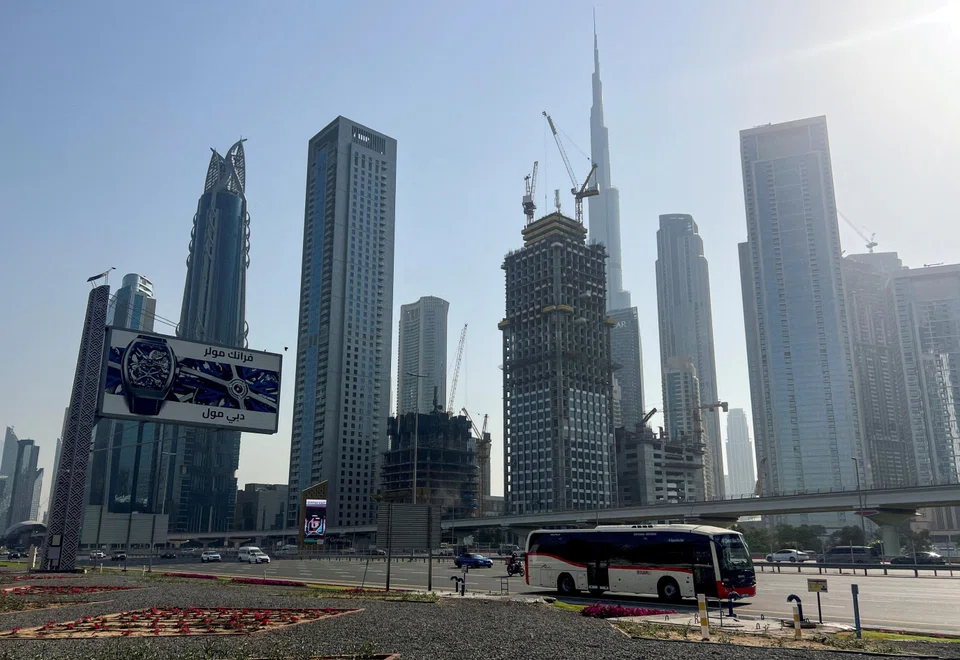
[SINGAPORE] Prolonged conflict in the Gulf is putting Dubai’s status as a safe haven for global wealth to the test, pushing some Asian family offices to rethink whether the region can continue serving as a neutral base to park their assets.
Wealth advisers told The Business Times that contingency planning has risen sharply since the start of the US-Israeli strikes on Iran, with families exploring options ranging from setting up secondary offices to restructuring holding vehicles.
“Recent developments have prompted some families to reassess their exposure to different regions,” said Tay Xinyee, head of Singapore wealth advisory at Julius Baer. “This is less about a wholesale shift and more about ongoing portfolio rebalancing and structure review.”
Still, some advisers say there is now a heightened sense of urgency. A Singapore-based asset manager who advises Middle Eastern hedge funds told BT on the condition of anonymity that many family offices are now looking to move their financial assets out “as soon as possible”.
This is as the crisis shifts from a short-term shock to a sustained risk that breaches internal thresholds.
With the crisis now in its third week, what was initially viewed as a short-term disruption by investors is now raising deeper questions about Dubai’s reliability in periods of regional stress.
Industry watchers say this could mark a turning point in how Dubai is positioned in global portfolios, particularly for investors seeking stability across jurisdictions.
Family offices weigh portfolio shifts
What began as a wait-and-see approach is fast moving towards action.
Asian family offices that flocked to Dubai previously, drawn by its zero-tax regime, golden visa programme and lower-cost environment for establishing family office structures, are quietly reassessing their exposure to the Gulf.


The multi-hub approach adopted by multi-family offices, once seen as optimal, is now being reconsidered by families with a larger-than-comfortable concentration in the United Arab Emirates.
“No prudent high-net-worth client would concentrate their holdings in a single jurisdiction vulnerable to geopolitical risk,” said Ryan Lin, a private wealth lawyer at Singapore-based Bayfront Law.
He has observed a stark increase in inquiries from high-net-worth families and family offices seeking to shift part or all of their portfolios from Dubai and the Middle East to Singapore and Hong Kong.
Since the start of the war, he has fielded about 20 such inquiries a week, from five for the whole of 2025.
However, the process is not without friction.
“While there are no severe exchange control restrictions between Dubai and Singapore, many assets are held within custodian accounts, trusts and financing structures,” said Lin. “This makes reallocation more complex than a straightforward transfer.”
Meanwhile, Raffles Family Office deputy group chief executive officer William Chow said this episode could lead to a “shift in mindset”.
“Clients are becoming more deliberate: placing greater emphasis on contingency planning and downside protection, and ensuring their regional exposure is resilient across different scenarios rather than relying on a single base case,” he said.
In a similar vein, Anuj Kagalwala, Asia-Pacific private wealth leader at PwC Singapore, has observed a marked rise in inquiries from families on where to situate their family offices.
“Many are now reassessing their options, and those with existing offices in Dubai are exploring the possibility of establishing a second office elsewhere,” he said.
This flight to quality is also reflected in asset allocation strategies of family offices, with more prioritising liquidity.
Ho Kah Chuan, founder and CEO of Go Global Gem, a Singapore-based consultancy providing wealth management services, said that family offices are increasingly parking wealth in short-duration bonds, money market instruments and safe-haven currencies.
“For deployed capital, investment-grade private credit outside the US, such as in the Australian market, is gaining traction,” he said, emphasising that investors are looking to hedge against inflation amid higher oil prices while cutting exposure to emerging markets.
Multi-family offices feel stronger pressure
Multi-family offices are feeling greater strain, given the need to balance differing client risk appetites.
“Multi-family offices appear slightly more frantic given that different families possess different risk profiles,” said Bayfront Law’s Lin, noting that advisory activity has picked up across diversification and reallocation strategies.
While Dubai has weathered financial shocks over the years, including the global financial crisis, advisers say the current episode is different.
“Those were financial shocks, where Dubai proved resilient during that period,” said Felix Desjardins, head of acquisitions for Phuket and Koh Samui at List Sotheby’s International Realty Thailand, who works selectively with family offices.
“What makes the current moment different is that it represents the first meaningful geopolitical stress test for a modern Middle Eastern wealth hub.”
Whether the current outflows prove to be a temporary blip or the start of a longer trend may hinge on how regional tensions ease, though advisers say the change in investors’ mindsets will be hard to reverse.
“Even if tensions ease, geopolitical risk and neutrality are now part of the broader wealth allocation conversation,” said Desjardins.
Decoding Asia newsletter: your guide to navigating Asia in a new global order. Sign up here to get Decoding Asia newsletter. Delivered to your inbox. Free.
Copyright SPH Media. All rights reserved.