



GE2025: Miles away, overseas Singaporeans say their votes ‘still matter’ for the country’s future
 Add BT as a preferred source
DeeperDive is a beta AI feature. Refer to full articles for the facts.
[SINGAPORE] The vast majority of Singaporeans were able to vote at last weekend’s general election (GE) at a polling station near their homes.
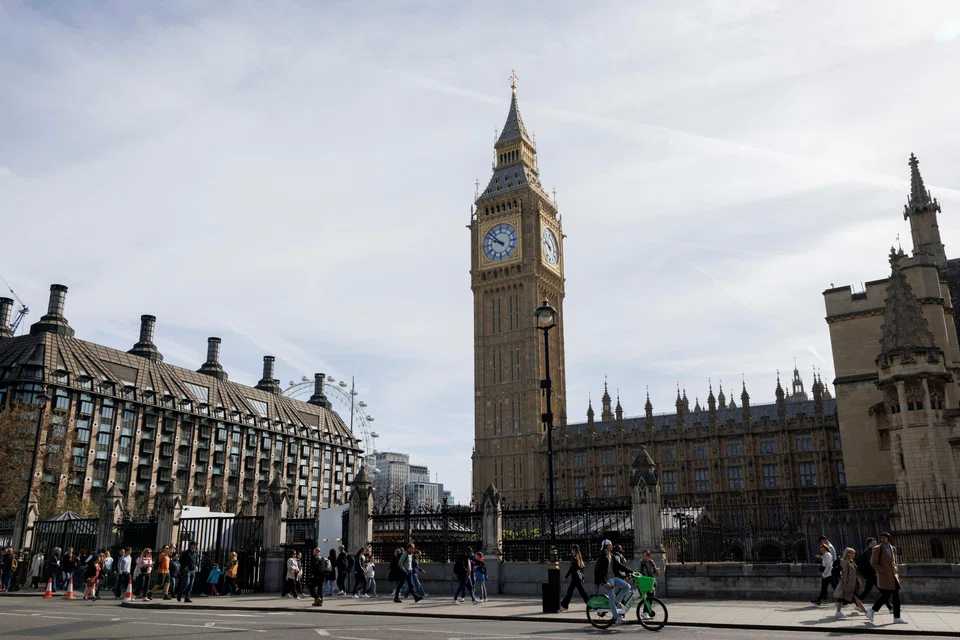
But for Arjun Jayaraman, based in Paris for his master’s degree, the journey to casting his vote in person started on the morning of Friday (May 2) – the eve of Polling Day – with a train ride from the French capital to London.
Ten overseas polling stations, located at the Singapore government’s high commissions, embassies or consulates, were set up for GE2025. These voting centres are in Beijing, Canberra, Dubai, Hong Kong, London, New York, San Francisco, Shanghai, Tokyo and Washington.
In some places, voting was held a day ahead of balloting in Singapore due to time differences, because overseas polls cannot close later than those in Singapore, which was at 8 pm on Saturday.
A total of 18,389 people successfully registered themselves as overseas voters, out of a total of 2.75 million voters for GE2025, said the Elections Department Singapore (ELD).
Just over half of those 18,389, or 9,759 voters, registered to vote by post. The 1,152 registered voters in Marine Parade-Braddell Heights GRC did not get to vote because that constituency was declared a walkover for the People’s Action Party (PAP) team.
Navigate Asia in
a new global order
Get the insights delivered to your inbox.
All Singaporeans aged 21 and above must vote.
Overseas votes, whether cast in person or by post, do not reach Singapore until after Polling Day; the law requires them to arrive in Singapore within 10 days after Polling Day.
But the reality that overseas votes are counted much later than those cast at home did not dissuade overseas Singaporeans like Jayaraman from taking his civic duty seriously.
“It’s important to me to express my view regardless (of my vote making the final tally) – because I wish to be part of an effort of sending a message through my vote. The final vote count and shares still matter,” the 30-year-old told The Business Times.
Lucas Lim, a 25-year-old now in Edinburgh for his undergraduate studies, felt similarly obligated to vote even though he was so far away from home.
“As disconnected as one may feel abroad (during the GE period), I still felt the need to keep up with the election’s happenings. I wanted to ensure I made the right vote and that my voice is heard,” he said.
He registered as a postal voter, and felt that the instructions were straightforward and the process, smooth.
Asked about the areas he wished his vote could make a difference, he cited the cost of living, housing affordability and the recent rise in goods and services tax as policies he was concerned about, given that he is looking to return home after his studies.
“With Singapore already named the most expensive city to live in, I want to know that I can move home and afford to live and start a family sustainably,” Lim said.
Over in Australia, Mah Chern Han, a 28-year-old working in Brisbane, also said he had little to no issues voting by mail. He liked that he could download his ballot paper online, instead of having to wait for a physical one to appear in his mailbox.
“The 10-day delay for my vote to reach Singapore did not bother me at all, because I know that, at the end of the day, my vote would be counted,” said the resident registered to vote in East Coast GRC.
Social media platforms as a bridge
Even as many overseas Singaporeans excitedly cast their vote, others were invariably disengaged from the election proceedings in Singapore.
For 25-year-old finance professional Reena based in New York, her vote felt more like “an action to exercise (her) civil right rather than for the greater good of Singapore”.
As a Singaporean abroad, she noted that the main way to follow the campaigning from overseas was through social media, which could create different impressions of the candidates, compared to actually being able to speak to them during walkabouts or house visits.
On the other hand, Nisha Dass, 28, a product manager working in London, felt that the full videos of the rallies uploaded by Singapore news outlets online helped her catch up on happenings on the ground during the hustings.
“I do think they greatly influenced my vote as I looked to the rallies to see how candidates articulated their views or made comprehensive arguments. We also saw candid moments that provided insight on what candidates are like under pressure, too,” the Tanjong Pagar GRC-registered voter said.
Certain overseas voters have previously criticised candidates for doing little to no outreach to voters based abroad, but some young overseas voters who spoke to The Business Times said this was an understandable phenomenon.
Bernice Ng, a 29-year-old master’s student based in London, said: “While there was little to no engagement (with us), I don’t think we can blame them in light of limited resources and time, especially the smaller parties.”
A simple acknowledgement from candidates that there are Singaporeans worldwide that care about local politics would have sufficed, said Jayaraman.
“I remember that in his first or second campaign rally speech, Andre Low of the Workers’ Party (WP) began his speech by greeting all Singaporeans locally, watching at home, and from around the world,” the Bishan-Toa Payoh GRC-registered voter said. “That kind of recognition is enough. Simple and sweet.”
Apart from the streaming of rallies, podcasts featuring different candidates helped voters like Jayaraman make a decision. He cited an episode with Steve Chia from the Singapore People’s Party and Zyrup Media’s Joel Lim as useful, educational content.
“I think politicians going on podcasts made it easier for me to get a sense of what their policies are. Chia, for example, also welcomed audience members to reach out to him on Facebook or the WhatsApp number to answer any questions they had. So, it’s really the small things that count,” he said.
Reaction to election results
For Mah, watching GE2025 from Brisbane was “one of the most exciting GEs (he had) ever seen”.
“I enjoyed seeing the greater contestation (of different parties) in the GE. The fact that there were still a significant number of Singaporeans who were not as polarised, as in some other countries – I find that quite encouraging.”
In this election, the PAP secured 87 out of the 97 seats in Parliament, four more than in its previous term.
Tanjong Pagar GRC had the highest vote share for the PAP with 81.03 per cent, followed by 81.12 per cent in Queenstown SMC and 80.51 per cent in Jurong Central SMC.
The PAP also won in the battleground constituencies against the WP this round, including Punggol and Tampines GRC, and Jalan Kayu SMC. The WP retained strongholds Aljunied GRC and Hougang SMC, as well as Sengkang GRC, maintaining its 10 seats in Parliament with no new gains.
This time, however, the WP has two additional spots for Non-Constituency Members of Parliament.
Even for voters away in foreign cities, the result still matters to them.
Dass said: “I voted with the mindset of how I want my family in Singapore to be supported, and how I would like to see the future of Singapore turn out as there is always a possibility that I will return there later in life.”
For Ng and her Singaporean friends in the UK, there was some disappointment with the results, as they wished to see “more opposition members secure seats for more diverse voices”.
As for Mah, he was heartened that Singaporeans appeared to be “discerning” with their vote, and was glad that the WP was able to retain its existing seats for parliamentary balance.
“But at the same time, it’s also about policies, which are equally important,” he said. “At the end of the day, this is the choice we made. We’ll see what happens over the next five years.”
For more election coverage, visit our GE2025 microsite
Decoding Asia newsletter: your guide to navigating Asia in a new global order. Sign up here to get Decoding Asia newsletter. Delivered to your inbox. Free.
Copyright SPH Media. All rights reserved.
TRENDING NOW
‘Boring’ is the new black: The stars are aligning for a Singapore stock market revival
Near sell-out launches in March boost developer sales to 1,300 units after four slow months

China pips the US if Asean is forced to choose, but analysts warn against reading it like a sports result
Genting Singapore’s Lim Kok Thay receives S$7.5 million pay package for FY2025

