



Global economic outlook challenging in ‘shock-prone’ 2023, but China reopening offers hope: forum

Sharon See
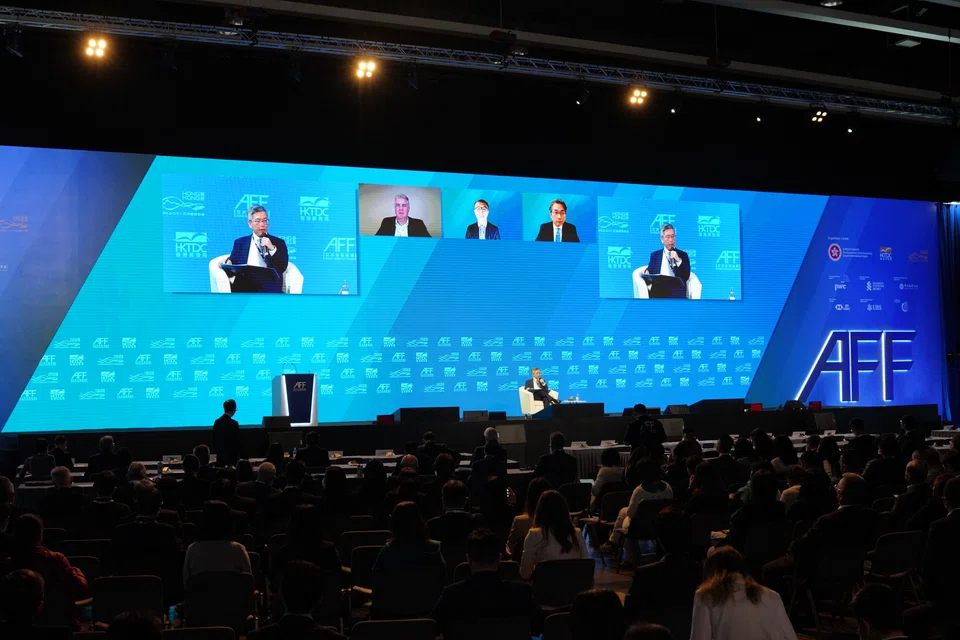
[HONG KONG] The global economic outlook remains challenging in the first half of the year, which is more “shock prone” now, but China’s reopening could provide relief from the second quarter, senior bankers and economists said on the first day of the Asian Financial Forum (AFF) 2023 in Hong Kong on Wednesday (Jan 11).
The United States and the euro zone, in particular, are headed for a recession in the first half of the year, although the US is likely to experience a shallower downturn than Europe, said the participants in a panel discussion on the global economic outlook.
This is because many of the negative drivers from last year are still in place, said Jose Vinals, group chairman of Standard Chartered.
“But I see a very different second half – I think this is going to be helped very much by the opening up of China, which will have a positive impact already from the second quarter,” he said, adding that inflation would likely have peaked.
The reopening of China is likely to also contribute to growth in Asia, which will in turn be a “top contributor” to global economic growth again, he said.
While Mark Tucker, group chairman for HSBC Holdings, agreed the global situation should improve in H2, he also warned of “false dawns” that may prolong inflation.
“History shows that where inflation has come down, we may need to see a deeper recession caused by higher rates,” he said.
“Or recession fears may just dominate. There’s a risk that rates peak too low or too early, and therefore inflation will persist for longer,” he said, adding that this is a “fundamental policy challenge” around the world.
In an earlier session, Dr He Dong, deputy director for monetary and capital markets at the International Monetary Fund (IMF), described 2023 as a challenging year for monetary policy.
“It’s a somewhat different kind of challenge – 2022 was about how quickly to tighten monetary policy and how far to go,” he said. “For 2023, the question is probably about how long to stay on hold, and we believe that it’s important that the central bank stay the course.”
Noting that significant headwinds, including the Russia-Ukraine war and synchronised monetary tightening, cloud the IMF’s forecast, Dr He said the world is now “more shock-prone”.
“Climate disasters, debt stress and continued geopolitical tensions and fragmentation could bring more shocks,” he said.
Separately, former United Nations (UN) secretary-general Ban Ki-moon said these problems have arisen because “multilateralism is not working”.
He noted, for example, that the Russia-Ukraine war does not only involve the two countries but also the international community, causing political instability, energy-supply disruption, a financial crisis and inflation.
He added that Russia should be held accountable and that this is a matter of injustice, but said the International Criminal Court has not been able to do anything because the UN Security Council is divided.
“We really need to normalise multilateral systems and structures,” he said.
Likewise, a lack of political will and support is hampering efforts to fight the climate crisis, he said, as he blamed developed nations for not doing more to make reparations towards developing countries.
He lashed out at them for not committing to a dollar figure in the loss-and-damage fund that was agreed to at COP27.
This echoes the lack of commitment seen in an earlier agreement in 2009 by the Organisation for Economic Co-operation and Development countries to provide US$100 billion annually to developing countries to mitigate climate change.
“Not a single year they were able to provide US$100 billion. They had at best... during the last 14 years, US$80 billion or US$90 billion, that’s all,” he said.
During an afternoon session, Ridha Wirakusumah, chief executive of the Indonesia Investment Authority, said the financial sector can do a lot more to aid development in the face of interest rate hikes and geopolitical tensions.
The principle among bankers, he said, is to lend money to “people who don’t need money”, not to lend to those who cannot pay back. This applies not just to individuals, but at the country level as well.
“As a result of that, you can actually see the rich getting richer, and the poor getting poorer.”
Decoding Asia newsletter: your guide to navigating Asia in a new global order. Sign up here to get Decoding Asia newsletter. Delivered to your inbox. Free.
Copyright SPH Media. All rights reserved.






