



Himalayan flood death toll rises to 750 across Nepal and Tibet; over 3,000 missing
Scale of the disaster has complicated rescue efforts across the rugged Himalayan terrain
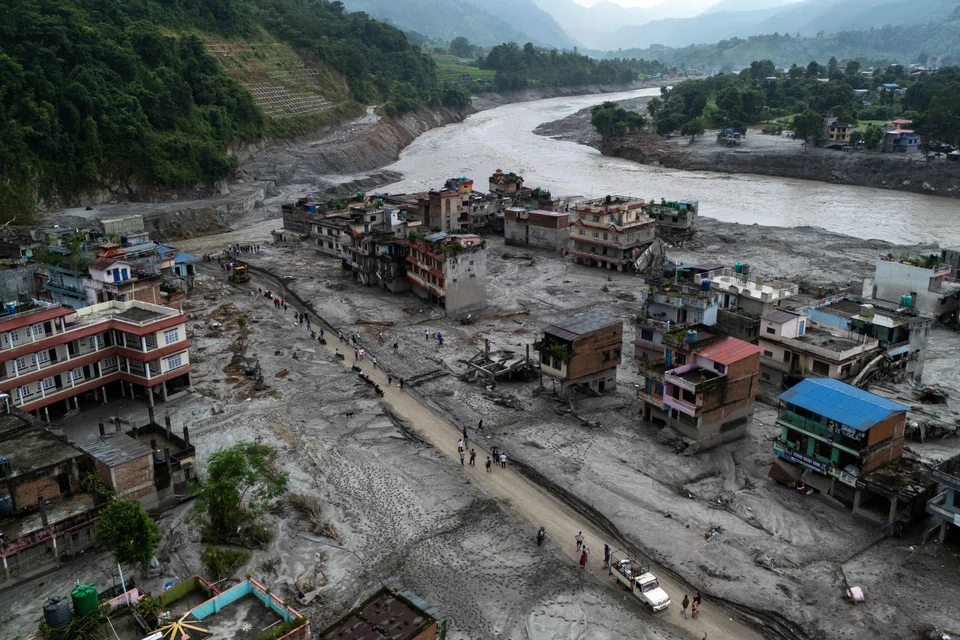
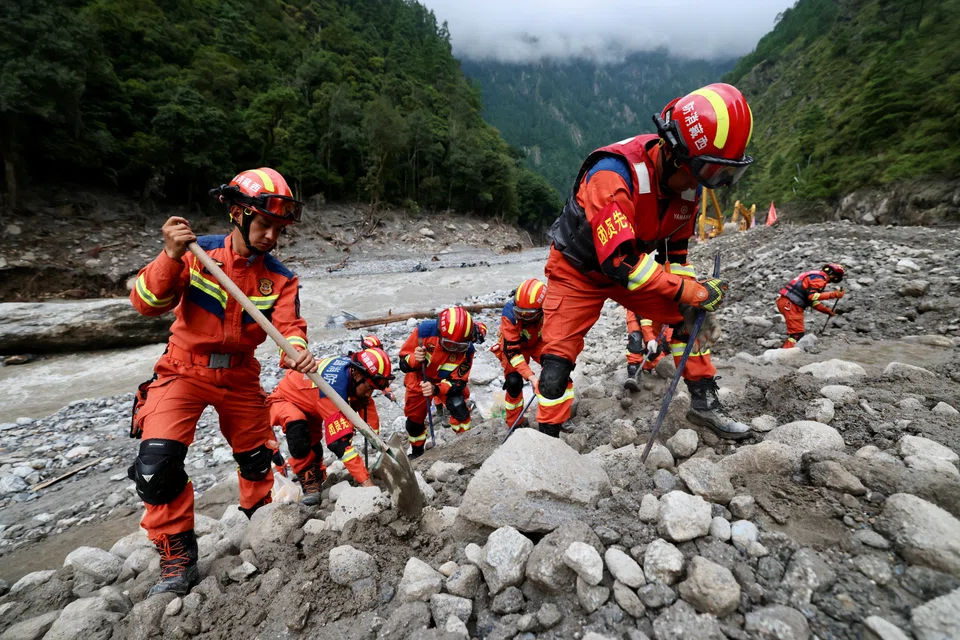
[CHITWAN, Nepal/BEIJING] Rescuers in Nepal and China raced on Sunday (Aug 30) to find thousands of people missing after a glacier collapse unleashed a catastrophic mudslide across the Himalayas, as they faced challenging weather conditions and rising water levels.
Authorities said the death toll rose to 750 by Sunday morning, with more than 3,000 people missing on both sides of the Nepal-China border after a torrent of ice, rock, mud and debris swept through mountain valleys and rivers on Wednesday, causing widespread devastation.
The Red Cross has estimated that more than 90,000 people are likely to have been affected by the disaster, which China has linked to the effects of climate change.
China’s Foreign Minister Wang Yi told his Nepalese counterpart in a Saturday telephone call that the mudslide was their “most severe cross-border disaster” in recent years and that rescue operations were of unprecedented difficulty and complexity, Chinese state broadcaster CCTV reported.
Nepal’s disaster authority said 734 people had died, 2,498 remained missing and 7,514 had been rescued. On the Chinese side, authorities said 16 people were killed in Gyirong County and 546 were missing.
Beijing said 261 foreign nationals from 23 countries were unaccounted for in Tibet, near a key border crossing with Nepal.
The scale of the disaster has complicated rescue efforts across the rugged Himalayan terrain.
Local police in Nepal told Reuters that residents and rescue workers had moved to higher ground after the Trishuli River’s water levels rose in recent hours following fresh rainfall, raising fears of additional flooding.
Rescue operations have been suspended several times since Friday because of bad weather and concerns that a lake formed across the Nepal-China border by the disaster could trigger fresh flooding after it began overflowing into Nepal’s Lhende Khola and Trishuli Rivers.
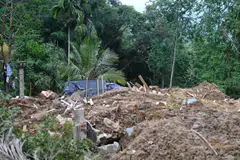
CCTV reported that the lake threatening downstream areas had been largely drained by Saturday evening. But drones detected a landslide late on Saturday that is 2.8 km downstream of the lake, forming a new dam and a fresh pool of water.
In Nepal, rescue efforts have become more focused on hundreds of people believed to be trapped inside tunnels at hydropower plants damaged by the floods.
Lok Bahadur Chhetri, a spokesperson for Nepal’s foreign ministry, said Nepal required international assistance in specialised areas, including tunnel rescue operations, DNA testing, refrigerated storage for bodies and forensic identification of decomposed remains.
Indian and Chinese experts were already working to help open tunnels and support rescue operations, Chhetri said.
Mass burials of decomposing bodies
Days after desperate relatives moved between hospitals, morgues and relief centres searching for loved ones, authorities in Nepal began mass burials of hundreds of unidentified victims whose bodies had started to decompose.
In Chitwan district, which escaped the direct impact of the disaster, bodies swept downstream from the flood-hit Rasuwa region have been carried by the river system into the Narayani River.
Authorities are photographing the bodies, collecting DNA samples and recording identifying details in the hope that families may still be able to identify relatives after burial.
“Of the bodies we have recovered so far, more than half are beyond recognition,” police officer Anil Thapa told Reuters.
“Many have no visible faces. In some cases, only hands or legs remain; in others, only parts of the body are available. In many cases, more than half of the head is missing.”
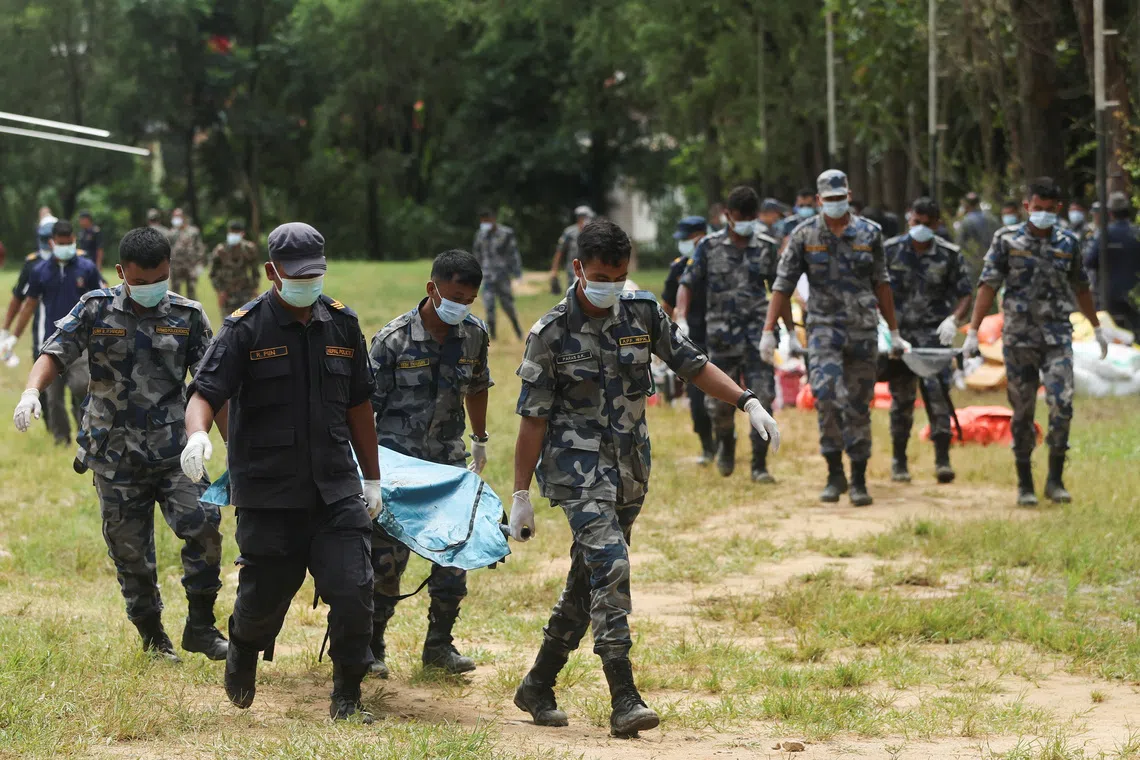
After burying more than 100 unidentified bodies on Saturday, authorities were digging additional graves on Sunday for hundreds more.
Nepal’s rescue effort is now focused on hundreds of people believed to be trapped in tunnels at hydropower plants after a torrent of ice, rock, mud and debris crashed down Himalayan rivers.
Link to ‘long-term effects of climate change’
The flood was “caused by glacier instability under the long-term effects of global warming”, CCTV reported, saying it was a “new and prominent feature of cryosphere disasters” on the Tibetan plateau.
The mudslide from the Nepalese side took six to seven minutes to reach the Gyirong border crossing, CCTV said, citing the findings of Chinese scientists. Dramatic surveillance footage shared worldwide showed torrents of water and debris engulfing buildings while people tried to flee.
The state-run TV channel reported China has mobilised over 2,100 rescue workers and allocated at least 220 million yuan (US$32.7 million) to support relief efforts. It has also been airdropping equipment and supplies to frontline rescuers, while its soldiers used life-detection equipment to look for the missing. REUTERS
Decoding Asia newsletter: your guide to navigating Asia in a new global order. Sign up here to get Decoding Asia newsletter. Delivered to your inbox. Free.
Share with us your feedback on BT's products and services
TRENDING NOW

DBS, OCBC, UOB rout lops billions off STI as inflation, rate concerns spook investors

Grab CEO’s wife Chloe Tong on life with Anthony Tan and finding her purpose

OCBC sheds S$8 billion in value as shares close nearly 6% down; analysts cautious on banks

Deal between tycoon friends sparks scrutiny of Philippine power sector

