



Huge strategic defeat for the US? There is now a two-week ceasefire but hard questions remain
The US and Iran are set to begin negotiations towards achieving durable peace in Islamabad on Friday (Apr 10)
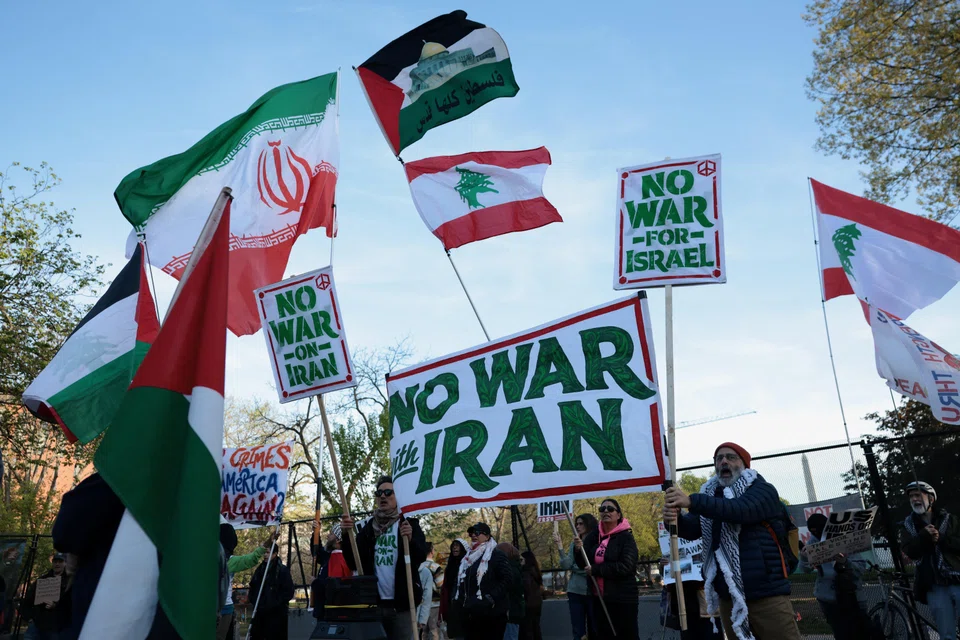
[PHILADELPHIA] On the 40th day of the Iran war, after vowing to destroy the Iranian civilisation, US President Donald Trump blinked.
It took the US President a little more than a day to execute an incredible 180-degree turn from threatening to wipe Iran off the map to declaring that he had nearly closed the gap on striking a definitive peace agreement with Iran.
In the process, the United States appeared to have ceded the advantage to Iran on key points such as accepting Teheran’s de facto control over the Strait of Hormuz and the possibility of negotiating over its large stock of highly enriched uranium which can be turned into nuclear weapons.
Before and during the war, the Trump administration had frequently described the possibility of Iran retaining its uranium stock as “non-negotiable”.
The abrupt shift came after mounting pressure on the US economy from surging petrol prices, domestic opposition to the war and battlefield realities that exposed the limits of US air superiority against Iran’s dispersed missile arsenal and proxy militias.
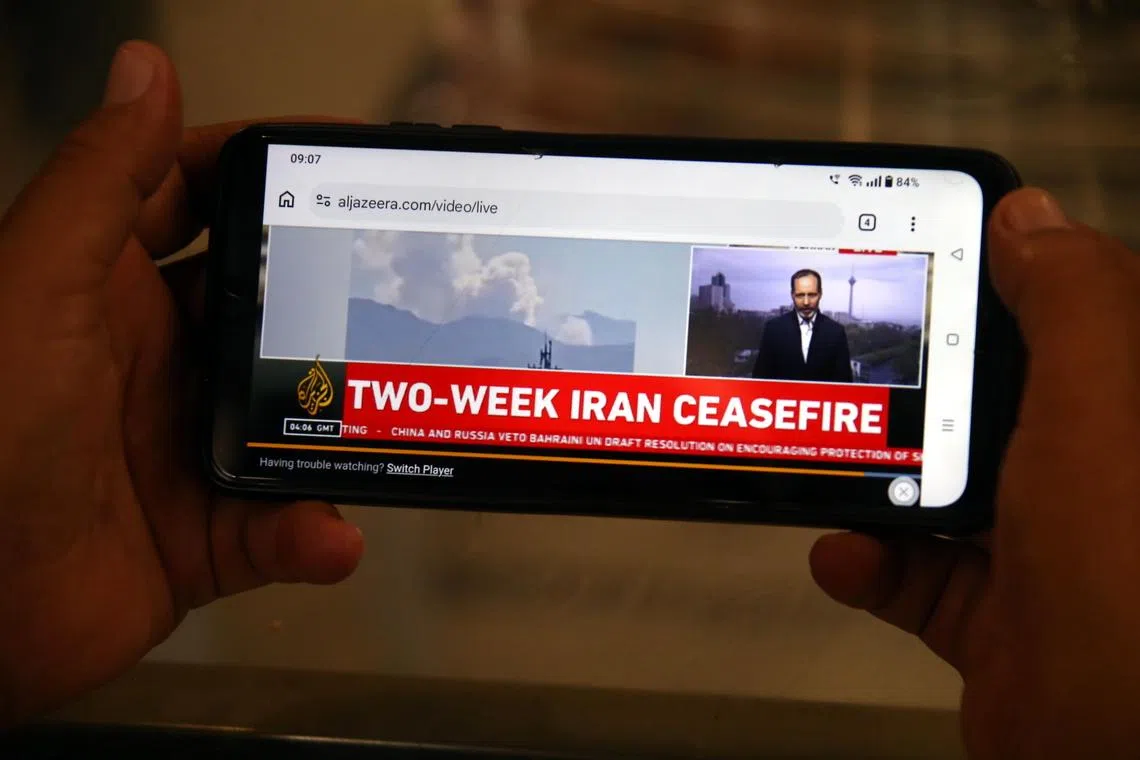
Amid questions on whether the two-week ceasefire brokered by Pakistan would hold, the US and Iran are set to begin negotiations towards achieving durable peace in Islamabad on April 10.
The pause opens the path to halting the bloodshed and destruction that quickly expanded across the Middle East in the wake of the joint US-Israeli strikes that pulverised Iranian nuclear sites, military bases and command nodes.
The ceasefire also appears to offer at least temporary reprieve for Asia’s oil and gas importing nations. Iranian Foreign Minister Abbas Araghchi said the country will allow the “safe passage” of vessels through the Strait of Hormuz during the two-week period “via coordination with Iran’s armed forces and with due consideration of technical limitations”.
Trump’s comments in an interview with ABC News and on Truth Social went further, raising the possibility of the US and Iran jointly charging a toll on ships traversing the Strait.
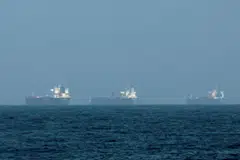
“We are thinking of doing it as a joint venture. It is a way of securing it, also securing it from lots of other people,” Trump told ABC News.
In a Truth Social post, he had more details. The US would be monitoring and “helping with the traffic buildup” in the Strait, he said.
“We will be loading up with supplies of all kinds, and just ‘hangin’ around’, in order to make sure that everything goes well,” he said, adding that Iran could “start the reconstruction process”.
“Big money will be made,” he added. “Just like we are experiencing in the US, this could be the golden age of the Middle East.”
If the series of disparate comments appeared to allow Iran to continue exerting influence over the narrow waterway that was freely navigable before the war began on Feb 28, it was possibly not the only concession that Trump appears to be making to Iran.
Trump also suggested that the US would work with Iran to “remove” its supply of highly enriched uranium which can be used to make nuclear weapons, a possibility that the US had cited as a reason to wage the war. In exchange, the US appears prepared to offer tariff and sanctions relief.
“There will be no enrichment of uranium, and the US will, working with Iran, dig up and remove all of the deeply buried (B-2 bombers) nuclear dust,” he said in a Truth Social post.
Iran has made no comment to suggest it is prepared to hand over its stockpile of at least 440 kg of near-weapons grade uranium that can be used to make up to a dozen bombs.
Iran claims a ‘victory’
Iran’s Supreme National Security Council, the country’s top body for coordinating national security, defence and foreign policy decisions, wasted no time in claiming a “victory” in getting the US to accept its 10-point peace plan.
“The enemy has suffered an undeniable, historic and crushing defeat in its cowardly, illegal and criminal war against the Iranian nation,” the council said soon after accepting the ceasefire, using the bombastic rhetoric typical of the Islamic republic.
Nour News, a publication backed by the council, listed the 10 points of the Iranian proposal which amounted to a recitation of all of the regime’s long-held hardline demands. For instance, control over the Strait of Hormuz, the right to enrich uranium, lifting of economic sanctions, compensation for war damage and the withdrawal of US combat forces from the region.
It remains highly unlikely that the US will accept these demands, but their mere acceptance as the baseline for negotiation counts as a climbdown for the Trump administration.
What stunned observers were Trump’s initial comments when announcing the ceasefire in a Truth Social post.
He described the “10-point peace proposal” received from Iran as a “workable basis on which to negotiate”.
“Almost all of the various points of past contention” have been agreed to between the US and Iran, he said, adding that the “two-week period will allow the agreement to be finalised and consummated”.
He also said he had agreed to the ceasefire because the US had already “met and exceeded all military objectives”.
Asked for clarity on what Trump meant by the Iranian peace proposal being “workable”, White House press secretary Karoline Leavitt said that Trump had prevailed.
“The truth is that President Trump and our powerful military got Iran to agree to reopening the Strait of Hormuz, and negotiations will continue,” Leavitt said in a statement.
A day after Trump’s social media posts raised questions about the conflicting messages emerging from Washington and Iran, Defence Secretary Pete Hegseth tried to seize control of the narrative.
The US had achieved a “historic and overwhelming victory on the battlefield”, he said in a tense press conference at the Pentagon.
“Iran begged for this ceasefire,” he said in comments meant to clarify the circumstances in which the US went from threatening the obliteration of Iran to a fragile ceasefire.
“President Trump had the power to cripple Iran’s entire economy in minutes. But he chose mercy. He spared those targets because Iran accepted the ceasefire under overwhelming pressure, the new Iranian regime understood that a deal was far better than the fate that awaited them,” Hegseth added.
Asked if the US had allowed a “grace period” for the ceasefire to take hold amid reports that Gulf nations were still coming under attack from Iran, he said the US was monitoring developments in “real time”.
“Iran would be wise to find a way to get the carrier pigeon to their troops out in remote locations to (tell them) not to shoot any longer,” he added.
General Dan Caine, chairman of the Joint Chiefs of Staff, said the US stood ready to resume its military campaign against Iran if the ceasefire collapses.
The US had achieved the military objectives as defined by the President, he said, listing them as: Destroying Iran’s ballistic missile and drone capabilities, eliminating its navy, and destroying its defence-industrial base.
But Professor Robert Pape, an expert on security issues at the University of Chicago, called the outcome a “huge strategic defeat for the US, the biggest loss since Vietnam”.
What’s next?
The key question now, he said, is not who “won”.
“It is whether a new rule has been set: that stability in global energy flows depends on accommodating Iran. If that holds, even partially, the system has already shifted,” he noted in a social media post.
Retired Lieutenant-General H.R. McMaster, who served as Trump’s national security adviser (2017-18) during his first term, said preventing Iran from projecting power outside its borders would be a key challenge.
“I don’t think that is feasible until there is a fundamental change in the nature of the regime,” he said in a TV interview, adding that he did not expect the regime to survive long because the joint US-Israeli military campaign had decimated its sources of strength and support, including its military leadership, weapons and proxies.
Dr Robert Satloff, an expert on US Middle East policy at The Washington Institute for Near East Policy, said the US might need to retain the option of resuming a military campaign.
“For the US, victory in this war has not yet been achieved,” he said in a post on X.
“It will come by translating the US armed forces’ impressive operational success into firm, lasting strategic accomplishments, on issues from Iran’s nuclear ambitions to the resumption of free, open, unfettered transit through the Strait of Hormuz,” he said.
“That will require maintaining a credible threat of a return to armed conflict and a diplomacy that matches the skill and creativity of our military,” Dr Satloff added. THE STRAITS TIMES
Decoding Asia newsletter: your guide to navigating Asia in a new global order. Sign up here to get Decoding Asia newsletter. Delivered to your inbox. Free.
Share with us your feedback on BT's products and services
TRENDING NOW

Philippine power giant First Gen rebuffs foreign offers, plans up to US$2.6 billion in expansion

Cliff Tan has 7 million followers and a 4-month waitlist. Why won’t he expand his business?

Could stablecoins be the future of money?

From finance aspirant to Asean CEO: TUV SUD’s Jonas Strahberger on finding people who believe in you

