Iran war splits Asia’s diesel market into haves and have-nots
Countries in South-east Asia have limited oil stocks, leaving them more vulnerable to supply disruptions
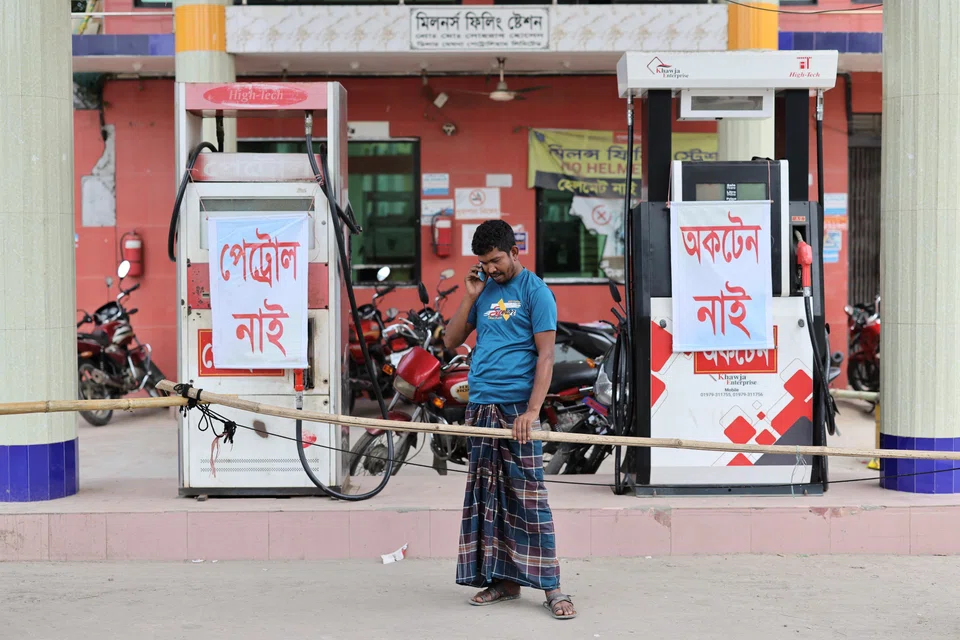
[SINGAPORE] The war in the Middle East has left Asian buyers grappling with a two-speed diesel economy, as poorer states face acute shortfalls, while wealthier nations with large refining industries enjoy sizable buffers.
Diesel – vital for the transport of goods, agriculture and industry – has been among the fuels most immediately affected by the conflict. In Asia, refining powerhouses China and South Korea curbed product exports after processors were forced to cut run rates. That triggered a drop in fuel flows to regional buyers, with importers such as Indonesia and the Philippines bearing the brunt.
For richer nations, the curbs have paid off as their domestic supplies remain healthy. Among indicators of relative abundance, commercial diesel inventories in China recently touched the highest level in nearly two years even as state-owned refineries ran slower, according to data from Mysteel Oilchem.
But for poorer countries such as India – where diesel runs through the backbone of the economy, and most goods are moved by road – there are mounting problems. Truck owner Smruti Ranjan Samantaray said that one of his vehicles headed to pick up a load of iron ore has been stranded by the roadside in the eastern state of Odisha as pumps run dry.
“The situation is quite serious,” Samantaray said by phone on Thursday (Apr 30), adding that he also halted the departure of seven additional trucks as the shortages appeared to be worsening. “When I last spoke to the driver, he said several other trucks are idling on the side of roads.”
The war between the US and Iran – now in its third month – has forced the near-total closure of the Strait of Hormuz, crippling shipments of crude as well as refined products. Brent futures topped US$126 a barrel this week to hit the highest in almost four years, and product prices including diesel have soared.
For the world’s most populous region, that is feeding into a pick-up in inflation as costs surge for farmers, manufacturers and drivers. In the Philippines – which declared a national energy emergency – price gains hit 4.1 per cent in March, the fastest in nearly two years, and the central bank expects they’ll go higher still.
‘More vulnerable’
“The impact of the diesel shortage isn’t evenly distributed across Asian countries,” said Xavier Tang, a senior market analyst at Vortexa “Countries in South-east Asia have limited oil stocks, leaving them more vulnerable to supply disruptions.”
Asia typically sources most of its diesel from plants within the region, which in turn rely on flows of crude from the Middle East for a substantial share of their input. With oil supplies from the Persian Gulf down by more than 14 million barrels a day, according to an estimate from Goldman Sachs Group, that has had a knock-on effect in Asia as seaborne diesel exports contract.


In Indonesia, the shortage of diesel has prompted South-east Asia’s largest economy to fast-track the roll-out of a blend comprised 50 per cent of biofuels from its vast oil palm plantations. That push has come as the surge in international crude oil prices lifted the cost of regular diesel far above its crop-based counterpart, a reversal of the usual pattern, traders said.
In Vietnam, industries including steel- and cement-making have been asked by the government to conserve fuel, while Nghi Son Refinery and Petrochemical, a major processor, asked Japan’s Idemitsu Kosan, which has a stake in Nghi Son, for help in sourcing feedstock. Elsewhere, Thailand’s Cabinet approved a plan to borrow money to try to shield consumers from rising fuel costs.
“The poorer countries in South-east Asia are much harder hit,” said Arne Lohmann Rasmussen, chief analyst at A/S Global Risk Management. “But the bottom line is that the situation is getting worse by the day. There is no one that can make up for the Middle East supply shortfall.”
Some of the toughest conditions have emerged in India with service stations running dry, as truck owner Samantaray has found. While authorities have been shielding consumers from the surge in costs caused by the war, there are now widespread expectations that retailers will soon raise pump prices for the first time in four years following the conclusion of state elections.
“There’s a lot of uncertainty about fuel supplies and price-rise,” Samantaray said. “Now that the state elections are over, we are waiting for clarity on these matters.”
In Northeast Asia, the picture is different. While South Korea and Japan faced lower refinery run rates – Japan’s plants have been working at 68 per cent of capacity compared with 80 per cent in normal times – there have been little-or-no local deficits, even if costs have gone up, according to traders. In addition, both governments presided over the release of emergency energy stockpiles.
South Korean refiners may now be set to raise exports of diesel next month, according to industry consultant FGE NexantECA. In China, there are similar signs, with state-owned refiners asking Beijing for permits to export fuels next month, citing abundant local stockpiles as a result of the initial curbs.
While such moves may be welcomed by importers, difficulties look set to persist especially as diesel consumption picks up at this time of year on a seasonal basis, in part because of spiking demand for harvesting and cooling.
“The current supply shocks – compounded by refinery run cuts in Japan, South Korea and China to preserve stockpiles – are likely to keep the regional products market structurally tight well beyond the peak summer season,” said Nikhil Bhandari, co-head of Asia-Pacific natural resources and clean energy research at Goldman Sachs. BLOOMBERG
Decoding Asia newsletter: your guide to navigating Asia in a new global order. Sign up here to get Decoding Asia newsletter. Delivered to your inbox. Free.
Share with us your feedback on BT's products and services