



Jury is still out on whether reforms will lift City of London’s fortunes
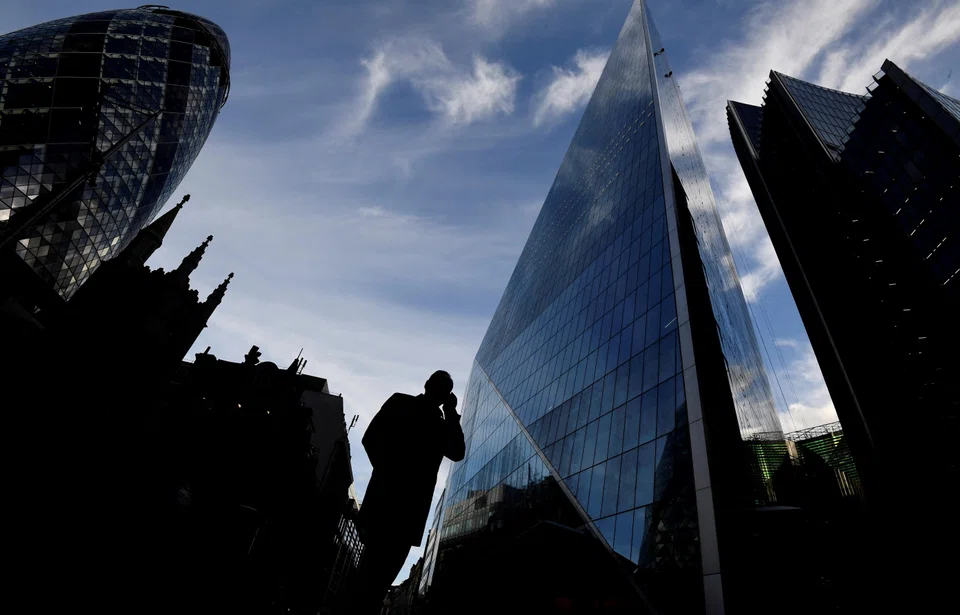
[LONDON] The UK government is hoping that a host of reforms – new financial legislation and updated regulation – will boost the City of London. But the big question is whether these changes will arrest the post-Brexit decline in equity listings, declines in foreign exchange and bond trading income, and the movement of talent to other major cities like New York, Amsterdam, Paris and Frankfurt.
About 590,000 people work in the City of London, which is the core of the UK’s financial industry and has a centuries-old special status.
Business leaders say they generally welcome the reforms, but many are still concerned that deals and investments will continue to be diverted to the fast-growing Euronext, which operates in Amsterdam, Brussels and Dublin.
This pan-European stock and derivatives exchange aims to establish a single clearing house across Europe for equities, currency, interest rate and commodity derivatives. In a recent speech in London, British Chancellor of the Exchequer Jeremy Hunt said that a new financial-services memorandum of understanding (MOU) signed with the European Union should underpin London as a top financial centre.
The MOU covers regulatory knowledge, data and the sharing of future strategies to improve market stability and transparency.
The UK Treasury said in a statement: “The regulatory cooperation should not restrict the ability of either jurisdiction to implement regulatory, supervisory or other legal measures that it considers appropriate.” The MOU, however, does not equate to regulatory equivalence or straightforward access to the EU’s single market. Hunt said: “Protectionist rules inherited from our time in the EU will be abolished, so that UK investors can access the best and most liquid markets anywhere in the world.” To counter a decline in London Stock Exchange (LSE) equity listings, company prospectuses will be “more accessible and understandable” and will save potential initial public offerings both time and money, he said. The government also intends to follow the recommendations of an investment review headed by Rachel Kent, a senior partner in financial services in the legal firm, Hogan Lovells.



The review paves the way for a new research platform that will provide pension funds and investors much easier access to research and security experts. It aims to remove an inherited EU law that requires brokers to charge a separate fee for research. There are also plans to establish an intermittent trading venue that will give private companies access to capital markets without floating on a stock exchange, said Hunt. “If implemented, the measures stand to simplify the listing process and unlock further innovation, which will help attract businesses from across the world,” said Anna Anthony, the managing partner of UK financial services at Ernst & Young. “But success can only be measured on actions, and we cannot be complacent,” she said. The City of London’s latest review of financial services showed that the London Stock Exchange’s share of global market capitalisation dropped to 5 per cent in 2022, from 7 per cent in 2018. In contrast, Euronext’s proportion rose steadily to 9 per cent over the same period.
Wall Street, including Nasdaq, is well ahead, with 63 per cent of global market capitalisation. The UK’s market share of global over-the-counter (OTC) equities trading fell to 46 per cent in 2022, from 50 per cent in 2019, but remains the biggest market in the world, the City of London’s review said. London’s share of global private equity and venture capital investment dipped to 18 per cent in 2022, from 23 per cent in 2021. According to the Bank of International Settlements’ latest triennial survey, London remained the dominant centre for OTC foreign-exchange trading and interest rate derivatives (IRDs). But its share in euro and dollar IRDs has fallen, while recent data also raises questions on whether London’s underwriting of eurobonds is being eroded, the BIS said.
Decoding Asia newsletter: your guide to navigating Asia in a new global order. Sign up here to get Decoding Asia newsletter. Delivered to your inbox. Free.
Share with us your feedback on BT's products and services
TRENDING NOW

Singapore’s central gas buyer affirms Indonesia’s role as ‘important partner’ amid export review warning

Why the biggest business decision about AI isn’t which model to choose

Is Manila Asia’s new dining hot spot?

KKR founders among investors buying 42% of Peter Lim’s Valencia; club valued at US$1.4 billion

