



Middle East war affects Singapore’s September bunker sales
This is despite more vessels arriving in the Republic

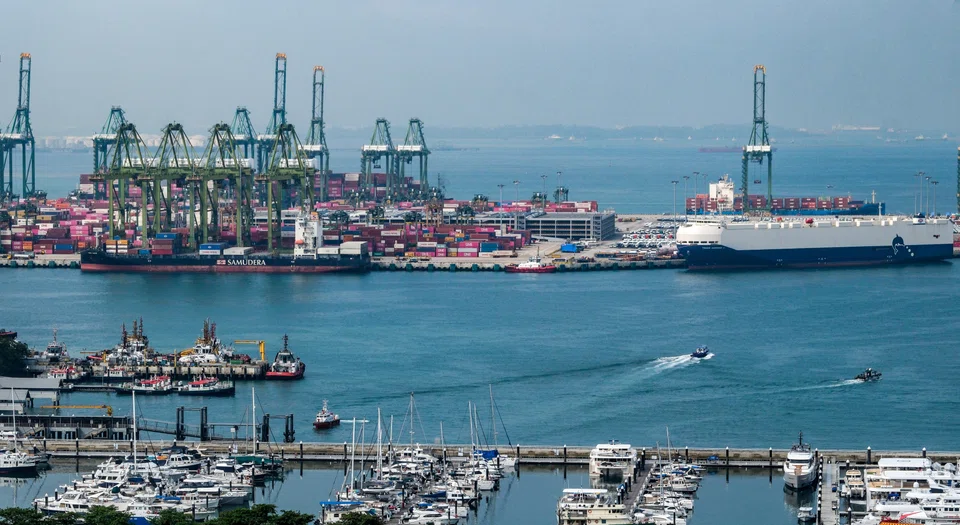
[SINGAPORE] Singapore sold less marine fuel in September despite more vessels arriving, as the Middle East war hits the world’s largest bunkering hub in both price and physical availability.
Sales of marine fuel in Singapore came in at over 4.7 million tonnes in September, falling 1 per cent both month on month and year on year.
Statistics from the Maritime and Port Authority of Singapore published on Wednesday (Oct 14) showed that sales had been rising from April – the first month when the war-induced tight global oil supply started to bite – to August.
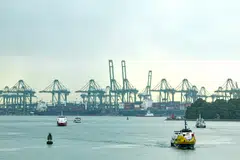
The sales performance in September was logged against 3,617 vessels arriving to refuel in the Republic, up 0.8 per cent or 29 vessels month on month. However, these vessels collectively had a smaller capacity.
Compared with a year earlier, the latest figure is 2.8 per cent or 99 ships higher; the vessels this September were larger as well.
Notably, just 1,466 oil tankers arrived during the month. This marked a 4.9 per cent decline month on month, and a 5.7 per cent decline year on year.
Mahua Mitra, head of marine fuels pricing, Asia-Pacific at Argus Media, noted that the weakness was in refuelling volumes per call, and not the number of ships using Singapore.
She noted that while total vessel arrivals rose by 5.6 per cent to 11,608, buyers “took less low-sulphur fuel oil (LSFO), switched some demand into high-sulphur fuel oil (HSFO) and remained cautious on higher-priced alternative fuels like liquefied natural gas”.
“This points to supply, price and fuel-choice effects rather than weaker underlying shipping activity,” she noted.
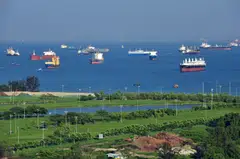
The main drag, Mitra added, was LSFO, sales of which fell by 5.6 per cent to 2.2 million tonnes as limited blendstock availability tightened near-term availability in the first half of September.
Higher prices and volatility likely encouraged buyers to limit refuelling volume per order, delay purchases where possible or consider competing ports.
The rise in HSFO sales points to substitution within the conventional fuel pool as nearly two million tonnes, or 6.3 per cent more than in the year-ago period, were sold.
However, this was not caused simply by a demand surge as HSFO supplies into Asia were also constrained, with fewer Singapore offers and longer lead times – the period between placing an order and securing a confirmed delivery slot before the vessel arrives – towards the end of September.
The shift to HSFO is a reflection of scrubber-fitted vessels taking advantage of cheaper HSFO as scrubbers, which are exhaust gas-cleaning systems, allow vessels to burn cheaper HSFO while meeting emissions requirements, Mitra said.
While LSFO availability should improve as fresh blendstocks arrive in the near term, she flagged that the industry should watch HSFO supply because cargo flows into Asia from the Middle East are still uncertain.
Impact of a prolonged disruption
A prolonged disruption would keep price premiums and delivery lead times elevated. It could also make Singapore more vulnerable to demand shifting to Chinese ports when the Zhoushan port is more competitively priced.
The key indicators for the coming months would include prompt very low sulphur fuel oil and HSFO availability, and Singapore’s price position against Zhoushan, said Mitra.
Prices of bunkers delivered in Singapore spiked for key grades shortly after the US-Israel attacks against Iran started on Feb 28, as the supply of crude oil flowing through the Strait of Hormuz was reduced to a trickle after Iran closed the waterway.
One-fifth of global crude oil volume would have normally flowed through this passage.
Although prices have since dropped from the March-to-April peaks, they are now on an upward trajectory after US and Iran failed to sustain a ceasefire.
Decoding Asia newsletter: your guide to navigating Asia in a new global order. Sign up here to get Decoding Asia newsletter. Delivered to your inbox. Free.
Copyright SPH Media. All rights reserved.
TRENDING NOW
Singapore identifies 7 firms responsible for haze fires, notices issued urging action: Grace Fu

DBS remains analysts’ pick ahead of Q3 earnings after Singapore banks’ share slump

High Court rules against Julius Baer’s Singapore trust arm in US$50 million family trust dispute

Could stablecoins be the future of money?

