
Musk is beating China’s 203,000 paper satellites
The country’s plans are best understood not as a genuine expansion, but a bid to hobble the front-runner
IF ORBITAL space is the 21st century’s high seas, China looks to be preparing an armada. Government plans submitted late last year to the United Nations’ International Telecommunications Union, or ITU, promise a fleet of 203,000 satellites to be deployed by the mid-2030s.
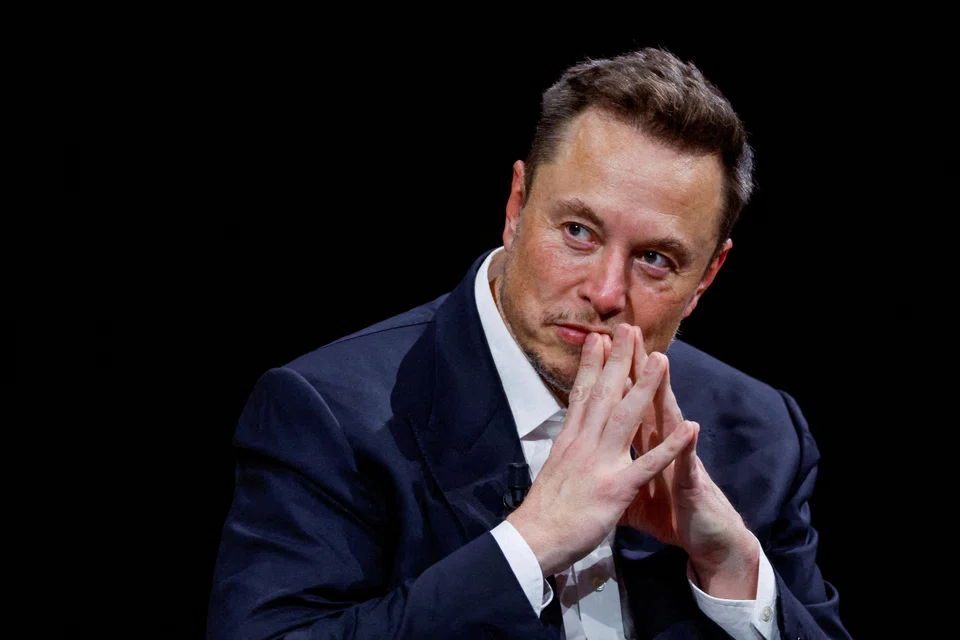
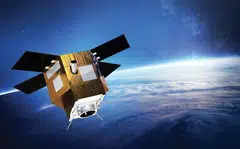
That would dwarf the ambitions of Elon Musk or Jeff Bezos: SpaceX’s Starlink network has nearly 10,000 orbiters so far, while Amazon.com’s Leo constellation will top out at just 3,232. It sounds like an alarming plan for control of space. But while there’s undoubtedly a land grab underway 600 kilometres above the ground, it’s one that Musk is winning.
China’s plans are best understood not as a genuine expansion, but a bid to hobble the front-runner. The number of objects orbiting the earth is rising at breakneck speed. Two key innovations – reusable rockets such as SpaceX’s Falcon 9, and the development of resilient and lightweight components that enable smaller craft – have slashed launch costs.
Since 2020, the number of orbiters has quadrupled to more than 16,000. SpaceX alone is adding more than 2,000 satellites a year. That’s rapidly turning the idea of overcrowding in space from a science-fiction scenario to a reality. Putting too many objects in orbit carries a host of potential problems.
The most nightmarish is Kessler syndrome, the runaway chain reaction that strands Sandra Bullock in the 2013 film Gravity. One disintegrating orbiter forms a cloud of debris, in turn smashing up other vehicles, until Earth is surrounded by a hazardous asteroid belt of scrap.
The more prosaic and pressing issue is that too many communication satellites might cause radio interference. The so-called megaconstellations being built by SpaceX and Leo float in Low Earth Orbit, closer than the far smaller number of GPS, weather and communications craft in Medium Earth Orbit and geostationary space. In that position, they risk blocking the signals from more distant orbiters.
How near are we to that point? Closer than you might think. There is about the same density of active satellites at the best altitude for megaconstellations as there are pieces of space debris, the European Space Agency said in October.
There may only be enough room at these levels for as few as 148,000 objects, according to one study last year. If just four space programs hit SpaceX’s current launch cadence of more than 2,000 orbiters a year, we could reach that number by the late 2030s.
That’s the best context in which to understand China’s 203,000-device plan. Many will be “paper satellites” designed to create a regulatory hurdle for Musk and other megaconstellation builders, Evan Grey, a contributor to website SatNews, argued last month.
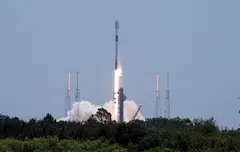
They don’t have to enter orbit until the early 2030s, and the only penalty if they’re never launched is that China will lose the “slots” it’s reserving. But the ITU counts them as real, and that has implications for the way rivals must mitigate radio interference.
“Western engineers are forced to design real hardware to dodge the ‘ghost noise’ of Chinese paper satellites,” Grey wrote, “effectively throttling the power and performance of US networks before they even launch.”
China is hardly alone in this. One 2023 study found that governments had proposed launching a million orbiters in the previous few years. About 454,000 of that total was linked to just one man, serial entrepreneur Greg Wyler – a sometime associate of Musk as well as of Jeffrey Epstein, who advised Wyler on the creation of OneWeb.
OneWeb, which Wyler left after a 2020 bankruptcy, is currently the most serious competitor to Starlink, with about 600 in space against its 9,646.
The scale of that disparity is a clue to how far ahead of the competition Musk is right now. Until a rival can develop a reusable rocket to match the low costs and rapid launch cadence of SpaceX’s Falcon 9, the only weapon they can deploy in this 21st century space race is delaying tactics at a UN agency in Geneva founded by Napoleon Bonaparte’s nephew.
China has nearly half a dozen companies, both private and state-owned, racing towards developing reusable rockets. With every month that goes by, however, SpaceX creates hundreds more orbiters on (or, rather, off) the ground.
A megaconstellation of 203,000 paper satellites might look like a plan for global domination, yet until China creates its own Falcon 9, the real power and potential lies in Musk’s hands.
The touted US$1.5 trillion number being mooted for SpaceX’s listing this year might seem extravagant. But Musk, Bezos, and Wyler are all betting that the future of the Internet and communications depends not on overloaded terrestrial systems, but megaconstellations in Low Earth Orbit.
China seems to have now made the same assessment. If that wager is right, Starlink’s commanding lead in space might justify its stratospheric valuation. BLOOMBERG
Decoding Asia newsletter: your guide to navigating Asia in a new global order. Sign up here to get Decoding Asia newsletter. Delivered to your inbox. Free.
Share with us your feedback on BT's products and services