



Nepal-Tibet flash flood kills at least 469; fast-filling lakes raise threat of further floods
More than 1,500 people are missing, including visitors from India, Malaysia, Australia, UK, US, Singapore
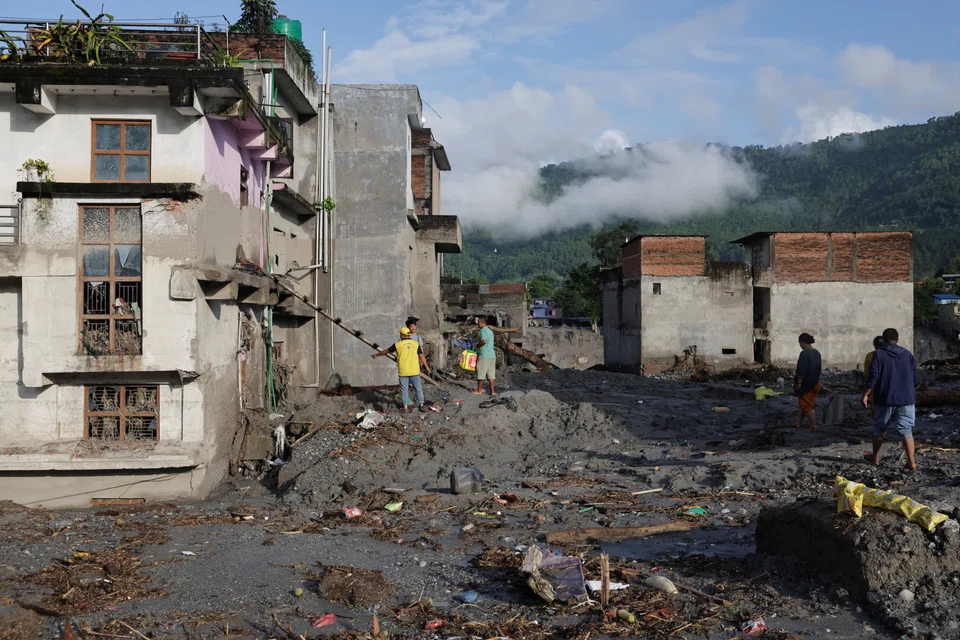
RIVERS choked with rocks, ice and mud after a devastating flash flood are creating unstable lakes high in the Himalayas, prompting fresh warnings as rescuers in Nepal and China scour the mountains for survivors.
At least 469 people have been confirmed dead, a toll that is expected to rise in the coming days after fast-moving waters swept through villages, wiping out bridges, roads and entire settlements in a Nepalese valley near the border with China.
More than 1,500 people are missing across both countries, including visitors from India, Malaysia, Australia, the UK, the US and Singapore.
Images from the region showed rescuers crawling through sludge and debris to reach stranded survivors. As floodwaters receded, battered homes were left standing in pools of silt and flotsam.
In a dramatic rescue at the Trishuli-1 project, where a hydroelectric plant is under construction, emergency teams airlifted more than 300 trapped survivors. Some eight key hydropower projects around the area – some in progress and some already operational – have been affected by the disaster.
The threat of new flooding on both sides of the border risks complicating already challenging rescue efforts in a remote mountain region.
Satellite analysis has shown a new lake is forming above the Rasuwagadhi border crossing between Nepal and China due to the obstruction of the Lhende River, Kathmandu’s Disaster Risk Reduction and Management Authority said in a post to X.
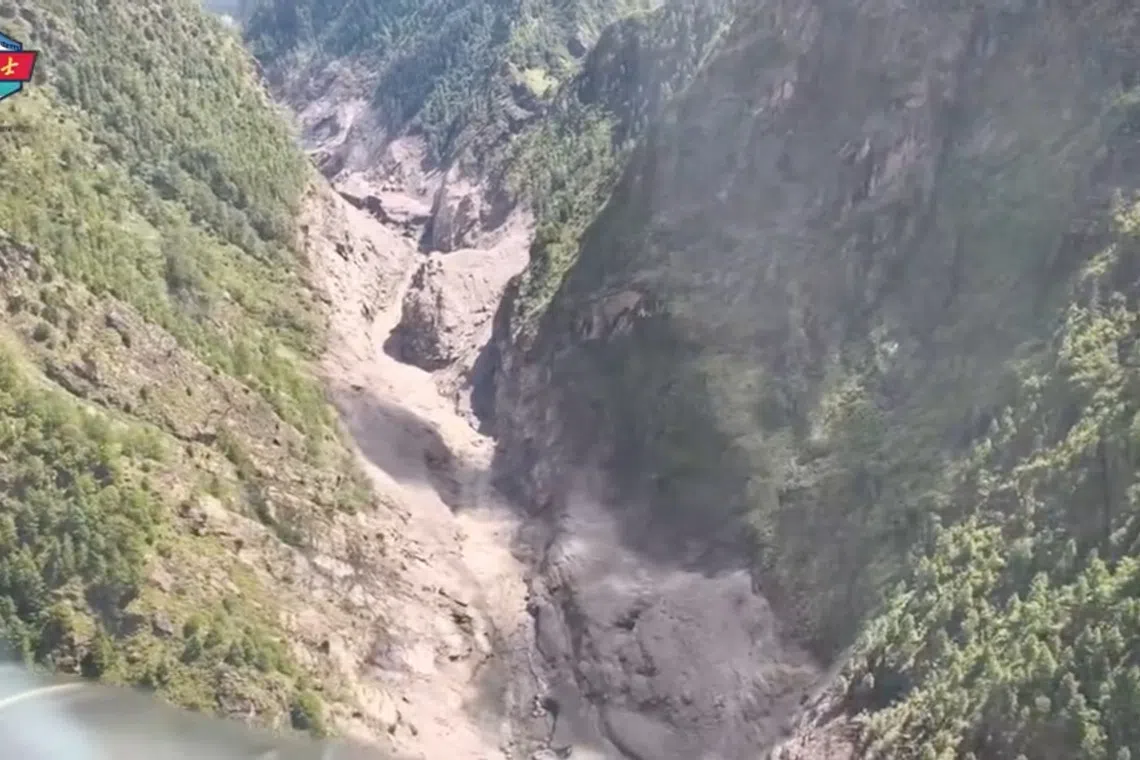
It warned the lake could breach its banks: “Residents of downstream areas and all concerned are requested to adopt necessary vigilance and remain on high alert. It is estimated that there may be additional lakes in that area.”
China’s Ministry of Water Resources warned that a barrier lake had formed as a result of falling ice-rock debris and was quickly filling up with water, according to state-run broadcaster CGTN.
SEE ALSO



By Thursday morning, the new lake had filled with 2 million cubic metres (cu m) of water and was already beginning to overflow, the ministry said. That was expected to rise by an additional 3 million cu m over the next three days, with Chinese authorities closely monitoring for potential flooding.
Chinese President Xi Jinping dispatched his second-in-command, Li Qiang, to inspect emergency rescue efforts in affected areas of Tibet on Thursday afternoon. While no images or official details from the visit have yet emerged, the speed with which Li travelled to the disaster zone underscores the relief work is a priority for Beijing.
Tom Robinson, senior lecturer at the University of Canterbury in New Zealand, who researches landslides in the Himalayas, said the lake was formed like a standard hydroelectric dam, but without the option of naturally releasing water in a controlled way.
“In the worst-case scenario, it will erode itself a channel. That can lead to a total collapse of the debris, and the entire lake can drain away very, very quickly,” he said, adding that there was no way of immediately predicting the stability of the dam without observers on the ground, meaning it would require constant vigilance.
“From the images I’ve seen, it’s already quite large and it is still the tail end of the monsoon season,” Robinson said. “It’s going to pose a real risk, particularly to rescuers, if they are putting themselves downstream to try and find people. This is a real threat to them.”
Assessments based on seismic and satellite data indicate the initial flood was triggered by the collapse of a glacier and underlying bedrock in the Himalayan region between Nepal and Tibet on Wednesday, causing a 5.2-magnitude seismic event that sent water, ice, rock and debris downstream.
Images and videos circulated online show the extent of the water’s force, with walls of gray water sweeping through villages and valleys, pulling down trees, pushing boulders and sweeping over masses of people attempting to flee.
While hundreds have been rescued, there are still 977 people currently reported missing in Nepal, while over the border in China, authorities have said they are looking for 558.
Dr Gopal Sedain, deputy director of Tribhuvan University Teaching Hospital in Kathmandu, said 20 patients had arrived but more were on the way. Blocked roads and difficult access have made it difficult to transport injured survivors out of the flooded area, he said, adding that many arrived with fractures and lacerations. Some were still trying to contact family members.
“We still expect more patients, either those who have minor injuries or those who haven’t been able to be rescued for now,” he said by telephone. “I think they will be coming to the hospital in the coming days.”
According to Nepal’s police, more than 170 Indian citizens are currently missing, the largest group of foreign nationals currently unaccounted for, followed by about 65 Americans and 51 Malaysians.
The number of Australians missing in the disaster has risen to 39, Foreign Minister Penny Wong said on Friday, adding that the country was deploying a rapid response team and an initial A$5 million (US$3.6 million) in funding to Nepal. BLOOMBERG
Decoding Asia newsletter: your guide to navigating Asia in a new global order. Sign up here to get Decoding Asia newsletter. Delivered to your inbox. Free.
Share with us your feedback on BT's products and services
TRENDING NOW

He built the Vingroup empire. Now South-east Asia’s richest man is handing some key roles to his sons

Quarter of Singtel special discounted shares sold ahead of CPF Board transfer

Why Tan Aik Keong of digital solutions specialist Agmo wants to make himself less indispensable
Asia needs new energy security architecture

