Oil prices climb 2% after US shoots down Iranian drone, worries about armed boats
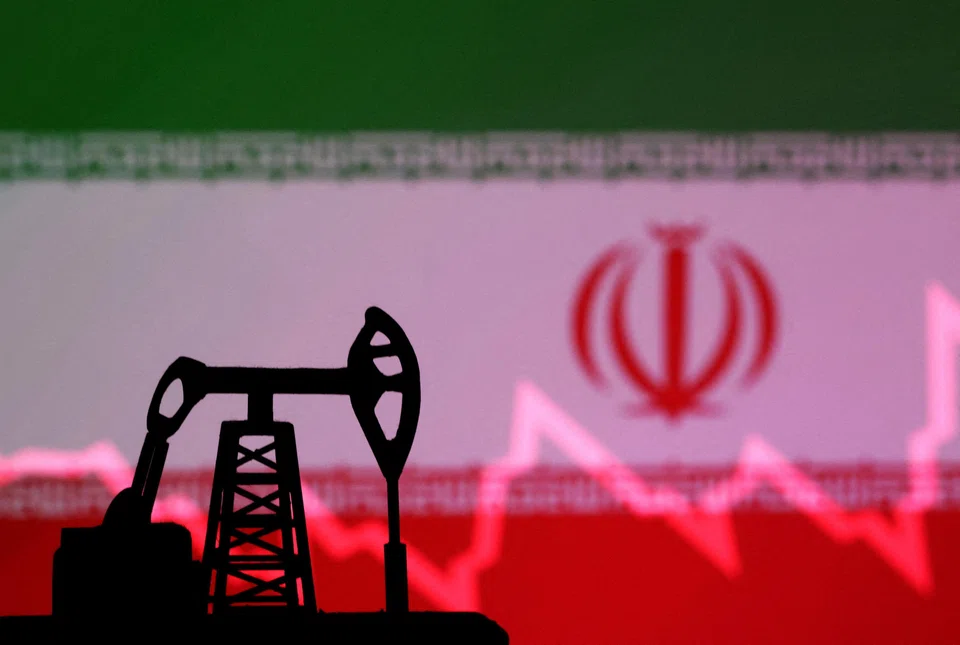
[NEW YORK] Oil prices climbed about 2 per cent on Tuesday after the US shot down an Iranian drone approaching a US aircraft carrier and armed boats approached a US-flagged vessel in the Strait of Hormuz, stoking concerns talks aimed at de-escalating US-Iran tensions could be disrupted.
Brent futures rose US$1.03, or 1.6 per cent, to settle at US$67.33 per barrel, while US West Texas Intermediate crude rose US$1.07, or 1.7 per cent, to settle at US$63.21.
On Monday, both crude benchmarks dropped more than 4 per cent after US President Donald Trump said Iran was “seriously talking” with Washington.
But on Tuesday, the US military shot down an Iranian drone that “aggressively” approached the Abraham Lincoln aircraft carrier in the Arabian Sea.
In the Strait of Hormuz between the Persian Gulf and the Gulf of Oman, a group of Iranian gunboats approached a US-flagged tanker north of Oman, maritime sources and a security consultancy said on Tuesday.
Opec members Saudi Arabia, Iran, the United Arab Emirates, Kuwait and Iraq export most of their crude via the strait, mainly to Asia.
“The diplomatic effort to avoid a US military strike in Iran is unravelling ... it would appear (elements in Iran) are trying their best to sabotage the process right now,” Bob Yawger, director of energy futures at Mizuho, said in a note.
Iran was the third-biggest Opec crude producer in 2025, according to US Energy Information Administration data.
“Iran’s significance within oil markets extends well beyond its own production profile. The country’s geopolitical weight is rooted in its strategic location, its influence over regional security dynamics, and its capacity to disrupt critical energy infrastructure and transit routes,” said Jorge Leon, senior vice-president and head of geopolitical analysis at consultancy Rystad Energy.
Regional power United Arab Emirates urged Iran and the US on Tuesday to use the resumption of nuclear talks this week to resolve a standoff that has led to mutual threats of air strikes.
Iran, meanwhile, is demanding that talks with the US this week be held in Oman not Turkey, and that the scope be narrowed to two-way talks on nuclear issues only, casting doubt on whether the meeting will go ahead as planned.
Russia and India
Earlier on Tuesday, oil prices had gained support as a trade agreement between the US and India raised hopes that global energy demand could increase, while Russia’s continued attacks on Ukraine boosted worries Moscow’s oil would remain sanctioned for longer.
Trump’s move to slash tariffs on Indian imports lifted sentiment among exporters and policymakers even as details of the agreement remained scant.
Trump announced a trade deal with India on Monday to cut tariffs to 18 per cent from 50 per cent in exchange for New Delhi halting Russian oil purchases and lowering trade barriers. India is one of the world’s biggest economies and oil importers.
While the deal might appear bullish for oil, “the near-term impact will likely be on a further discount on Russian crude barrels that is unlikely to affect exit of shadow cargoes into the world market,” energy advisory firm Ritterbusch and Associates said.
In Ukraine, President Volodymyr Zelenskiy accused Russia on Tuesday of exploiting a US-backed energy truce to stockpile munitions, and using them to attack Ukraine a day before peace talks.
The overnight attack knocked out heating in cities including the capital Kyiv as Ukrainian negotiators headed to Abu Dhabi for a second round of U.S.-brokered trilateral talks set for Wednesday and Thursday.
Any delay to ending the war in Ukraine would likely keep oil prices elevated by leaving sanctions limiting Russia’s oil exports in place following Moscow’s 2022 invasion.
Russia was the world’s third-biggest crude producer behind the US and Saudi Arabia in 2025, according to EIA data. REUTERS
Decoding Asia newsletter: your guide to navigating Asia in a new global order. Sign up here to get Decoding Asia newsletter. Delivered to your inbox. Free.
Share with us your feedback on BT's products and services