Global Enterprise logo
BROUGHT TO YOU BYsc logo

Power crunch, red tape forcing Asia’s data centres out of hyperscaler hubs

Operators are pivoting towards a ‘decentralised’ model – which places data centres in ‘Tier-2’ cities

Summarise
Young Zhan Heng
Published Tue, Jan 13, 2026 · 07:48 PM — Updated Thu, Jan 15, 2026 · 10:44 AM
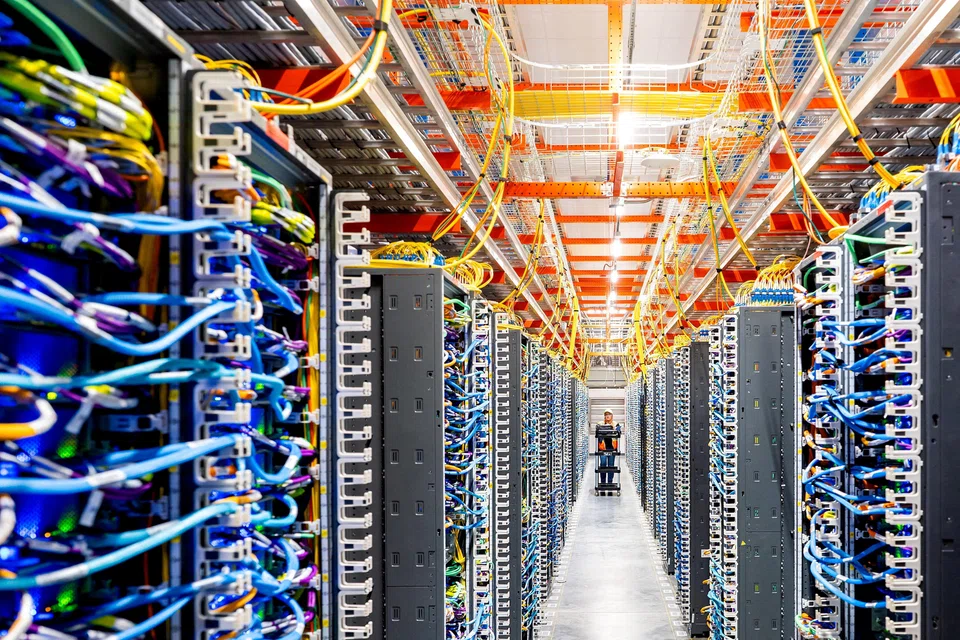
    • Above: A data centre in Indiana in the US.  While decentralised centres offer solutions that traditional hyperscalers struggle to answer, the two models are expected to coexist to meet rising AI demands.
    • Above: A data centre in Indiana in the US. While decentralised centres offer solutions that traditional hyperscalers struggle to answer, the two models are expected to coexist to meet rising AI demands. PHOTO: REUTERS

    [SINGAPORE] Operators are starting to move data centres out of metropolitan hubs and opting for a more decentralised model as the sector experiences record-high demand.

    Citing reasons such as straining power grids and intensifying regulatory friction at traditional hyperscaler hubs, data centre research firm DC Byte noted in its 2026 outlook report that “projects are increasingly stalling in the middle of the development pipeline”.

    Decentralisation of data centres is not an entirely new concept.

    Cyrus Adaggra, president of the Asia-Pacific Data Centre Association, told The Business Times that Johor’s data centre hub is an example of a decentralised data centre, as high demand from a Tier-1 city like Singapore has spilled over across the border.

    To handle higher pressure, an increasing share of new hyperscale commitments has occurred outside “traditional primary metros”, DC Byte noted.

    It added: “In the Asia-Pacific, operators are looking beyond traditional gateways as mature locations struggle to scale.”

    Asean Intelligence

    Get insights into businesses across South-east Asia

    Get the free report

    Power and regulations concerns addressed

    The benefits of a decentralised model are clear: A decentralised facility is able to directly address power and regulatory concerns that plagues hyperscale hubs.

    “It’s much easier to get compliance and parcels of land in a Tier-2 city, versus being concentrated (in a city) like Mumbai,” said Sai Tunuguntla, partner at consultancy firm AlixPartners.

    He noted Google’s plans to invest US$15 billion into an artificial intelligence (AI) hub in the Indian city of Visakhapatnam, widely regarded as a “Tier-2” city in the country.

    The AI hub – Google’s largest outside the US – was announced in October last year. It includes a gigawatt data centre.

    Because obtaining regulatory permissions for decentralised data centres in Tier-2 cities can be faster as compared to major metropolises, it means they enjoy faster turnaround in construction time, which is associated with higher cost-benefit and time-to-market benefit for companies, Tunuguntla told BT in an interview. (*see amendment note)

    Another disadvantage of traditional hyperscaler hubs lies in the power grid: Since such hubs have data centres concentrated in one area, the cost of a single power outage would be prohibitive.

    A decentralised data centre model offers a more stable power supply by reducing single points of failure, he added.

    Beyond the matters of regulations and power benefits, a decentralised model is also able to address the increasing demand for data sovereignty.

    Data sovereignty – which refers to keeping confidential information such as healthcare and personal information secure – has been a rising concern in the tech industry, in the face of the increasing digitalisation of such information.

    Decentralised data centres will help ensure that such sensitive data remains secure because of these centres’ proximity to the origin of the data, noted Adaggra. This ensures compliance with local data sovereignty laws.

    A decentralised future?

    Will we see a future where all data centres are decentralised? Unlikely, the experts say.

    While decentralised data centres offer solutions that traditional hyperscalers struggle to answer, the two models are expected to coexist to meet rising AI demands.

    Adaggra pointed out that that centralised data centres will remain essential for AI training and development, while decentralised data centres are better suited for inference and bringing data closer to enterprises.

    Tunuguntla also believes that the future of data centres will lie in having both traditional hyperscaler data centres and decentralised models.

    Adaggra agreed, saying: “I don’t think we will move from a centralised model to a decentralised model.”

    He added: “I think there is a use-case for both models.”

    *Amendment note: We have made an amendment regarding Tunuguntla’s comments about obtaining regulatory permissions in tier-2 cities.

    Decoding Asia newsletter: your guide to navigating Asia in a new global order. Sign up here to get Decoding Asia newsletter. Delivered to your inbox. Free.

    Copyright SPH Media. All rights reserved.