



Precious metals, fertilisers: These charts show Asia’s exposure to Middle East trade, disruptions
Risk of supply chain contagion looms over everything from semiconductor manufacturing to global food security

[SINGAPORE] The Middle East remains the undisputed heartbeat of the global energy market, but its influence extends far beyond the gas pump.
As geopolitical tensions escalate, the risk of supply chain contagion looms over everything from semiconductor manufacturing to global food security.
These charts map the critical chokepoints, product dependencies and national vulnerabilities that define the world’s reliance on the region. The Business Times also takes a look at Asia-Pacific’s trade relationships with the Middle East region.
The world’s key oil and LNG maritime checkpoints
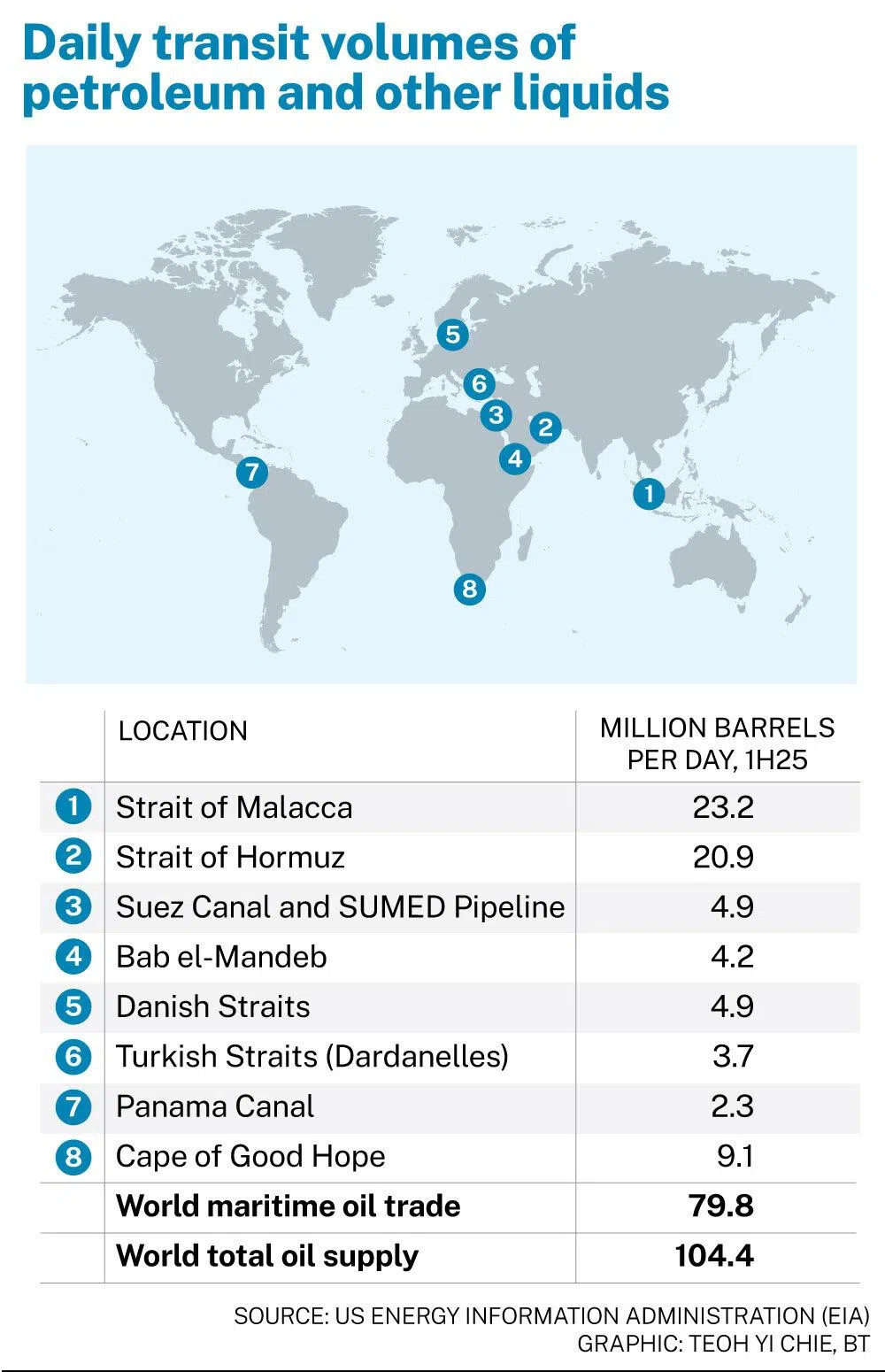
The Strait of Hormuz is a critical shipping waterway for one-fifth of global oil and liquefied natural gas (LNG) supplies. In the first half of 2025, an average of 20.9 million barrels a day of crude and petroleum liquids flowed through this narrow waterway, which translates to nearly 26 per cent of the world’s maritime oil trade passing through this chokepoint.
“More than one-quarter of global seaborne oil trade transit the Strait of Hormuz. Apac economies sit at the end of that pipeline. Mainland China and India absorb the bulk of Iraqi crude in heavy grades processed by refineries purpose-built for that feedstock – substitution is not simply a matter of sourcing elsewhere,” said BMI in a Thursday (Mar 19) note.
But closer to home, the Strait of Malacca is the primary artery for trade, with 23.2 million barrels passing through it a day – even more than the Strait of Hormuz.
US President Donald Trump on Saturday said the US would “obliterate” Iran’s power plants if it did not fully reopen the Strait of Hormuz within 48 hours, or a deadline of 7 am Singapore time on Tuesday.
In response, Iran on Sunday said it would attack US infrastructure in the region, such as energy facilities, if Trump followed through on his threat.
Trump then said on Monday, ahead of the deadline, that he had given orders to postpone any military strikes against Iranian power plants for five days. This is after US and Iran had “very good and productive” conversations over the past two days about a “complete and total resolution of hostilities in the Middle East”.

Iran’s foreign ministry spokesperson denied on Monday holding any talks with the US during the past 24 days.
Asian economies most dependent on Middle East oil
Reliance on oil imports from the Middle East is particularly high across Asia. Japan is the most dependent economy, with 93 per cent of its oil consumption sourced from the region.
South Korea and Singapore also show high dependency at 67 per cent and 58 per cent, respectively.
The region’s largest economies, China (43 per cent) and India (42 per cent), receive nearly half of their oil requirements from the Middle East. Furthermore, around 40 to 50 per cent of oil requirements for both India and China must pass through the Strait of Hormuz, making these economies especially sensitive to maritime supply disruptions.
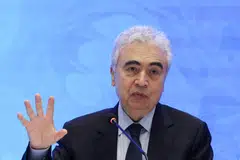
On Monday, Fatih Birol, executive director of International Energy Agency, said it was consulting with governments in Asia and Europe on the release of more stockpiled oil “if necessary” due to the Iran war.
What the Middle East exports to the world
The table lists the top few products in each product sector, by global export market share.
While energy dominates the Middle East’s export profile, the region is also a critical supplier of raw materials and industrial inputs that fuel global manufacturing.
Crude oil accounts for 34 per cent of the global export market share, with annual exports valued at nearly US$450 billion. However, the region’s grip on “downstream” products is equally significant.
The Middle East supplies 44 per cent of the world’s butane and 25 per cent of its propane – both essential for heating and petrochemical cracking.
In the industrial sector, the region holds a 35 per cent market share in amino-alcohol chemicals and 33 per cent market share in rare gases (helium).
Industries most exposed to supply disruption
Supply disruptions from the Middle East would trigger a domino effect across diverse global sectors.
The agriculture industry is vulnerable; the region provides 45 per cent of the world’s sulphur – a key input for sulphuric acid and fertiliser production – and 22 per cent of urea and ammonia.
On Wednesday, Minister for Sustainability and the Environment Grace Fu said that the affected shipments of fertiliser from the Middle East could lead to higher costs of it, and have a trickle-down effect on agriculture and farming of livestock.
It may lead to an increase in food prices in Singapore, even though less than 1 per cent of the Republic’s food supply comes from the Middle East. Supplies from major ports in the Strait of Hormuz account for less than 0.5 per cent.
High-tech and specialised manufacturing also face significant risks.
The healthcare and semiconductor industries rely on the region’s 33 per cent share of global helium for MRI systems and chip cooling.
Meanwhile, the automotive and plastics sectors are tied to Middle Eastern methanol and butadiene, which serve as essential building blocks for synthetic rubber and engineering plastics.
Oil price reactions to geopolitical volatility
Energy markets have reacted violently and immediately to past geopolitical instabilities. During major conflicts such as the Gulf War and the Iraq War, prices spiked as traders priced in the risk of prolonged supply outages.
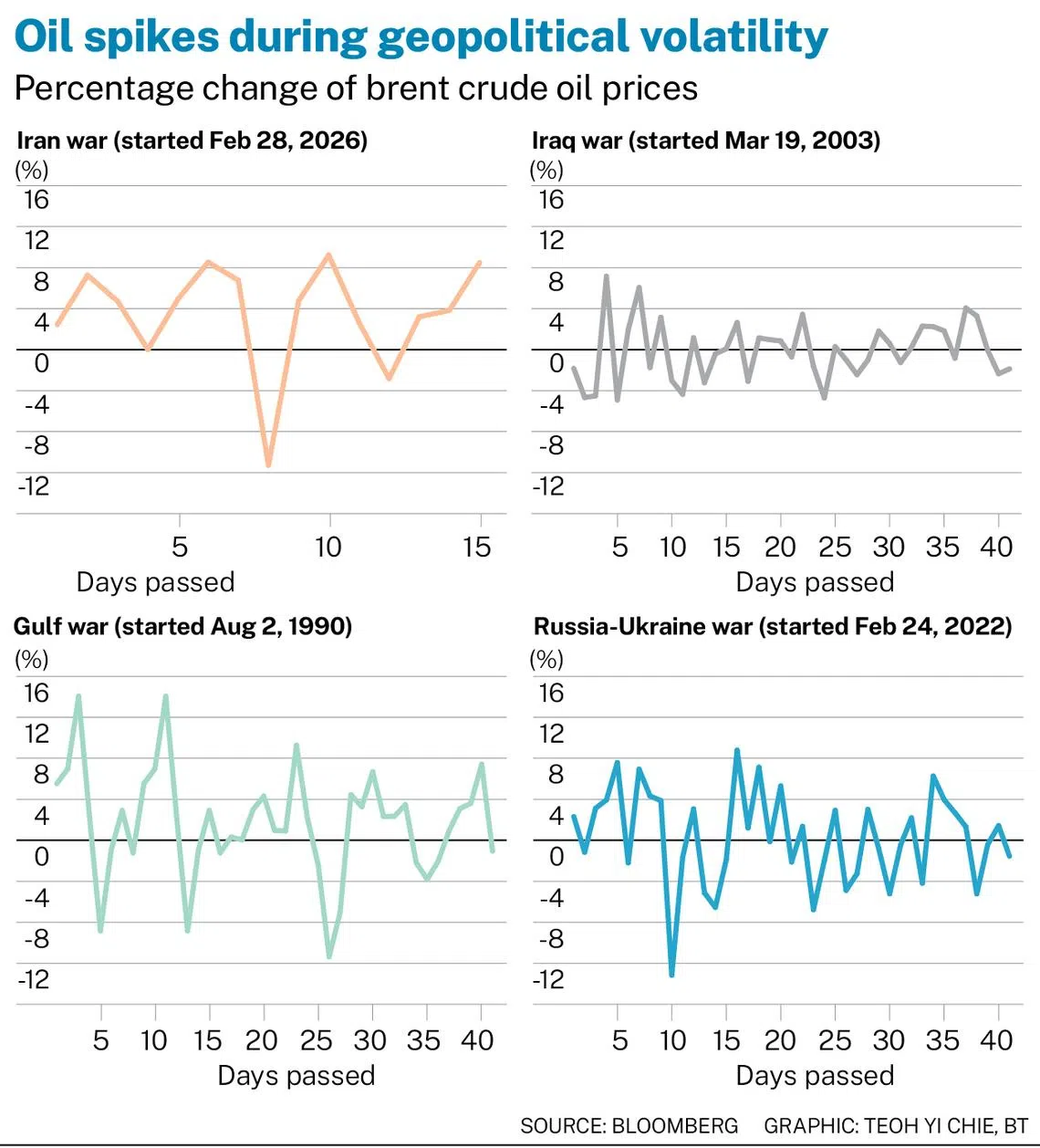
During the Russia-Ukraine conflict that began more than four years ago, prices surged to US$139 a barrel on Mar 7, 2022.
Oil prices were largely stable on Monday morning in Asia, with West Texas Intermediate crude futures nearly flat at about US$98 a barrel. Brent crude futures were down 0.4 per cent at around US$112 a barrel, after settling on Friday at their highest since July 2022.
Decoding Asia newsletter: your guide to navigating Asia in a new global order. Sign up here to get Decoding Asia newsletter. Delivered to your inbox. Free.
Copyright SPH Media. All rights reserved.
TRENDING NOW

Philippine power giant First Gen rebuffs foreign offers, plans up to US$2.6 billion in expansion

Cliff Tan has 7 million followers and a 4-month waitlist. Why won’t he expand his business?

Could stablecoins be the future of money?

From finance aspirant to Asean CEO: TUV SUD’s Jonas Strahberger on finding people who believe in you

