
Samsung, SK Hynix exceeds value of Chinese duo as AI boom shifts
AI investment frenzy has shifted towards infrastructure, benefiting the Korean chipmakers
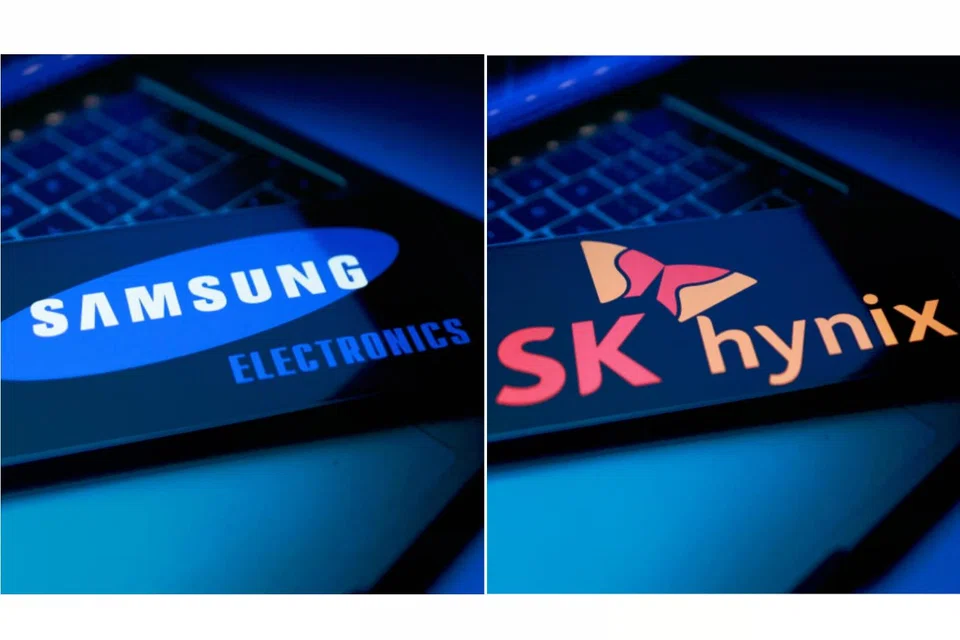
[SEOUL] South Korea’s two most valuable companies eclipsed a duo of Chinese Internet giants by market cap for the first time, underscoring how an evolving global artificial intelligence boom has reshaped the sector’s investment dynamics in Asia.
The combined valuation of Samsung Electronics and SK Hynix reached US$1.14 trillion on Tuesday (Feb 3), surpassing the combined tally of at US$1.07 trillion for Alibaba Group Holding and Tencent Holdings – the two biggest Chinese tech firms listed in Hong Kong.
The milestone underscores how the AI investment frenzy has shifted towards infrastructure, benefiting the Korean chipmakers that are riding insatiable demand for memory. Samsung and SK Hynix have each gained more than 39 per cent in 2026. That is as Alibaba and Tencent, long considered the symbols of Asia’s tech ascent, struggle for fresh momentum given their focus on the highly-competitive e-commerce sector and nascent involvement in AI.
The change in ranks also highlights the different development paths pursued by the two Asian nations. While Korea has positioned itself as a key supplier of global industry leaders like Nvidia, China’s focus has been in achieving tech self-sufficiency. The sudden drop in Chinese tech shares on Tuesday, sparked by taxation fears, also serves as a reminder of the policy uncertainties that have unsettled investors in the past.
“Korea is really concentrated on a specific part of the tech supply chain, whereas for China, it’s more a story of a full end-to-end AI stack that they’re trying to build,” said Yiping Liao, portfolio manager at Franklin Templeton Global Investments. “The reason Hynix and Samsung are seeing such phenomenal share price appreciation looks like is we are in an unprecedentedly tight memory cycle.”
Shares of Samsung Electronics rallied 11 per cent on Tuesday while SK Hynix climbed more than 9 per cent. In comparison, Alibaba ended the day down 1.4 per cent, trimming this year’s gains 13 per cent, while Tencent’s 2.9 per cent drop kept the stock firmly in the red.
The Korean duo have been thriving on their exposure to the most advanced high-bandwidth memory chips that power AI accelerators such as Nvidia’s, benefiting from demand from hyperscalers willing to pay the premium. A record shortfall in both DRAM and NAND has further granted them unprecedented pricing power.
“Memory chips have become critical strategic assets for US big tech companies, a major shift from earlier cycles when memory was simply a disposable component for PCs and smartphones,” said Simon Woo, head of Korea research at BofA Global Research in Seoul, who forecasts the memory supercycle to persist through 2027. “This shift has elevated the importance of the memory industry.”
The semiconductor industry will account for around 60 per cent of Korean stocks’ expected earnings growth this year, according to estimates by Timothy Moe, chief Asia-Pacific equity strategist at Goldman Sachs Group.
SEE ALSO


In contrast to Korea’s heavy presence in the global AI scene, China’s vision for the industry is increasingly defined by domestic substitution, as US export curbs limit access to advanced chips. Yet even within China, there has been a clear divergence, with the latest round of local tech rally led mostly by AI chip designers.
Newly listed local graphics processing unit (GPU) designers like Moore Threads Technology and MetaX Integrated Circuits Shanghai have delivered eye-popping trading debuts in Shanghai. Yet the performance of the likes of Zhipu, startups that build large language models to rival OpenAI, has lagged behind.
While both Alibaba and Tencent have also been making their own foray into the AI industry, their focus remains on developing models to serve their core business.
To be sure, there are risks associated with the Korean chipmakers’ undue exposure to the supply-demand cycles of memory chips, while the Chinese Internet behemoths’ advantages on application may offer longer-term growth stability.
To some observers, the AI universe is vast enough for investors to trade the theme from different angles.
China’s strength, a “big manufacturing ecosystem – means it can bring things to scale very fast,” said Indrani De, global head of investment research at FTSE Russell. “Korea focuses on hardware – this is so structural that it’s very hard to see that stopping anytime soon.” BLOOMBERG
Decoding Asia newsletter: your guide to navigating Asia in a new global order. Sign up here to get Decoding Asia newsletter. Delivered to your inbox. Free.
Share with us your feedback on BT's products and services