Sell US, buy Asia? US outlook clouded on threat to Fed, geopolitical tensions: analysts
Investors rush into Asia markets, precious metals as the ‘sell US’ trade takes hold
 Add BT as a preferred source
DeeperDive is a beta AI feature. Refer to full articles for the facts.
[SINGAPORE] Investors could continue to rush out of US markets and seek safety in precious metals, said analysts on Tuesday (Jan 13), as markets piled into Asia equities. This comes as geopolitical tensions and threats to the US Federal Reserve’s independence take centre stage.
Oil prices could also be boosted in the near term amid a bigger trigger from the Trump-Iran development compared to the US strikes on Venezuela, they said.
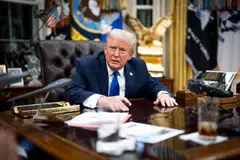
While the “Sell America” trade lifted regional indices on Monday, sentiment was tested on Tuesday by US President Donald Trump’s vow to impose a 25 per cent tariff on countries doing business with Iran.
Trump also added that the new duty would be “effective immediately”. No details about the scope or implementation of the charges were provided, increasing pressure on Teheran amid widespread anti-government protests. Iran’s major trading partners include China, India and Turkey.
Sell US?
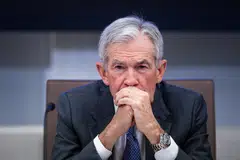
Gold and oil prices rose, and the US dollar sank on Tuesday, on geopolitical tensions as well as unease as the Trump administration also started a probe on US Fed chair Jerome Powell.
“The debasement trade – the trade of a weakening US – is also boosting appetite for hard commodities,” said Ipek Ozkardeskaya, a senior analyst at Swissquote.
Navigate Asia in
a new global order
Get the insights delivered to your inbox.
She noted the fresh highs for gold and silver, adding that there was little to stop the debasement trade as “headlines worsen by the day”. “The debasement trade continues as investors lose confidence in a weakened Fed, which would be forced into looser monetary policy – resulting in weaker growth and higher inflation.”
She added: “The US dollar is no longer the automatic safe haven it once was. In a sell-off today, there is little reason to expect capital to flow into the (US) dollar.”
ANZ Research analysts said: “The US dollar weakened and precious metals gained, as the action sparked concerns about the future independence of the Fed.”
BNP Paribas noted that gold prices surged this week and has further to go.
“The push above US$4,600 an ounce was, in our view, driven by a combination over rising concerns over the deepening unrest in Iran, and renewed concerns over US Federal Reserve independence,” the bank said in a note.
“Indeed, US political, geopolitical and economic uncertainty will, in our view, remain elevated this year, sustaining our view that the balance of risk to gold remains very much on the upside,” it added.
However, Maybank said the “sell US” trade did not happen to have prevailed so strongly, noting that American markets closed slightly higher.
“Nonetheless, Fed independence would continue to be a theme clouding markets in the coming months,” it said, adding it believes upside for the greenback would be more limited in the near term.
Rush into Asia markets
Asian markets extended gains on Tuesday on the momentum from a global rotation out of US assets.
Despite weeks of advances, Asian stocks are still drawing global investors with their cheaper valuations and regional growth prospects. The shift coincides with the outflow of funds from fully valued US stocks amid rising risks.
In Singapore, the Straits Times Index closed 0.9 per cent higher at 4,807.13 points. In Japan, the Nikkei jumped 3.6 per cent to a record 53,814.79 in early trade, before closing 3.1 per cent up at 53,549.16.
Hong Kong’s Hang Seng Index was up 0.9 per cent at 26,848.47. South Korea’s Kospi rose 1.5 per cent to 4,692.64, and Malaysia’s Kuala Lumpur Composite Index added 0.8 per cent to close at 1,708.20.
Morningstar said that attractive valuations, artificial intelligence-driven growth and benign interest rates (ex-Japan) should underpin Asian equity gains in 2026, despite the ongoing volatility.
The MSCI Asia Pacific Index trades at about 15 times earnings, compared with about 22 times for the S&P 500 and 25 times for the Nasdaq 100, indicated data compiled by Bloomberg.
Impact on oil from Iranian unrest
Iran has been convulsing from weeks of mass unrest – initially sparked by a currency crisis and worsening economic conditions – which has increasingly been aimed at the regime.
Trump warned the Iranian regime against violently repressing the demonstrations, and said earlier that the US “stands ready to help”.
“Iran will have a larger near-term impact on crude oil price than Venezuela,” Heng Koon How, head of markets strategy at UOB, said in a commodities strategy report on Monday.
“The Strait of Hormuz is a key consequential geopolitical risk of Iran’s regime change that is difficult to quantify... Iran is a much more substantial producer of crude oil than Venezuela, and most of its exports now go to China,” he added. “China will (lose) another key supplier of crude oil after Venezuela, should Iran’s exports get disrupted.”
Maybank in a note said that Trump is placing pressure on Iran’s major trade partners with the 25 per cent tariff. “No details were given by the president, but China is a major buyer of Iranian oil and the situation can get complicated between the two countries,” it said.
At a regular press briefing on Tuesday, Chinese Foreign Ministry spokesperson Mao Ning said that China will protect its rights and interests, when asked about Trump’s tariff remarks.
Iran has warned both the US and Israel against any attempt to intervene.
Iranian Parliament Speaker Mohammad Bagher Ghalibaf said: “In the event of a US military attack... the occupied territories and US military and shipping centres will be legitimate targets for us.”
He reiterated a warning that Iran could act pre-emptively against potential threats. “Within the framework of legitimate self-defence, we do not limit ourselves to responding only after an attack,” he said.
Decoding Asia newsletter: your guide to navigating Asia in a new global order. Sign up here to get Decoding Asia newsletter. Delivered to your inbox. Free.
Copyright SPH Media. All rights reserved.