



SpaceX, Unitree, Anthropic, OpenAI: Is the ultra-hyped tech-listing wave backed by sound fundamentals?
BT looks at what analysts are saying about the current and upcoming tech IPO headliners

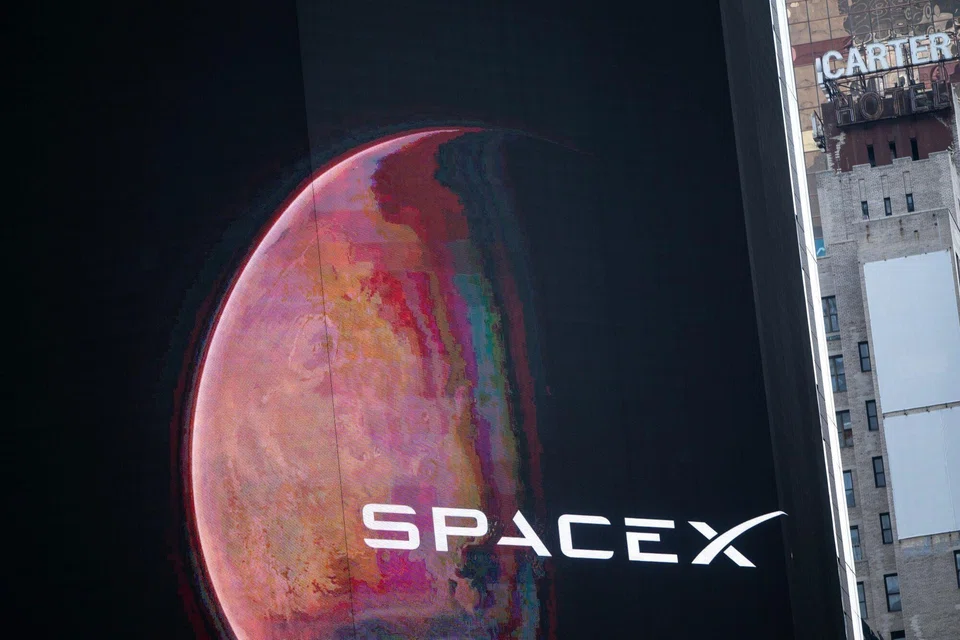
[SINGAPORE] A growing wave of ultra-hyped tech listings is driving investors to assess whether current valuations are supported by economic fundamentals or just driven by speculative hype.
Recent high-profile debuts such as US titan SpaceX, as well as expected filings from generative artificial intelligence pioneers OpenAI and Anthropic, underscore this trend. A surge in humanoid robotics listings, including Unitree Robotics in China, further highlights the phenomenon.
However, speculative excess “is becoming impossible to ignore”, said Swissquote’s Ipek Ozkardeskaya.
The senior analyst warned that technology valuations have detached from tangible fiscal metrics, adding that prices no longer reflect actual or forward-looking measures such as sales, revenue, earnings or profits.
Conversely, other observers believe that markets remain well-positioned to absorb a new wave of listings. While valuations of individual companies may appear elevated, a Lombard Odier note on Jun 16 argued that strong corporate earnings and a resilient macroeconomic backdrop continue to support equities.
The Business Times examines what analysts are saying about current and upcoming initial public offering headliners.
SpaceX
SpaceX, which went public on Jun 12, has emerged as a major “tactical risk-on catalyst”, encouraging investors to rotate into riskier assets such as US growth and AI-related stocks, said Manulife Investment Management in a Jun 18 note.
The Elon Musk-led space economy cum AI company’s US$75 billion IPO was more than four times oversubscribed.
Its prospects have excited investors. Its Starlink unit pioneered the satellite Internet service market, and its Falcon 9 rockets also dominate the commercial space launch industry.


The company also recently agreed to provide compute capacity to Anthropic and Alphabet’s Google, and acquired the AI-powered coding platform Cursor.
Its rapid appreciation has positioned it as the sixth-largest public company in the US as at Jun 22, trading just below Microsoft and Amazon.
However, the counter shed more than S$600 billion in market value over three days. On Tuesday (Jun 23), shares of SpaceX slipped for a third straight day, falling 16 per cent to close at US$154.60 after the company said it would sell investment-grade bonds for the first time.
Despite the sell-off, the company’s market capitalisation remains over US$2 trillion.
Its meteoric rise has drawn intense scrutiny regarding its fiscal sustainability.
Ozkardeskaya noted that SpaceX trades at about 160 times its revenue from the previous year, a valuation she considers steep. However, unlike its mega-cap peers, SpaceX remains deeply unprofitable, posting a US$5 billion loss during the same financial period.
The company’s IPO prospectus also highlighted significant execution risks, warning that its space infrastructure plans may not generate returns within a reasonable timeframe.
“The acquisition announcement of Cursor changes nothing in the maths. SpaceX can’t be worth US$2.66 trillion. Full stop,” Ozkardeskaya said.
The IPO’s immediate impact may be limited due to its small indice weight, with only about 4 per cent of SpaceX’s shares being available for public trading.
However, Lombard Odier noted that as lock-up restrictions expire and more shares enter circulation, the stock’s weighting in major indices is expected to rise, increasing its influence on broader market performance.
Unitree Robotics
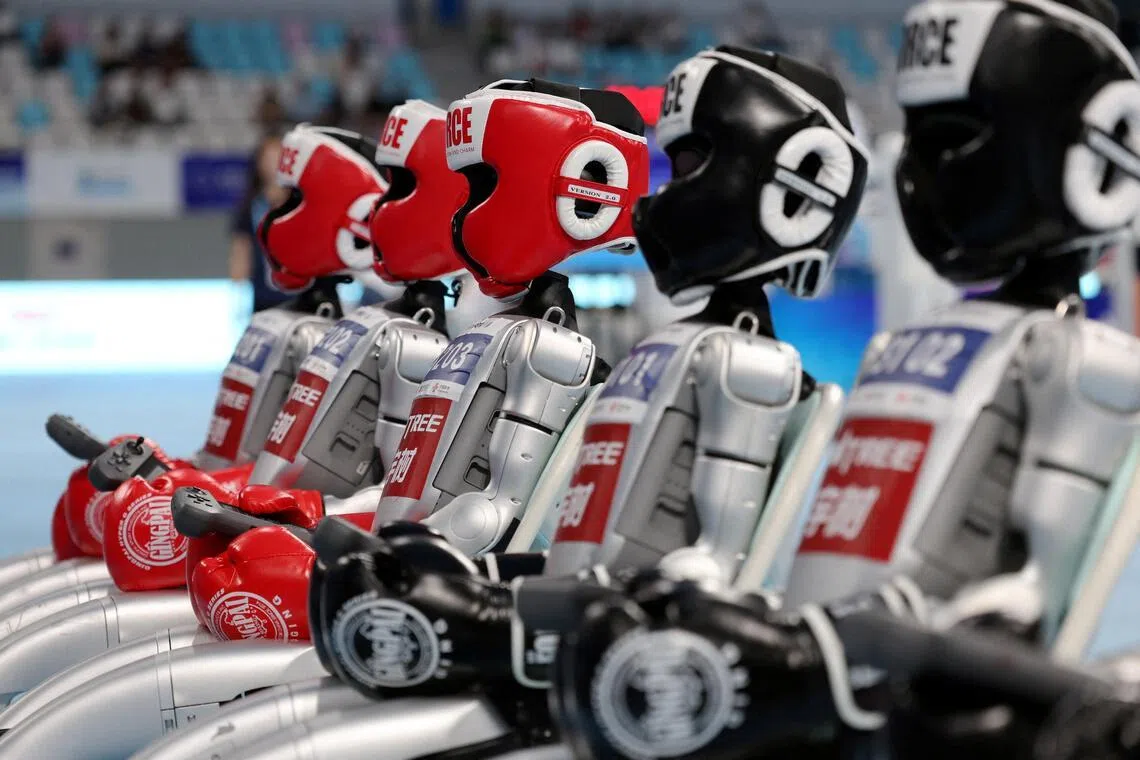
The highly anticipated listing of Chinese robotics firm Unitree represents a different facet of the AI boom – embodied AI.
The company passed the Shanghai Stock Exchange listing committee review on Jun 1. It is reportedly seeking a valuation of about 4.2 billion yuan (S$802 million) in its planned Shanghai listing.
As the company generated 1.7 billion yuan in revenue in 2025, the valuation implies a price-to-sales multiple of roughly 25 times.
Unitree’s IPO would be one of China’s biggest onshore tech listings in years, and it will test whether physical AI applications can command the same premium as their software counterparts.
For now, real-world factory deployment remains limited.
Unitree’s prospectus said its humanoid industry-application revenue came from mainly enterprise reception and tour guide use, intelligent manufacturing and intelligent inspection, with enterprise tour guide use accounting for roughly 50 to 70 per cent.
Morgan Stanley analysts wrote in a Jun 23 note that the focus of the humanoid industry is shifting “from demonstrations to commercialisation and real business value creation”.
Unlike its Western software peers, Unitree’s valuation narrative hinges on manufacturing scale and hardware adoption.
Reflecting stronger commercialisation momentum, policy support and positive supplier feedback, Morgan Stanley recently raised its 2026 China humanoid robot shipment forecast to 50,000 units, from a previous estimate of 28,000.
Analysts expect half-size humanoid robots, such as Unitree’s G1, which currently sells for US$16,000 a unit, to account for roughly 70 per cent of total shipments this year.
However, price wars are also imminent, with at least 46 robotics companies in the IPO pipeline for Hong Kong alone, according to Bloomberg.
“Commercial verification, policy support and supply-chain feedback point to faster humanoid adoption in China,” the Morgan Stanley report stated, forecasting the domestic market size to reach US$15 billion by 2030.
Anthropic
Pivoting back to the US software landscape, the AI giant behind Claude filed for a US IPO in June. While it did not disclose the size or terms of the offering, it last raised US$65 billion at a post-money valuation of US$965 billion in late May.
It is widely expected to achieve an IPO valuation of US$1 trillion or more.
The consequential stock market debut could potentially reshape benchmark indices, investor flows and the broader narrative driving US equities.
Currently, open-end funds, closed-end funds and exchange-traded funds are providing bridges to these private market leaders. According to Morningstar data, Anthropic is already held by 131 funds, representing around US$6.9 billion in invested exposure.
Dario Amodei, CEO of Anthropic, said in May that the company has reached a growth rate that could make it 80 times as big this year.
It has also been signing a series of deals with industry giants, including SpaceX, to obtain more computing power.
However, the timing of the filing comes alongside rising bills for enterprises utilising AI. These businesses are increasingly scrutinising the return on investment they are getting from AI, particularly after Anthropic transitioned to token-based pricing earlier this year.
OpenAI

ChatGPT creator OpenAI submitted its initial registration document shortly after Anthropic. OpenAI also did not disclose the size or terms of the offering, and said a timeline has not yet been determined.
A Reuters report noted that OpenAI is targeting a valuation of up to US$1 trillion in a public debut that could come as early as September.
In March, OpenAI said it was generating US$2 billion in monthly revenue and growing roughly four times faster than companies that defined the Internet and mobile eras, including Alphabet and Meta.
Overcrowded market?
For the US-based software giants, analysts broadly observe concerns about a crowded capital market. This supply pressure is compounded by existing tech giants tapping the market for cash.
Unlike the tightly regulated domestic capital pools that Chinese hardware companies such as Unitree tap, these American IPOs must vie for liquidity against hyperscaler capital drains.
“A growing wave of equity-over-debt issuance from mega cap tech hyperscalers such as Meta and Google-parent Alphabet raises questions of where will the capital come from,” said BlackRock Investment Institute in a Jun 15 note.
Lombard Odier noted that corporate buyback activity currently sits at its lowest level since 2021.
“The combination of large amounts of newly issued shares with few shares withdrawn from the market raises the possibility of a temporary equity oversupply if investor demand fails to keep pace,” it said.
BlackRock analysts said that while market absorption of this supersized equity issuance is a real risk to watch, it is not on its own a reason to question the AI sector’s fundamentals.
Aaron Socker, portfolio specialist at William Blair Investment Management, noted that while index mechanics can influence short-term trading dynamics, long-term returns are ultimately driven by business fundamentals.
Meanwhile, Monika Calay, director of UK manager research at Morningstar, cautioned investors that as these mega-IPOs hit the market, passive ETFs will become the primary exposure channel.
Regarding concerns about whether markets can absorb the additional supply of shares, Julius Baer analysts suggested in a Jun 5 note that such fears are overstated.
“In our view, the current revival should therefore be viewed less as a warning sign and more as evidence of improving confidence in capital markets. Selectivity will remain essential, but the next generation of public companies is likely to create attractive opportunities for both active and passive investors,” they wrote.
Decoding Asia newsletter: your guide to navigating Asia in a new global order. Sign up here to get Decoding Asia newsletter. Delivered to your inbox. Free.
Copyright SPH Media. All rights reserved.
TRENDING NOW

Government to bring forward raising of retirement age, give employers more financial support to create flexi-load jobs

If Europe goes to war, the fallout will be felt in East Asia
Indonesia stocks suffer worst plunge in nearly 30 years as MSCI proposes standalone status

Vietnam’s northern provinces, not Hanoi or Ho Chi Minh City, are powering near 10% GDP growth

