‘Structural evolution’: Hong Kong draws back talent as IPO boom fuels financial hub’s revival
More than 400 companies either set up local entities or expanded their presence in the city in the first six months of 2026
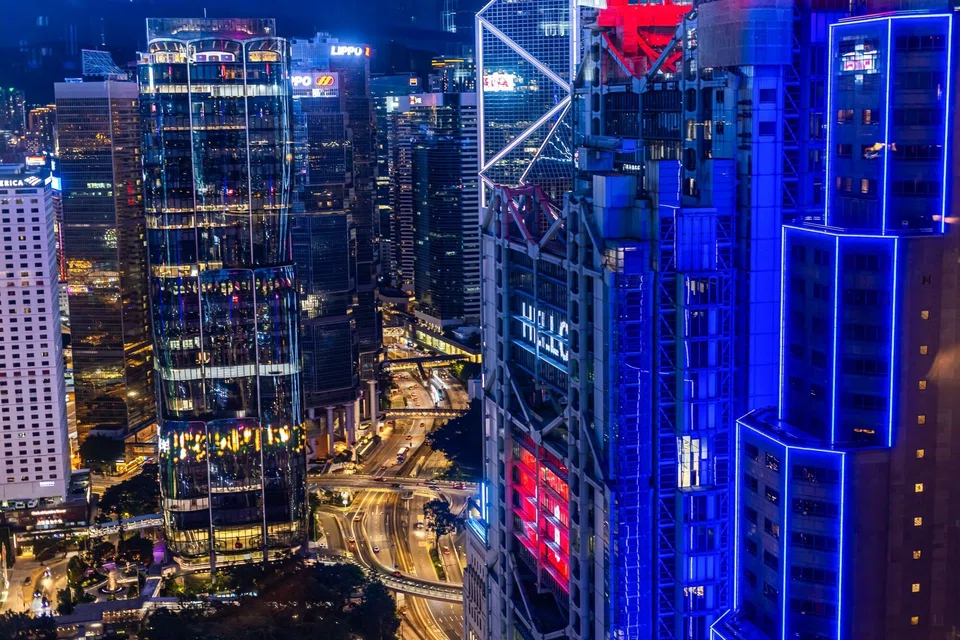
[HONG KONG] Hong Kong is luring back professionals, reversing an exodus in the wake of political and social unrest in 2019 and some of the world’s most rigid Covid-19 restrictions, as its IPO market booms and the city reclaims ground as a global financial hub.
After overtaking Switzerland as the world’s top cross-border wealth hub, Hong Kong is firmly back in the spotlight with total funds raised, including IPOs, rising 76 per cent year-on-year to roughly US$83.5 billion in the first eight months of 2026.
Executive talent firms and consultancies have reported finance industry professionals returning from Singapore, London, Dubai and mainland China to pursue opportunities in wealth management and China-related business.
“Inquiries and relocation activity have rebounded strongly compared to the depths of 2023, gaining solid momentum over the past 18 to 24 months,” said Lee Brantingham, a Hong Kong-based partner at global executive search firm H.I.E.C.
“Financial services, particularly asset management, private wealth and family offices, remain the cornerstone. The fastest-growing demand is around artificial intelligence integration, compliance, and risk management,” he added.
More than 400 companies either set up local entities or expanded their presence in the city in the first six months of 2026, up 9 per cent from a year earlier, according to government investment agency InvestHK.
These enterprises were expected to bring in more than HK$53 billion (US$6.8 billion) in foreign direct investment and create over 8,600 jobs for the city, it said.
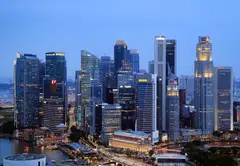
The revival has boosted demand for prime office space from mainland Chinese and multinational companies, with Grade-A office space in the Central business district recovering after years of decline.
Savills’ latest report on Hong Kong’s leasing market showed the city’s Grade-A office market in Central leading the recovery, with office rents increasing 4.8 per cent in the second quarter from the previous three months, while vacancy rates fell from 10.2 per cent in the first quarter to 9.4 per cent.
SEE ALSO


“Hedge funds and quantitative funds are pre-leasing large contiguous floor plates to secure space for future expansion, making them a key driver of recent market activity in Central,” said Jack Tong, director, research & consultancy at Savills.
“Rents for quality office space in core districts are expected to see further recovery over the medium term.”
Knight Frank said premium office space in the Central business district remained the most sought after, with vacancy falling to 9.7 per cent in July from 14.5 per cent at the start of 2026.
Hong Kong, aiming to strengthen its competitiveness as a global asset management hub, is also in the process of passing a Bill to extend a tax incentive to more fund firms and fund managers.
Underscoring demand for office space, US trading firm Susquehanna International Group plans to triple its office space in Hong Kong to bolster a major hiring push, Reuters reported in September.
The city’s revival is filtering into the economy. Economic growth accelerated to 5.9 per cent in the first quarter of 2026 and remained robust in the second quarter, with officials citing strong demand for AI-related products, rising cross-border financial activity and resilient domestic consumption.
Shifting dynamics
Beijing’s imposition of a national security law in 2020 rattled some professionals and expatriates, given a lack of clarity on what overstepping “red lines” constituted, although relative stability in the city over the past few years appears to have allayed some of those concerns.
The law criminalises acts including secession, subversion, terrorism and collusion with foreign forces, and has been used to prosecute numerous opposition politicians, activists and media figures.
The Hong Kong that some professionals are returning to, however, is still structurally distinct from the one they left.
In a city where the stock market is valued at about US$6 trillion and financial services account for around a fifth of gross domestic product, the nature of corporate hiring has shifted.
Government talent schemes have attracted tens of thousands of applicants, many from China, highlighting the city’s growing ties with the mainland and its role as the world’s biggest offshore centre for Chinese capital.
And while property prices in Hong Kong remain stubbornly high, in addition to a high cost of living, some returnees find they can still build wealth more effectively in the city than in lower-cost regional alternatives.
“The cost of living is more but we will be able to save more. That’s the goal ... I think we’re able to save more in the long term than we can here in Thailand,” said Emily Hampson-Ford, a teacher who returned to the territory in 2026, adding that the city also offers a great lifestyle.
“You’ve got the beaches, the mountains, the metropolitan city, all really on your doorstep.”
Relocation and property agents have reported a significant shift in market dynamics over the past year, pointing to a sharp increase in inbound assignments, with overseas executives accounting for a growing share of new corporate housing leases.
Ultimately, observers emphasise that the current influx points to a deeper shift in the city’s identity.
“This is a structural evolution rather than a simple cyclical recovery,” Brantingham said.
“Hong Kong is developing as a more China-integrated international hub.” REUTERS
Decoding Asia newsletter: your guide to navigating Asia in a new global order. Sign up here to get Decoding Asia newsletter. Delivered to your inbox. Free.
Share with us your feedback on BT's products and services