



Tokyo becoming colony for the rich, Pritzker winner warns
Riken Yamamoto says that what bothers him is the exclusivity of wealthy conclaves created by the Japanese capital’s recent blockbuster developments
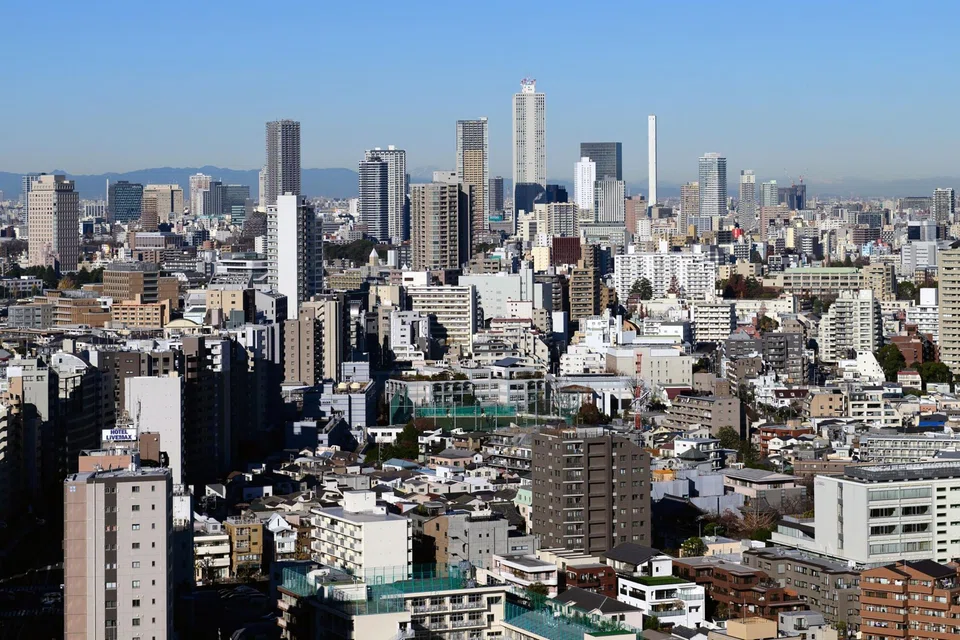
AN AWARD-WINNING architect warned that Tokyo is being trampled by luxury developments, issuing a rare rebuke of his peers for catering to wealthy interests over the public.
Tokyo has long existed in a state of flux, with older buildings routinely razed in favour of modernised, earthquake-resilient structures. But for a megacity in one of the world’s largest economies, the city is surprisingly pedestrian-friendly and human-scaled.
Narrow streets and lax zoning allow small shopfronts and bars to thrive, while affordable housing is dotted throughout even wealthy districts. Yet that has been changing in recent years, with sculptural glass-and-steel buildings filled with boutiques, offices and luxury condominiums springing up throughout the city.
“This is like a colony by rich people, ‘neoliberalism’ people,” said Riken Yamamoto, recipient of the 2024 Pritzker Prize – often called the Nobel Prize of architecture – during a recent talk at the Foreign Correspondents’ Club of Japan. “What is being built is completely unusable by people in the community.”
High-rise condominiums, called “tower mansions” in Japan, have proliferated as a solution to the growing concentration of people in urban centres. Greater Tokyo housed 812 tower mansions in 2024, roughly a quarter of which were built in the last decade, according to property database and consulting firm Tokyo Kantei.
Office supply is also surging, with new large-scale developments of around 549,000 tsubo, a Japanese measurement that is the equivalent of around 1.8 million square metres, entering the market from 2024 through 2026, according to an estimate by Toyo Keizai.
Yamamoto acknowledged that Tokyo, to some extent, would always need to rebuild itself. “Developers are not bad. We need developers,” he said.
What bothered him, he explained, was the exclusivity of wealthy conclaves created by Tokyo’s recent blockbuster developments, namely Mori Building’s series of “Hills” complexes, which span upscale areas from Roppongi to Azabu. Designed by other famous architects, they often feature sleek retail and manicured greenery.
He criticised some by name: “Kengo Kuma, Tadao Ando. When they design, are they really considering the community? All they are turning towards are Mori Building and others. Why? Because they give them work.”

A Mori Building spokesman declined to comment, and representatives for the architects did not respond to requests for comment.
Yamamoto is known for imaginative buildings that link people across generations and social groups.
One of his most famous works, a fire station in Japan’s Hiroshima Prefecture, features a transparent exterior with glass louvers, allowing the community to watch firefighters’ daily activities and training. He is also currently working on the renewal of a slum in Caracas with the intention of preserving the community’s way of life.
His remarks are unusual among Japanese architects, who rarely critique one another – save for the collective opposition to Zaha Hadid’s original plans for the Olympic Stadium that led to its eventual scrapping in favour of a more restrained plan by Kuma.
Among the public, though, there have been a few flashpoints.
The 2024 Meiji Jingu Gaien redevelopment sparked rare protests and became a central gubernatorial campaign issue over the felling of century-old ginkgo trees. Construction went ahead after developer Mitsui Fudosan made minor planning tweaks at the government’s request.
Yamamoto criticised ongoing renewal plans for Shibuya Station, a multi-year megaproject backed by railway companies, builders and the Tokyo Metropolitan Government.
The plan focuses on improving the flow of commuters, as well as boosting commerce, in one of the world’s busiest stations. He said that it was too centred on the priorities of the railway corporations.
He also objected to the makeover of the historic Tsukiji fish market, saying it “destroyed the heart, the very core place of Tokyo”.
The 900 billion yen (S$7.3 billion) Tsukiji redevelopment involved the relocation of the historic wholesale market to the industrial area of Toyosu, itself recently developed.
Yamamoto said that demolishing the original site meant erasing the history and liveliness of the traditional marketplace, severing its ties to the nearby Ginza dining scene. It is now being reinvented by an 11-member consortium which envisions a vast event venue surrounded by high-rises and flat green lawns.
“Developers will come in and buy all the land. A second ‘Something Hills’ will be built, another Mori building will be built,” he added. “Experts should step in and start drafting a plan for how the future of Tokyo ought to be.” BLOOMBERG
Decoding Asia newsletter: your guide to navigating Asia in a new global order. Sign up here to get Decoding Asia newsletter. Delivered to your inbox. Free.
Share with us your feedback on BT's products and services






