Trump launches US$12 billion minerals stockpile to counter China
The effort is akin to the nation’s existing emergency oil stockpile
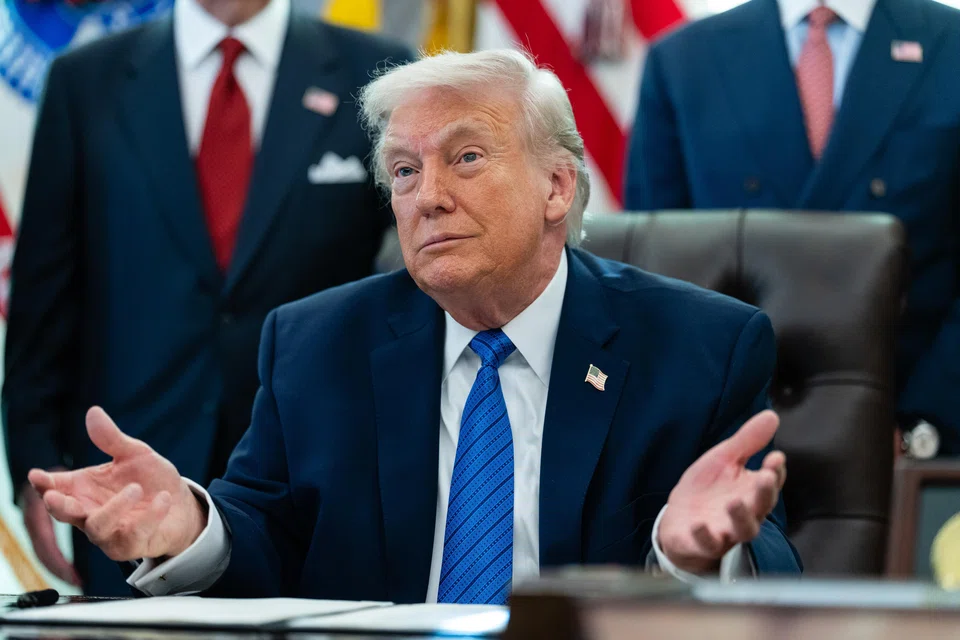
[WASHINGTON] US President Donald Trump is set to launch a strategic critical-minerals stockpile with US$12 billion in seed money, a bid to insulate manufacturers from supply shocks as the US works to slash its reliance on Chinese rare earths and other metals.
The venture – dubbed Project Vault – is set to marry US$1.67 billion in private capital with a US$10 billion loan from the US Export-Import Bank to procure and store the minerals for automakers, tech firms and other manufacturers.
Details of the initiative, which would represent a first-of-its-kind stockpile for the US private sector, were described by senior administration officials, who asked not to be identified discussing a plan that has yet to be announced.
The effort is akin to the nation’s existing emergency oil stockpile. But instead of crude, its focus would be minerals – such as gallium and cobalt – used in products such as iPhones, batteries and jet engines. The stockpile is expected to include both rare earths and critical minerals as well as other strategically important elements that are subject to volatile prices.
It represents a major commitment to accumulate minerals deemed critical to the industrial economy – including the automotive, aerospace and energy sectors – and highlights Trump’s effort to wean US supply chains from China, the world’s dominant provider and processor of critical minerals.
The project has participation from more than a dozen companies so far, including General Motors, Stellantis, Boeing, Corning, GE Vernova and Alphabet’s Google. Three commodities trading houses – Hartree Partners, Traxys North America and Mercuria Energy Group – have signed on to handle purchases of the raw materials to fill the stockpile.
Ex-Im’s board is set to vote later Monday to authorise the record-setting 15-year loan, which is more than double the next-largest deal ever executed by the bank.
Trump is set to meet Monday with GM’s chief executive officer Mary Barra and mining billionaire Robert Friedland, who represent both producers and users of critical minerals.
The US already operates a national stockpile of critical minerals to serve the nation’s defence-industrial base but doesn’t have a stockpile for civilian needs. Under Trump, the US also has taken the rare step of investing directly in domestic minerals companies to boost the production and processing of rare earths at home.
SEE ALSO
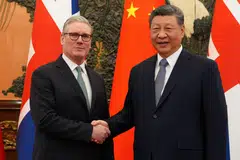
The administration has already inked cooperation agreements with Australia, Japan, Malaysia and other countries on the issue. It will press even more nations to pursue such pacts during a summit of dozens of countries set to take place in Washington on Wednesday.
The effort to reduce risk in the mineral supply chain gained new momentum last year, after China tightened export controls on some materials. That spurred some US manufacturers to dial back production and underscored the extent of Beijing’s leverage.
The new venture will offer participating manufacturers a way to insulate their businesses from swings in prices for key materials without having to maintain their own stockpiles.
Those types of swings can expose companies to massive volatility in key raw material inputs that wreak havoc on balance sheets. For example, nickel saw a historic price surge shortly after Russia invaded Ukraine, fed by fears buyers would no longer be able to purchase the metal from Russia, a top supplier.
Some details about Project Vault’s structure were not immediately known, including the institutional investors providing the US$1.67 billion. The senior administration officials said the project had been oversubscribed because investors are attracted by a credit-worthy group of manufacturers, their long-term commitments and the involvement of the US export-credit agency.
The specific carrying costs that would be charged to those manufacturers, as well as the fees for the trading firms participating as procurement officers, weren’t disclosed.
Under the arrangement, companies that make an initial commitment to purchase materials at a specified inventory price later – and pay some up-front fees – will be able to present Project Vault with a shopping list of preferred materials they need.
The project, in turn, will seek to procure and store the materials, with the manufacturers charged a carrying cost for the expenses associated with interest on the loan and holding the elements.
Manufacturers will be allowed to draw down their material stash as long as the firms replenish them. In the case of a major supply disruption, they will be able to access all of it, the officials said.
A key element in the venture’s design is that manufacturers who commit to buy a specified amount of materials at a set price also commit to repurchase the same amount at that same cost in the future. The administration sees that acting as a stabilising mechanism, helping suppress volatility. BLOOMBERG
Decoding Asia newsletter: your guide to navigating Asia in a new global order. Sign up here to get Decoding Asia newsletter. Delivered to your inbox. Free.
Share with us your feedback on BT's products and services