


Trump rebuilds US tariff wall with new claims of trade unfairness
His administration wants the rebuilt wall of import taxes to mirror those Trump put on every major trading partner in 2025
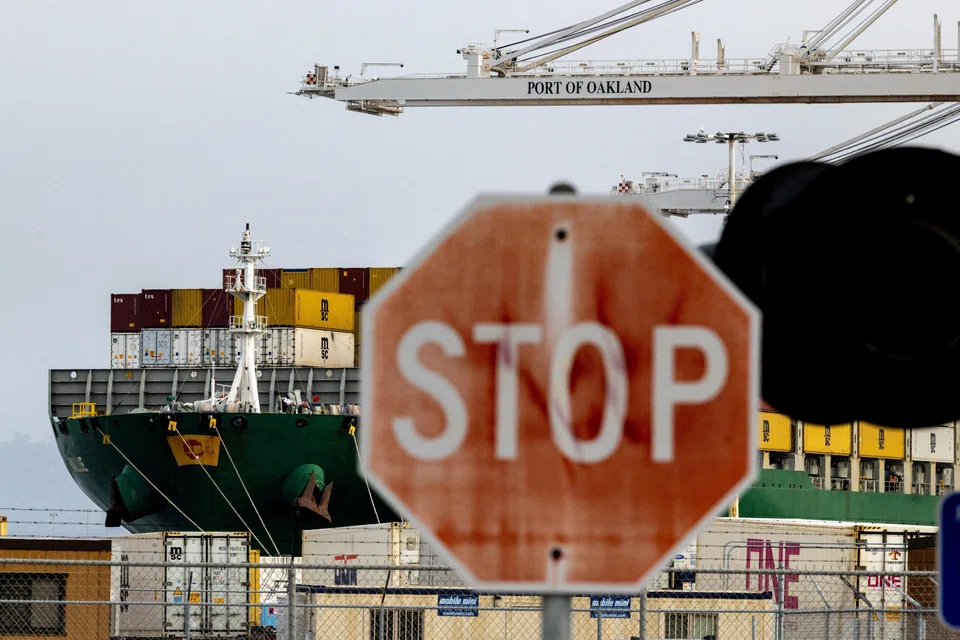
[WASHINGTON] US President Donald Trump is rolling out new tools with the same protectionist goals after the Supreme Court ruled his sweeping global tariffs to be illegal. His administration wants the rebuilt wall of import taxes to mirror those Trump put on every major trading partner at the beginning of his second term.
But not all is as it was on Apr 2, 2025, or Liberation Day, as the president called it. To make tariffs more legally sound, many countries are subject to investigations under accusations of trade unfairness, with the most prominent two focused on forced labour rules and excess industrial capacity.
The actions were brought under a legal authority known as Section 301 of the Trade Act of 1974. Not all countries are targets of the probes, and when Trump’s temporary 10 per cent across-the-board tariffs expire at the end of July, some stand to gain a competitive edge with a lower rate than they had before. Others could end up worse off.
With Trump, though, it’s wise to assume a wild card in policymaking. On trade, that’s been the administration’s use of exemptions from tariffs for imports it does not want to make more costly to buy from abroad, like AI equipment or farm tractors or Brazilian coffee. On the flipside are inclusions that can add items and broaden the scope of tariff targets.
Another unresolved issue is what happens with economies such as India, the European Union, Japan, South Korea and the UK that signed trade agreements capping their tariff rates at lower negotiated levels, especially on automobiles. US officials have sought to reassure them that those agreements remain intact.
US Trade Representative Jamieson Greer’s trip to India this week may provide a preview of what countries with deals should expect. Piyush Goyal, the nation’s commerce and industry minister, said at a press briefing that “the issue currently pending is that our duties need to be lower compared to those of competing nations”, according to local news agency ANI.
With those caveats, here’s a look at how different countries and economies might potentially be affected:
The Philippines
Under the Liberation Day levies, the Philippines was subject to a 19 per cent rate. The South-east Asia country will instead be subject to a 12.5 per cent tariff if the forced labour penalties are imposed as proposed. It is not subject to the excess capacity probe, so there is not an expected increase in duties later on.
That raises the potential for a nearly seven percentage-point drop in its tariff rate compared with April 2025. US goods imports from the Philippines totalled US$7.7 billion in the first four months of this year, a 51 per cent increase from the January to April period in 2025.
SEE ALSO

South Africa
In April 2025, South Africa was slapped with a 30 per cent tariff rate as Trump regularly alleged the government of discriminating against white Afrikaners. That duty rate is now expected to settle at 12.5 per cent after the forced labour investigation concludes. South African goods shipments into the US through April totaled US$3.5 billion, down 56 per cent from a year earlier.
Smaller economies
Several countries that engage in less than US$10 billion of US trade are set to benefit from the new tariff wall, with some bouncing from exorbitant tariff rates back down to the most favoured nation duties. This potentially opens up a new frontier for multinationals to shift their supply chains to in an attempt to avoid higher duties.
Pakistan’s tariffs will drop 19 percentage points to 10 per cent from 29 per cent. Myanmar was hit with a 44 per cent duty in April 2025. Now, it could drop down to a rate of between zero and 2 per cent on most goods, and Laos and Lesotho are also in similar positions.
Singapore
With final details still unclear, Singapore is a small but important US trading partner that will almost certainly be left in a worse position under the new tariff regime. It did not get a country-specific emergency tariff in April 2025.
But the city-state did get hit with the 10 per cent duty applied to earlier this year to all the others. That is now at risk of increasing: The South-east Asian economy faces both a 12.5 per cent tariff on forced labour and an expected additional tariff from the excess capacity probe.
People in Singapore are “keenly aware” that the new tariff wall is a problem for them, said Deborah Elms, head of trade policy at The Hinrich Foundation. “They were sitting at a comfortable, manageable 10 per cent,” and now, they are at risk of being pushed into a worse spot.
Making matters tougher for American importers that pay tariffs and handle compliance paperwork, Singapore is one of the world’s busiest transshipment hubs, meaning lots of raw materials enter its ports and industrial zones and are then exported as finished products.
Canada
At first glance, Canada appears better positioned, with tariffs on imports lower than the April 2025. There are key exemptions for US-Mexico-Canada Agreement (USMCA)-qualified goods. Still, industry-specific tariffs on metals have strained Canadian industry.
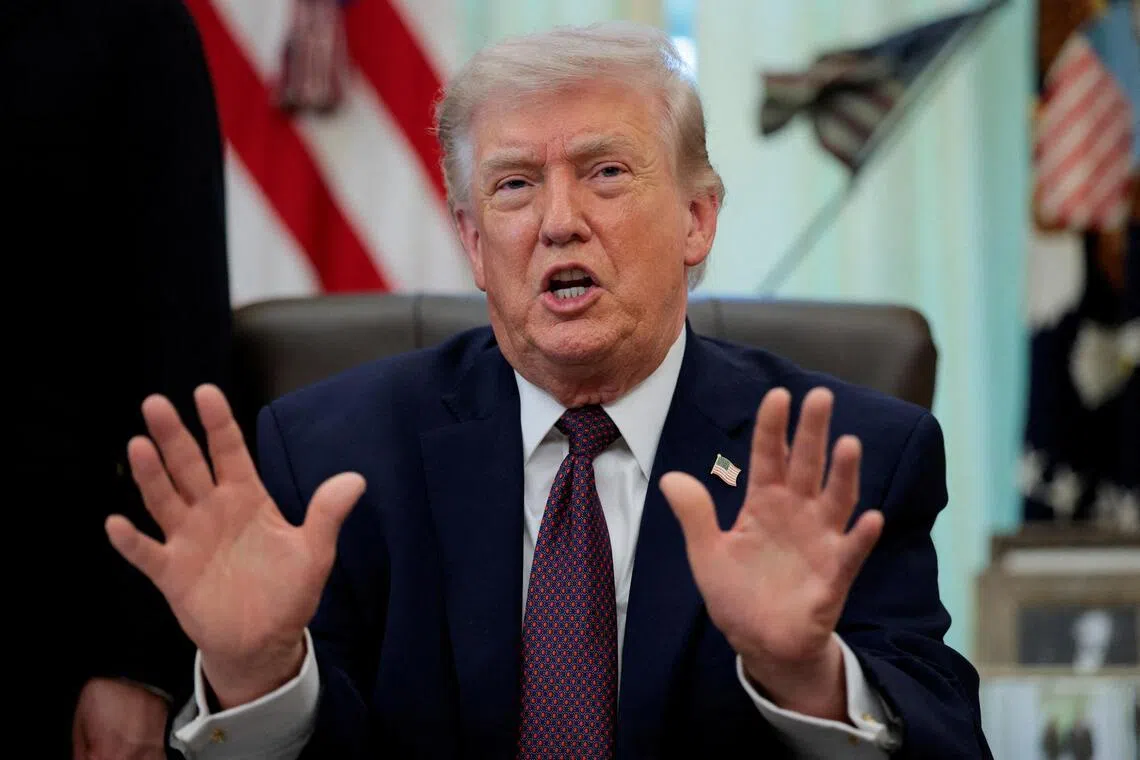
Trump regularly threatens to withdraw from the North American trade agreement he helped broker during his first term, and has made clear he has grievances with Canadians for retaliatory actions. Even if the threats are a negotiating chip, it means Canada cannot rest easy heading into USMCA renegotiations in the second half.
Mexico
Mexico is pushing for relief on sector-specific auto tariff rates, arguing that their rate exceeds those of some vehicles imported from South Korea or Japan. As part of the ongoing USMCA talks, Washington is pushing Mexico to implement a rule for cars in the North American trade zone to be comprised of at least 50 per cent American-sourced goods. The talks will continue through at least July, making it unclear how Mexico’s trade impact will shake out in the near term.
European Union
The EU is under pressure from the US to codify it’s trade agreement. The European Parliament and EU countries still need to vote to ratify the finished text before a Jul 4 deadline imposed by Trump. The US president said that if the deal is not in place by then, he will hike tariffs on European automobiles to 25 per cent from 15 per cent, though US Trade Representative Jamieson Greer has sought to assure Brussels that “a deal’s a deal”.
Just last week, Trump launched a 301 investigation against Germany, citing “persistent underpayment for innovative pharmaceutical products”. In response, Chancellor Friedrich Merz said that he expects the US to stand by its trade commitments with Europe, adding that decisions on pharmaceutical payments are a domestic matter.
China
China is in a vastly better position than it was at the top of Trump’s second term. During his presidential campaign in 2024, he vowed to implement a 60 per cent tariff on China. The effective rate now sits at roughly 21 per cent, according to analysis by Bloomberg Economics.
The US and China are set to revisit their tariff truce this fall. While much could happen between now and then, Chinese leader Xi Jinping demonstrated the country’s leverage over the US economy by blockading its rare earths exports last year. BLOOMBERG
Decoding Asia newsletter: your guide to navigating Asia in a new global order. Sign up here to get Decoding Asia newsletter. Delivered to your inbox. Free.
Share with us your feedback on BT's products and services
TRENDING NOW
Green fuels, autonomous ships: How Singapore is future-proofing its shipping industry

US trade chief to consider trade deal tariff caps in excess capacity probe

Grab CEO’s wife Chloe Tong on life with Anthony Tan and finding her purpose

Deal between tycoon friends sparks scrutiny of Philippine power sector

